
Building pipeline installation projects involve multiple construction processes, including water supply and drainage systems, fire protection systems, HVAC systems, and industrial conveying pipelines. During these construction activities, metal pipe cutting, welding, and connection work play an important role, while a stable and reliable gas supply directly affects construction efficiency and project quality. For many large-scale projects, relying solely on traditional gas cylinders often cannot meet the demand for continuous construction. Therefore, acetylene generator tanks have gradually become important supporting equipment on construction sites. They can achieve on-site gas generation and continuous gas supply, providing stable support for welding and cutting operations while helping construction companies improve site management efficiency and project progress.
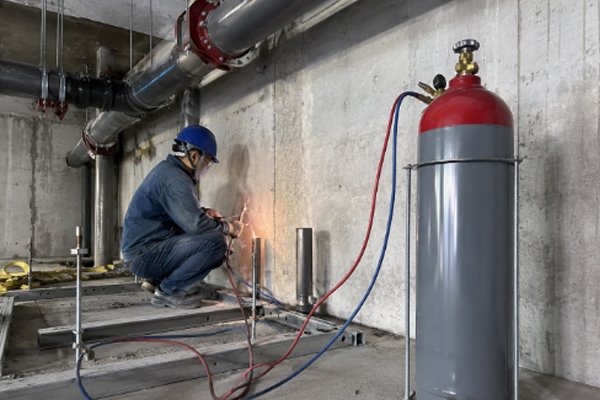
The Role of Acetylene Generator Tanks in Building Pipeline Installation
Building pipeline installation projects often require continuous welding and cutting operations, especially in large factory construction, municipal engineering, and industrial projects where gas consumption demand is relatively high. As an on-site gas supply device, an acetylene generator tank can provide a stable source of acetylene for construction activities.
What Is an Acetylene Generator Tank?
Many construction workers know that acetylene is a commonly used industrial gas, but their understanding of how an acetylene generator tank works is often incomplete. In fact, this type of equipment has been applied in many engineering projects and is especially suitable for construction environments requiring continuous gas supply.An acetylene generator tank is a device that produces acetylene gas through the chemical reaction between calcium carbide (carbide) and water. Its working principle is relatively simple. By controlling the contact rate between calcium carbide and water, a stable gas supply can be achieved.On construction sites, acetylene generator tanks can continuously generate acetylene according to actual gas consumption requirements, providing a stable gas source for welding and cutting equipment. Compared with frequently replacing acetylene cylinders, some engineering projects prefer centralized gas supply methods to meet long-term construction demands.
Why Do Building Pipeline Projects Need Acetylene Gas?
During construction, many pipeline materials must undergo cutting, prefabrication, adjustment, and welding before installation can be completed. Without stable heat source support, construction efficiency will be significantly affected. Therefore, acetylene gas has maintained a high utilization rate in the construction industry.During building pipeline installation, many metal pipes require cutting, prefabrication, and welding.
Common applications include:
● Steel pipe cutting
● Fire protection pipeline welding
● Industrial pipeline installation
● Metal bracket fabrication
● Equipment connection construction
Acetylene flames have high temperatures and excellent thermal efficiency, enabling rapid completion of metal processing tasks. As a result, acetylene has become one of the important energy sources on construction sites.
Advantages Brought by Acetylene Generator Tanks
As project scales continue to expand, construction companies have increasingly higher requirements for gas supply stability and management convenience. Acetylene generator tanks can reduce gas supply interruptions to a certain extent and therefore attract the attention of many project managers.Compared with traditional gas supply methods, acetylene generator tanks offer strong continuous gas supply capability, flexible on-site adjustment, and relatively low transportation costs.
| Comparison Item | Acetylene Generator Tank | Acetylene Cylinder |
| Gas Supply Continuity | High | Requires frequent replacement |
| Transportation Demand | Low | High |
| Site Management | Centralized management | Decentralized management |
| Suitable for Large Projects | Yes | Generally |
| Gas Supply Stability | Relatively stable | Stable |
For construction projects with longer durations, the proper use of acetylene generator tanks can reduce downtime waiting periods while lowering the management pressure caused by frequent transportation and replacement of gas cylinders.
Implementation Process in Building Pipeline Installation Projects
After selecting the right equipment, installation and operation must still be completed according to standard procedures. Only by making adequate preparations in project planning, installation and commissioning, and subsequent operation management can the actual value of acetylene generator tanks be fully realized.
Equipment Planning Before Construction
Any construction equipment requires preliminary planning before being put into use, and acetylene generator tanks are no exception. Evaluating project requirements in advance can prevent issues such as insufficient gas supply or excessive equipment configuration later on.Before an acetylene generator tank is put into operation, a gas supply plan should be developed according to the project scale.
Construction companies usually consider the following factors:
● Average daily gas consumption
● Number of welding stations
● Construction period
● Site area
● Safety distance requirements
After calculations are completed, the equipment model and gas storage capacity can be determined to avoid insufficient gas supply or idle equipment.For example, an industrial plant pipeline installation project requiring the simultaneous operation of 20 welding stations must calculate peak acetylene consumption in advance and select generator equipment with corresponding specifications. This not only meets construction requirements but also avoids resource waste.
Equipment Installation and Commissioning
After the equipment is transported to the construction site, it cannot be immediately put into production. Installation and commissioning must first be completed according to relevant requirements. Installation quality directly affects the stability and safety of subsequent operations.After the equipment arrives at the construction site, a safe area should be selected for installation.
Installation areas generally require:
| Installation Requirement | Description |
| Level ground | Prevent equipment tilting |
| Good ventilation | Prevent gas accumulation |
| Away from ignition sources | Reduce safety risks |
| Convenient drainage | Facilitate daily maintenance |
| Warning signs installed | Improve safety awareness |
After the foundation installation is completed, technicians must conduct airtightness inspections, pressure tests, and gas supply trial operations.
Only after all tests have passed can the equipment be officially put into production.
Gas Supply Operation During Construction
Once the equipment begins operation, site management work does not end. During construction, equipment operating conditions must be continuously monitored to ensure the gas supply system can stably support all construction stations.After entering the construction phase, the acetylene generator tank begins continuous gas supply. Operators add calcium carbide and water according to regulations and adjust gas production by controlling the reaction rate.After passing through purification, cooling, and transmission systems, the acetylene gas enters the welding work area.
The entire operation process requires real-time monitoring of:
● Pressure changes
● Temperature changes
● Gas flow rate
● Water level status
● Pipeline sealing conditions
This helps ensure stable gas supply, prevents delays in construction progress, and facilitates the timely identification and resolution of potential issues.
Related Technologies of Acetylene Generator Tanks
With the continuous upgrading of industrial equipment, acetylene generator tanks are no longer simply gas generation devices. Many automatic control and safety protection technologies have been integrated into the equipment, making operation more stable and reliable.
Stable Gas Supply Control Technology
In construction projects, gas consumption requirements vary at different stages. If equipment cannot adjust gas supply in time, welding quality and construction efficiency may be affected. Therefore, gas supply control is particularly important.The workload of building pipeline projects generally changes as construction progresses.If gas supply fluctuates significantly, welding quality can be negatively impacted.Therefore, acetylene generator tanks usually adopt automatic regulation systems that adjust reaction rates according to gas demand and achieve dynamic gas supply control. This method maintains flame stability, improves weld formation quality, and makes the construction process smoother.
Gas Purification Technology
During the generation process, acetylene gas may contain certain impurities. If these impurities enter welding equipment directly, flame quality and welding performance may be affected. Therefore, purification systems have become important components of the equipment.Acetylene gas generated from calcium carbide may contain impurities and moisture. Direct use without treatment can affect combustion performance. Therefore, purification devices are generally installed.
Purified gas offers the following characteristics:
| Indicator | Before Purification | After Purification |
| Moisture Content | High | Low |
| Impurity Content | High | Low |
| Combustion Stability | Average | Better |
| Welding Quality | Average | More stable |
Purification systems can improve construction quality, reduce rework rates, and extend the service life of welding equipment.
Safety Protection Technology
Safety is always one of the most important concerns on construction sites. Especially in working environments involving combustible gases, comprehensive protection measures are required to ensure the safety of personnel and equipment.Acetylene is a flammable gas, making safety control particularly important.
Modern acetylene generator tanks are typically equipped with:
● Flashback arrestors
● Automatic pressure relief devices
● Overpressure alarm systems
● Emergency shut-off devices
● Pressure monitoring systems
When abnormal situations occur, protection systems can respond quickly, reduce accident risks, and improve the overall safety level of construction sites.
Site Management and Maintenance Solutions
No matter how good equipment performance may be, standardized management remains essential. Establishing comprehensive inspection systems and maintenance mechanisms can effectively reduce failure rates and ensure smooth project progress.
Daily Inspection System
Many equipment failures do not occur suddenly but gradually develop during long-term operation. Therefore, routine inspections help personnel identify problems in advance.To ensure continuous and stable operation, construction sites should establish regular inspection systems.
Inspection items include equipment appearance, valve status, pipeline connections, and instrument display conditions.Operators should maintain records before startup and after shutdown each day, forming a complete operational archive.
Maintenance Measures
After long-term continuous operation, some components may experience wear or accumulate impurities. Without timely maintenance, normal operating performance may be affected.After extended operation, acetylene generator tanks require periodic cleaning and maintenance.
Main maintenance tasks include:
● Removing residue
● Inspecting seals
● Cleaning purification devices
● Calibrating pressure gauges
● Inspecting safety accessories
Standardized maintenance can extend equipment service life, improve operational reliability, and reduce downtime for repairs.
Personnel Training Management
The safe operation of construction equipment depends on professional personnel. Even when equipment has a high level of automation, operators still need basic knowledge and emergency response capabilities.No matter how advanced the equipment is, it still requires trained personnel to operate it correctly.Construction companies should regularly conduct safety training so that operators can master equipment operating procedures, emergency response processes, and daily inspection methods.After training, both site management efficiency and safety levels can be significantly improved, making project progress more stable and controllable.
Frequently Asked Questions
Is an Acetylene Generator Tank Suitable for All Building Pipeline Installation Projects?
Not all projects must use acetylene generator tanks. If the project scale is relatively small, the construction period is short, and gas consumption demand is limited, using acetylene cylinders directly may be more convenient.
However, for large industrial plants, chemical pipeline installations, municipal pipeline network construction, and long-term construction projects, acetylene generator tanks can provide more continuous and stable gas supply support.When selecting equipment, construction companies should comprehensively evaluate project scale, construction schedule, working environment, and budget conditions, and choose a gas supply solution that best matches actual requirements.
Building pipeline installation projects place high demands on welding and cutting quality, and a stable and reliable gas source directly affects construction efficiency and project quality. As one of the on-site gas supply devices, acetylene generator tanks have significant application value in large construction projects, industrial pipeline engineering, and long-term construction sites.Through proper equipment planning, standardized installation procedures, strengthened operation monitoring, and effective daily maintenance management, gas supply stability can be ensured, downtime can be reduced, and construction efficiency can be improved.
As construction project scales continue to expand, the requirements for gas supply systems on construction sites are becoming increasingly demanding. More and more engineering companies are paying attention to centralized gas supply solutions, hoping to achieve more efficient construction management while ensuring safety.For projects that require long-term welding and cutting operations, acetylene generator tanks can provide continuous and stable gas support, offering reliable assurance for engineering construction. Choosing reliable equipment and professional service teams can also help enterprises reduce long-term operating costs and make the entire construction process smoother.