
Bridge steel structure construction is an important part of modern bridge engineering. From steel component manufacturing and processing to on-site installation and subsequent welding reinforcement, every stage relies on metal thermal processing technologies. Welding quality not only affects the overall structural strength of the bridge but is also directly related to operational safety after completion. A stable gas supply is one of the key factors in ensuring welding quality. As a widely used industrial fuel gas, acetylene plays an important role in bridge steel structure cutting, welding, preheating, and repair operations. Properly configured acetylene cylinder gas supply systems can help construction teams improve work efficiency, reduce downtime caused by waiting for gas supplies, and make on-site management more organized and standardized.
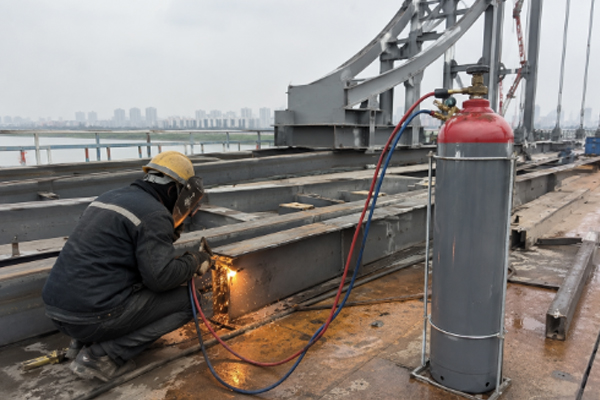
Basic Functions of Acetylene Cylinders in Bridge Steel Structure Welding
Bridge steel structure projects often involve large quantities of steel plates, structural steel sections, and large component fabrication work. From factory prefabrication to on-site hoisting and installation, many procedures require the cooperation of cutting and welding equipment. As important gas supply equipment, acetylene cylinders have become a common configuration in many bridge construction projects.
What Is an Acetylene Cylinder?
Many people are familiar with acetylene, but their understanding of the structure and function of acetylene cylinders is often limited. In bridge construction, shipbuilding, and steel structure engineering, acetylene cylinders have been used for many years and are considered highly mature industrial gas supply equipment.In industrial construction applications, an acetylene cylinder is a pressure vessel specifically designed for storing and transporting acetylene gas. The acetylene gas is typically dissolved in a special porous filler and solvent to ensure safety during transportation and use.
During operation on construction sites, acetylene gas is delivered through a pressure-reducing device to a welding torch or cutting torch. When mixed with oxygen, it produces a high-temperature flame used for steel cutting, heating, and welding assistance.In bridge steel structure construction, acetylene cylinders offer advantages such as easy mobility, stable gas supply, and adaptability to complex construction environments. Therefore, they have become one of the essential pieces of equipment for many engineering projects.
Why Is Acetylene Gas Needed in Bridge Steel Structure Construction?
Steel structures used in bridge projects are often large in size and considerable in thickness. During fabrication, multiple cutting and welding procedures are required. Without a stable heat source, not only would construction speed decrease, but processing quality could also be affected.Bridge steel structures are typically manufactured using thick steel plates, structural steel sections, and large components. During construction, materials often require cutting, bevel preparation, localized heating, and weld repair work.
Common applications include:
● Steel plate cutting and processing
● Component bevel preparation
● Preheating before welding
● Weld repair operations
● Component installation adjustment
When acetylene and oxygen are combusted together, they generate extremely high temperatures. This enables rapid steel thermal processing, improves construction efficiency, and helps ensure installation accuracy.
Advantages of Acetylene Cylinders in Bridge Projects
As bridge projects continue to increase in scale, construction companies place greater emphasis on equipment efficiency. Compared with frequently changing gas supply methods, acetylene cylinders can provide continuous and stable gas support, making them highly favored by many engineering teams.
| Comparison Item | Acetylene Cylinder Gas Supply | Other Temporary Fuel Gas Equipment |
| Mobility | High | Average |
| Gas Supply Stability | High | Affected by environment |
| Site Arrangement | Flexible | Relatively complex |
| Suitable for Large Bridge Construction | Yes | Generally |
| Maintenance Difficulty | Relatively low | Relatively high |
In bridge steel structure projects, proper use of acetylene cylinders can effectively improve cutting and welding efficiency, reduce construction waiting time, and make on-site equipment management more standardized.
Acetylene Cylinder Usage Process in Bridge Steel Structure Welding
To achieve optimal performance, every piece of equipment requires a scientific and reasonable operating procedure. Bridge projects usually have long construction periods and complex working environments. Therefore, acetylene cylinders must be managed according to established standards from site entry to formal operation.
Gas Supply Planning Before Construction
Large bridge projects involve substantial steel structure fabrication tasks, and gas consumption requirements vary at different stages. Therefore, proper planning before equipment enters the site is extremely important.Before formal construction begins, bridge projects need to develop gas supply plans based on project scale. Since the quantity of steel structures and construction schedules differ among projects, gas consumption requirements also vary.
Construction companies usually evaluate:
● Total steel structure volume
● Number of welding stations
● Number of cutting equipment units
● Construction duration
● Peak gas consumption demand
Through proper calculations, the required number of acetylene cylinders and gas supply layout can be determined. This helps prevent gas shortages during construction while reducing unnecessary procurement costs.
Acetylene Cylinder Installation and Site Layout
Bridge construction sites often experience significant environmental variations. Some projects are located in mountainous regions, while others are situated near rivers or coastal areas. Therefore, equipment placement must be arranged according to actual site conditions.Bridge construction environments can be complex, involving both ground-level work areas and elevated installation platforms. Therefore, acetylene cylinder placement must satisfy both safety and operational requirements.
| Layout Requirement | Description |
| Stable placement | Prevent tipping |
| Good ventilation | Reduce gas accumulation |
| Away from ignition sources | Lower risk |
| Sun protection measures | Prevent excessive temperatures |
| Firefighting equipment available | Improve safety protection |
After installation is completed, valves, regulators, and connecting hoses should be inspected. Equipment should only be put into service after confirming that there are no leaks.
Gas Supply Management During Construction
After equipment begins operation, continuous monitoring is still necessary. Bridge construction projects often last several months or even longer, making stable gas supply system performance extremely important.During bridge steel structure welding operations, acetylene gas must be continuously and reliably delivered to the work area.
Site management personnel should focus on:
● Cylinder pressure changes
● Pipeline connection conditions
● Welding flame stability
● Gas consumption rate
● Equipment operation records
Through standardized management practices, gas supply interruptions can be minimized, ensuring uninterrupted bridge welding operations and improving overall construction efficiency.
Technical Support Behind Acetylene Cylinders
As bridge construction technology continues to advance, gas supply equipment is also undergoing continuous improvement. Modern acetylene gas supply systems are no longer simply gas cylinders but incorporate multiple control and safety technologies.
Stable Gas Supply Technology
The quality of bridge steel structure welding is closely related to flame performance. Significant fluctuations in gas supply pressure can lead to uneven welds or reduced cutting quality.Therefore, professional pressure-reducing equipment and flow control devices are commonly used during construction to regulate gas supply conditions.
Stable gas supply can provide the following benefits:
| Item | Effect |
| Cutting Quality | Smoother |
| Flame Stability | Better |
| Weld Quality | More uniform |
| Construction Efficiency | Higher |
| Gas Utilization Rate | Improved |
A stable gas supply condition helps improve the machining accuracy of bridge steel structures while reducing material waste.
Gas Supply Technology for Elevated Construction
During bridge construction, elevated welding operations are very common. Delivering gas reliably to heights of dozens or even hundreds of meters is an important challenge for gas supply systems.Many bridge projects require elevated installation and welding work, resulting in long gas transmission distances. To ensure effective gas delivery, construction companies commonly use pressure-resistant gas pipelines and zoned gas supply systems.
This solution can:
● Reduce pressure loss
● Improve gas supply efficiency
● Facilitate site management
● Reduce transportation frequency
● Improve construction continuity
For large-scale bridge projects, this gas supply approach has been widely adopted.
Safety Protection Technology
Bridge construction sites contain numerous types of equipment, and welding, cutting, and lifting operations are often conducted simultaneously. Therefore, safety management remains a critical aspect of project management.
Gas supply systems are typically equipped with:
● Flashback arrestors
● Explosion-resistant pressure regulators
● Leak detection devices
● Emergency shut-off valves
● Pressure monitoring systems
When abnormal situations occur, these protective devices can respond promptly, reduce safety risks, and provide more reliable protection for construction sites.
Maintenance and Management Solutions for Bridge Steel Structure Projects
Stable equipment operation depends not only on product quality but also on proper maintenance and management. A comprehensive inspection system can help construction companies reduce equipment failures and improve utilization rates.
Daily Inspection Management
Bridge construction projects typically have long durations, and equipment remains in operation daily. Consistent inspections help identify and resolve potential issues before they become serious problems.Since bridge projects often last for months or longer, a comprehensive equipment inspection system should be established.
Inspection items include:
● Cylinder appearance condition
● Valve operating status
● Gas pipeline connections
● Pressure regulator performance
● Integrity of safety accessories
Continuous inspections help identify potential hazards early and prevent disruptions to normal construction activities.
Equipment Maintenance
Equipment operating over extended periods will inevitably experience wear. Without timely maintenance, gas supply efficiency may decline and equipment failures may increase.After long-term use, acetylene cylinders and supporting equipment require regular maintenance.
Maintenance tasks typically include:
● Cleaning equipment surfaces
● Inspecting seals
● Replacing aging hoses
● Calibrating pressure instruments
● Inspecting safety devices
Proper maintenance helps extend equipment service life and reduce downtime for repairs.
Personnel Training and Safety Management
All equipment requires operation by qualified personnel, and gas supply equipment used in bridge projects is no exception. Improving employee competence through training can effectively reduce human errors.Equipment management depends on professional operators. Bridge project sites should regularly conduct safety training to ensure workers understand gas supply equipment operating procedures and emergency response processes.Through ongoing training, worker safety awareness can be enhanced, operational mistakes can be reduced, and reliable protection can be provided for bridge construction projects.
Bridge steel structure projects place high demands on welding quality and construction efficiency, and a stable and reliable gas supply is one of the key conditions for ensuring smooth project execution. With advantages such as stable gas delivery, easy mobility, and strong adaptability, acetylene cylinders play an important role in bridge steel structure processing, installation, and welding operations.From steel plate cutting and component preheating to on-site welding and weld repair work, acetylene gas provides continuous and reliable heat source support for construction activities. As bridge construction projects continue to become larger and more complex, construction companies are placing increasingly higher demands on gas supply systems.
Scientifically planning acetylene cylinder configurations, standardizing on-site operating procedures, and strengthening equipment maintenance and management can effectively improve construction efficiency and project quality. At the same time, comprehensive safety management measures help reduce construction risks and create favorable conditions for successful project completion.For bridge projects requiring long-term steel structure welding operations, selecting high-quality and reliable acetylene gas supply equipment can not only improve on-site productivity but also provide continuous and dependable support throughout the entire construction process.