
In the context of continuous upgrading of agricultural machinery manufacturing and maintenance systems, welding operations are moving toward higher efficiency, lower energy consumption, and multi-scenario adaptability. Whether in structural welding on production lines or emergency repair operations in the field, there are increasingly higher requirements for heat source stability, equipment portability, and operational safety. Against this trend, propane cylinders, with their stable combustion, flexible usage, and wide applicability, are widely used in agricultural machinery welding operations, becoming an important auxiliary energy solution.
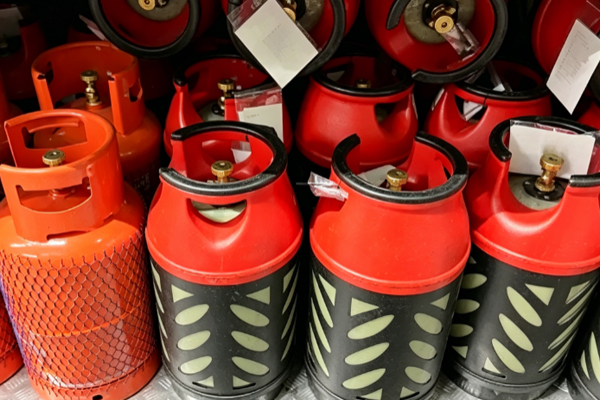
Core Value of Propane Cylinders in Agricultural Machinery Welding Systems
In agricultural machinery welding operations, propane cylinders are mainly used as a stable gas heat source for preheating, auxiliary welding heating, and local structural correction, improving welding quality while optimizing overall operational efficiency.
Providing a Stable and Controllable Welding Heat Source
Agricultural machinery structural components are usually made of high-strength metal materials. If heat input is unstable during welding, it may cause deformation or poor weld quality. Propane cylinders provide stable combustion and a relatively concentrated flame, delivering continuous and uniform heat, making them suitable for small and medium-sized welding tasks.
Common applications include:
- Local heating for agricultural machinery frame welding
- Preheating of structural connection points
- Surface dehumidification and cleaning before welding
- Post-weld slow cooling assistance
These applications effectively reduce welding deformation, improve structural consistency, and provide a more stable foundation for subsequent assembly.
Assisting Complex Structural Welding and Assembly
In agricultural machinery manufacturing, some complex components require thermal assistance before and after welding to reduce stress concentration and improve assembly accuracy. Propane cylinders play an important supporting role in this process.
Typical applications include:
- Uniform preheating of large structural components
- Heat-assisted assembly of high-strength bolts
- Pre-treatment of irregular structures before welding
- Local thermal correction and adjustment
These processes improve heat distribution uniformity, reduce assembly errors, and enhance overall structural reliability.
Typical Application Scenarios in Agricultural Machinery Welding Operations
In actual agricultural machinery manufacturing and maintenance processes, propane cylinders are not only used for standard welding procedures but also widely applied in pre-treatment, emergency repair, and various auxiliary processing scenarios.
Structural Welding and Production Line Applications
On agricultural machinery production lines, a large number of structural components require continuous welding operations. Propane cylinders are commonly used for auxiliary heating and process optimization to improve overall welding quality.
Applications include:
- Preheating of frame structures
- Uniform heating of chassis connection points
- Temperature control in welding areas
- Post-weld stress relief treatment
These measures effectively improve consistency in mass production and reduce rework caused by thermal deformation.
Agricultural Machinery Repair and Field Maintenance
In field or outdoor maintenance environments, propane cylinders are widely used for on-site welding and emergency repair due to their independent energy supply and portability advantages.
Applications include:
- Welding repair of fractured agricultural machinery parts
- Repair welding of agricultural tool components
- Temporary structural reinforcement
- Rapid on-site heating for disassembly
These applications significantly improve maintenance efficiency and reduce equipment downtime.
Metal Processing and Auxiliary Technological Applications
In agricultural machinery manufacturing, propane cylinders are also used in various metal processing auxiliary operations, improving overall processing flexibility.
In practice, propane is not only a heating source for welding but also a flexible process adjustment tool. For example, it helps improve material formability in low-temperature environments and reduces internal stress before precision assembly, significantly enhancing final welding quality and structural stability.
Applications include:
- Preheating and bending of metal sheets
- Heat treatment of rusted components
- Dimensional correction of parts
- Welding assistance in low-temperature environments
These processes improve material machinability and ensure more stable welding performance.
Process Advantages of Propane Cylinders in Agricultural Machinery Welding
Introducing propane cylinders into agricultural machinery welding systems not only improves operational flexibility but also optimizes overall process structure, making production and maintenance more efficient.
Their main advantages include stable combustion providing continuous and uniform heat, strong portability suitable for both workshop and field environments, and wide compatibility with various welding processes. In practice, propane cylinders are often used together with electric welding and gas-shielded welding equipment to achieve multi-process collaborative welding, improving both efficiency and quality stability.
Safety Management and Standard Operating Requirements
Since propane is a flammable gas, strict safety standards must be followed in agricultural machinery welding operations to ensure the safety of personnel and equipment. Safety management is not only a basic requirement but also a key factor in maintaining production continuity and operational efficiency.
| Management Area | Key Requirements | Purpose |
| Working Environment | Good ventilation, no ignition sources | Reduce explosion risk |
| Equipment Inspection | Seal and pipeline integrity checks | Prevent leakage |
| Operating Procedures | Standard ignition process | Avoid misuse |
| Safety Configuration | Pressure regulators and flashback arrestors | Improve system stability |
| Storage Management | Cool, ventilated, away from heat sources | Prevent hazards |
| Transportation Requirements | Shock-proof secured transport | Reduce transport risks |
Proper ventilation and keeping away from ignition sources reduce explosion risks. Equipment must be inspected before use to ensure no leakage. Operators should wear protective equipment to prevent accidents, and pressure regulators and flashback arrestors must be installed to enhance system safety.
Work Environment Safety Management
- Maintain good ventilation in the working area
- Prohibit open flame crossover operations
- Keep away from high temperature and flammable materials
These measures effectively reduce environmental risks and ensure basic operational safety.
Equipment Inspection and Operation Management
- Check valve and pipeline sealing integrity
- Install standard pressure regulators
- Equip flashback arrestors
This reduces equipment failure and leakage risks while improving operational stability.
Operational and Personnel Safety Management
- Operators must be certified
- Inspect equipment before operation
- Wear proper protective equipment
Standardized procedures significantly reduce human operational risks.
Storage and Transportation Safety Management
- Avoid high temperatures and strong impacts
- Keep away from ignition sources
- Store in cool and ventilated environments
- Conduct regular safety inspections
Proper storage and transport practices extend equipment lifespan and reduce accident risks.
As agricultural machinery manufacturing and maintenance technologies continue to develop, the application value of propane cylinders in welding operations continues to increase. They not only enhance process flexibility but also improve on-site efficiency and overall safety, providing a reliable energy solution for the agricultural machinery industry. Zhongcheng Gas Cylinde specializes in providing high-quality gas solutions for agricultural machinery welding and industrial applications.