
Large steel structure installation projects are typically characterized by long construction periods, extensive welding work, complex jobsite environments, and dispersed work areas. Whether for industrial plant construction, bridge installation, stadium projects, or large warehouse facilities, a stable and safe fuel gas supply directly affects construction efficiency and overall project quality. Thanks to their stable combustion, high heating value, adaptability to outdoor environments, and convenient transportation, propane cylinders have become one of the most commonly used industrial gas solutions in steel structure installation.
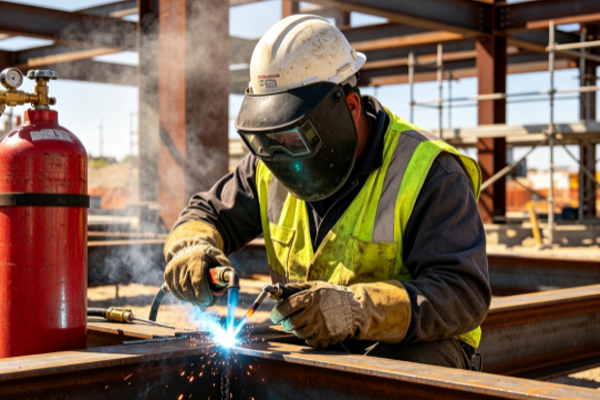
During construction, propane can be used together with oxygen for steel preheating, flame cutting, localized heating, and other thermal processing tasks. It also supports mobile operations without the limitations of fixed gas pipelines. By properly planning the number of cylinders, gas supply methods, and on-site management according to the project scale, contractors can effectively reduce downtime caused by gas replacement, improve overall construction efficiency, and simplify site management.
Why Choose Propane Cylinders for Large Steel Structure Installation?
Throughout steel structure construction, different stages require flame heating, cutting, and material adjustment, all of which depend on a stable and safe gas supply. Because propane cylinders are easy to transport and convenient to use, they are increasingly adopted by construction companies.
Meet the Requirements of Mobile Operations on Large Construction Sites
Large steel structure installation sites often cover wide areas where tower cranes, mobile cranes, welding platforms, and installation zones frequently change locations. Using fixed gas pipelines not only increases installation costs but also requires repeated pipeline adjustments as construction progresses. Propane cylinders can be relocated whenever the work area changes. Workers only need a pressure regulator, gas hose, and cutting torch to begin operation quickly. They are suitable for elevated installations, ground-level fabrication, and component adjustments in different construction areas. This flexible gas supply method significantly reduces equipment relocation time.
Suitable for Steel Cutting and Localized Heating
Steel structure installation frequently involves steel plate cutting, structural steel modification, weld preheating, and localized straightening. Propane produces a stable flame, and when used with oxygen, it satisfies the thermal processing requirements for most steel fabrication applications.
| Application Process | Function of Propane | Result |
| Steel plate cutting | Provides preheating flame | Smoother cutting edges |
| Structural steel adjustment | Localized heating | Easier dimensional adjustment |
| Weld preheating | Uniform temperature increase | Improved welding quality |
| Steel structure straightening | Flame heating | Corrects component deformation |
Proper use of propane not only improves construction efficiency but also reduces rework.
Suitable for Long-Term Continuous Construction
Large steel structure projects often last several months or even longer, involving extensive cutting and welding every day. Contractors typically rotate multiple propane cylinders in service while maintaining backup cylinder storage areas to ensure continuous gas supply throughout the project. This arrangement minimizes interruptions caused by cylinder replacement, keeps construction progressing smoothly, and simplifies overall site management.
Implementation Process of Propane Cylinders in Large Steel Structure Installation
Large steel structure projects usually continue for extended periods, and gas demand changes throughout different construction phases. Without proper planning of the gas supply process, even high-quality propane cylinders may fail to support construction efficiently due to poor logistics or delayed allocation. Therefore, before construction begins, contractors generally evaluate the project scale, workforce, daily workload, and site conditions to develop an overall plan covering cylinder allocation, transportation routes, storage areas, and usage schedules. This approach ensures continuous and stable gas supply while enabling site managers to monitor cylinder usage, reduce unnecessary transportation, minimize waiting time, and maintain orderly construction operations.
Configure the Number of Cylinders Based on Project Scale
Different large steel structure projects consume propane at different rates. Projects such as industrial plants, bridge construction, stadiums, and high-rise steel buildings all require varying amounts of cutting, preheating, and straightening work each day. Therefore, contractors should estimate the required number of propane cylinders according to actual project conditions before construction begins.
Construction teams generally calculate the expected daily gas consumption based on engineering drawings and construction schedules, estimate the number of cutting and heating equipment operating simultaneously, and determine both the required working cylinders and backup inventory. Proper planning prevents construction delays caused by insufficient gas supply while avoiding unnecessary inventory costs.Many projects organize pre-construction meetings to confirm gas usage plans and assign dedicated personnel to manage propane cylinders. As construction progresses, cylinder allocation is adjusted according to actual daily consumption, making the gas supply plan better suited to on-site requirements.
Items commonly evaluated in advance include:
● Estimated daily operating hours
● Number of cutting equipment operating simultaneously
● Daily propane consumption
● Quantity of backup cylinders
In addition to these basic factors, experienced construction teams also consider weather conditions, project schedules, and workforce allocation. During accelerated construction periods, propane consumption usually increases significantly, so additional backup cylinders are prepared to prevent gas shortages from disrupting project progress. Thorough preparation reduces downtime caused by cylinder replacement and allows workers to focus on construction more efficiently.
Establish Dedicated Gas Supply Areas on Site
Large steel structure construction sites contain numerous types of equipment. If propane cylinders are placed randomly throughout the site, transportation becomes inefficient and overall management becomes more difficult. Therefore, many contractors designate dedicated cylinder management areas where cylinders are organized according to their status, making daily inspection and allocation much easier.
Standard gas supply areas are generally located in well-ventilated locations away from open flames and high-temperature equipment, while providing sufficient access for forklifts and transportation equipment. Workers can quickly locate the required cylinders, improving operational efficiency. Many large projects also install clear identification signs and implement registration systems to record daily cylinder issuance, return, and replacement, making site management more standardized.
| Area | Function |
| Full Cylinder Area | Stores cylinders ready for use |
| Operating Area | Cylinders currently supplying gas |
| Empty Cylinder Area | Cylinders awaiting refilling |
| Inspection Area | Valve and accessory inspection |
Besides dividing the storage areas, construction sites also keep each area clean and organized to facilitate transportation and inspection. For larger projects, multiple temporary gas supply stations may be established near different work zones, reducing cylinder transportation distances and improving construction efficiency. This standardized management approach enhances both daily operations and overall project organization.
Arrange Gas Supply According to the Construction Schedule
Steel structure installation follows a highly organized workflow, with each construction stage closely connected to the next. For example, once structural components are lifted into place, positioning welds, localized cutting, or dimensional adjustments often need to begin immediately. If gas supply is not prepared in advance, both equipment and workers may be forced to wait, delaying subsequent construction activities.To avoid such interruptions, contractors usually prepare the following day’s gas requirements one day in advance, distribute the necessary propane cylinders to each work area ahead of schedule, and assign personnel to verify their availability. As a result, workers can begin operations immediately when construction starts.
During construction, managers continuously adjust cylinder allocation based on actual daily gas consumption. If one work area consumes propane faster than expected, additional backup cylinders are delivered promptly. Conversely, if another area uses less gas than planned, the remaining cylinders can be transferred to locations with higher demand, improving overall resource utilization.Many large steel structure projects also maintain daily gas supply records documenting cylinder usage, replacement times, and inventory levels. These long-term records help companies optimize gas supply planning for future projects, resulting in more scientific cylinder allocation while reducing work stoppages caused by inadequate preparation.
Key Considerations During Construction
Large steel structure installation sites present complex working environments. In addition to ensuring a stable propane supply, careful management throughout construction is equally important. Proper site management not only improves construction efficiency but also extends equipment service life and reduces unnecessary losses.
Proper Transportation and Storage of Propane Cylinders
Construction sites transport steel materials, machinery, tools, and other supplies every day. As essential gas supply equipment, propane cylinders should also be transported using proper procedures. During handling, dedicated transportation equipment should be used whenever possible. Cylinders should never be rolled, thrown, or subjected to severe impact, as doing so may damage valves or the cylinder body. During vehicle transportation, cylinders should also be securely fastened to prevent movement caused by road vibration.
After arriving at the construction site, propane cylinders should be placed on flat, well-ventilated ground and kept upright with appropriate support to prevent tipping. They should remain away from open flames, high-temperature equipment, and spark-generating work areas to minimize environmental risks. As construction progresses and work zones shift, site managers should relocate cylinders accordingly while maintaining safe distances and minimizing transportation distances for workers to improve operational efficiency.
Regular Inspection of Connections and Accessories
Before propane cylinders are put into service, not only should the cylinder itself be inspected, but pressure regulators, hoses, valves, and all connecting accessories should also be carefully checked to ensure proper condition. During long-term use, hoses may deteriorate or crack, fittings may loosen, and valves may experience wear from frequent operation. Ignoring these issues can reduce gas supply stability and even interrupt construction work.
Many large construction projects assign dedicated personnel to perform daily inspections while maintaining inspection records. Inspection items generally include connection tightness, accessory condition, and leak detection. Only after confirming that everything is functioning normally are the cylinders approved for use. Accessories that have been used for extended periods are typically replaced according to scheduled maintenance plans instead of waiting until failures occur. Although systematic inspections require additional preparation time, they significantly reduce equipment failures and unnecessary repair work while supporting uninterrupted construction.
Maintain Adequate Backup Cylinders
Large steel structure projects often require continuous construction. Any interruption in gas supply may delay not only the current operation but also subsequent construction schedules. Therefore, maintaining sufficient backup propane cylinders has become an essential management practice for many contractors.The number of backup cylinders is generally determined according to expected daily gas consumption and refill transportation cycles. If the construction site is located far from a cylinder filling station, additional backup inventory is usually maintained to ensure uninterrupted gas availability throughout the project.To simplify management, many projects establish centralized inventory systems where each cylinder receives a unique identification number and records are maintained for filling dates, usage frequency, and inventory status.
| Management Item | Recommended Practice |
| Daily Inventory | Maintain sufficient backup stock |
| Replacement Schedule | Rotate cylinders in advance |
| Cylinder Identification | Use numbered tracking system |
| Usage Records | Maintain detailed inventory logs |
Backup cylinders should also be inspected regularly to prevent accessory deterioration caused by long-term storage. Well-planned inventory management not only improves supply continuity but also reduces emergency purchasing and transportation costs, allowing construction to proceed smoothly. With a reliable backup system, contractors can respond quickly to peak construction periods or unexpected situations while keeping large steel structure installation projects on schedule.
Suitable for Various Large Steel Structure Projects
Propane cylinders are widely used in numerous steel structure construction applications, including:
- Industrial plant steel structure installation
- Large warehouse and logistics center construction
- High-rise steel building construction
- Bridge steel structure installation
- Stadium steel structure projects
- Petrochemical steel structure projects
- Power engineering steel structure construction
- Port and dock steel structure installation
Frequently Asked Questions
Are propane cylinders suitable for long-term use in large steel structure installation?
Yes. As long as the number of propane cylinders is properly planned according to the project size and transportation, storage, inspection, and rotation procedures are well managed, propane cylinders can fully support the long-term continuous gas supply requirements of large steel structure installation projects. This gas supply method is widely used in industrial plants, bridge construction, steel warehouses, stadiums, and many other large engineering projects. Contractors can also develop replenishment schedules based on daily gas consumption to maintain a stable on-site gas supply, improve construction continuity, and reduce downtime caused by fuel shortages.
Choose a Reliable Industrial Gas Cylinder Supplier
Large steel structure installation requires not only high-performance propane cylinders but also dependable product supply and comprehensive service support. Zhongcheng Cylinder Co., Ltd. specializes in the manufacturing and supply of industrial gas cylinders and related accessories. Its products are widely used in welding, cutting, metal fabrication, gas transmission, industrial storage, and various industrial gas supply applications. The company provides overseas customers with product selection recommendations, OEM customization, quality inspection, export packaging, and shipping coordination services, helping clients choose the most suitable industrial gas cylinder solutions for their projects. If you have inquiries regarding product specifications, export cooperation, or custom manufacturing requirements, please feel free to contact us. We are committed to providing professional and efficient service and support.