
The five-metal processing industry involves a wide range of processes such as cutting, welding, heating, and repair, all of which place high demands on the stability, continuity, and safety of heat source equipment. As a common industrial gas supply device, the acetylene tank plays a key role in delivering high-temperature flame output at metal processing sites. Whether the selection is appropriate often directly affects processing efficiency, product quality, and on-site management. Faced with different workshop sizes, varying production rhythms, and mobile operation needs, establishing an acetylene tank selection solution suitable for five-metal processing scenarios has become an important step in improving production capacity.
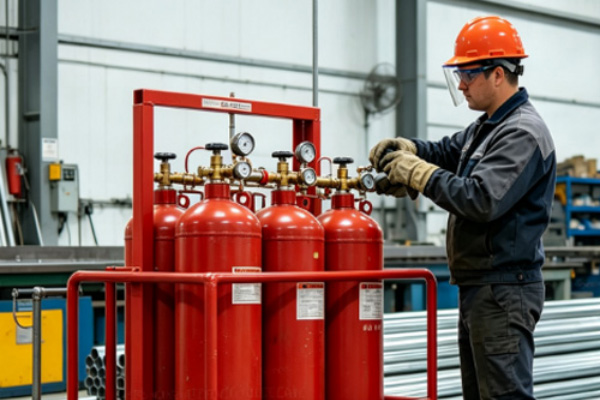
Why Five-Metal Processing Cannot Do Without Acetylene Tanks
Five-metal processing has a strong dependence on thermal energy, especially in thick plate handling, localized heating, and welding repair, where the role of acetylene tanks becomes even more prominent.
High-Temperature Cutting Demand Exists for a Long Time
Steel, alloy parts, and structural components often require stable high-temperature flame support during processing, and acetylene tanks can provide a continuous and highly concentrated heat source for cutting equipment, helping workpieces enter a machinable state more quickly.
- Thick plate cutting relies more on flame concentration; the more stable the flame, the neater the cut, and the less subsequent grinding and trimming work is required.
- Localized heating affects forming accuracy; if heat distribution is uneven, deviations are likely to occur during bending, correction, and splicing.
- Welding quality is closely related to heat source stability; stable gas supply allows weld seams to be more continuous and reduces the probability of rework.
Properly configured acetylene tanks help five-metal processing achieve a better balance among efficiency, precision, and safety.
Multi-Process Parallel Operation Is the Norm
The same workshop often has multiple types of operations running at the same time, so gas supply equipment must have strong adaptability to maintain stable output across different processes.
- When welding and cutting are performed alternately, the equipment needs to respond quickly to different flame demands to avoid frequent adjustments that affect production rhythm.
- When there are many temporary maintenance tasks, the mobility and deployment efficiency of the acetylene tank become especially important, helping the site resume work quickly.
- Small-part processing changes pace quickly; if the gas supply system is not flexible enough, waiting time increases and workstation utilization drops.
In such an environment, the acetylene gas supply system is more likely to deliver stable advantages and better suits the diversified needs of the five-metal processing industry.
What Core Indicators Should Be Considered in Acetylene Tank Selection
Selection should not be based on capacity alone. It must be judged comprehensively by combining usage scenarios, pressure output, and safety configuration. Only by considering these factors together can a truly suitable workshop solution be chosen.
Whether Capacity Matches Usage Duration
Different production rhythms correspond to different specifications. Capacity selection should align with actual consumption to avoid insufficient gas supply or overconfiguration.
- Small repairs are suitable for lightweight cylinders, which are easier to carry temporarily and better suited to short-term use and decentralized work environments.
- Conventional workshops are suitable for medium-sized configurations, which can meet daily processing needs without creating too much pressure in terms of space occupation and management difficulty.
- Continuous operation scenarios may consider large-capacity solutions, reducing downtime caused by frequent replacement and improving overall production continuity.
A reasonable capacity match is often the first step in improving five-metal processing efficiency.
Whether Pressure Output Is Stable
Pressure stability directly affects flame quality and processing results. Especially in precision cutting and welding scenarios, output fluctuations can magnify process errors. Unstable pressure can cause burrs and unevenness at the cutting edge, and it can also affect the consistency of weld formation. Different equipment also needs to match the corresponding pressure-reducing system. Only when the parameters are coordinated can the entire gas supply system maintain good operating conditions. In five-metal processing acetylene tank selection, pressure stability remains one of the key indicators determining equipment performance.
Whether the Safety Structure Is Complete
Acetylene is a high-risk gas, so safety components cannot be omitted. Any lapse in any link may affect the safety of the entire system.
- Whether the backfire protection device is complete directly determines whether flame can flow back into the pipeline. It is a very critical protective link in an acetylene system.
- Whether the valve sealing performance meets the standard affects whether there is a gas leakage risk. Poor sealing not only wastes gas but also increases hidden dangers.
- Whether the pipeline connections are standardized determines whether the system remains stable and reliable during long-term use. Standardized connections also make later maintenance easier.
Only by implementing every safety detail can the acetylene system maintain stable operation in five-metal processing and industrial work.
Application Comparison of Different Acetylene Tank Specifications
Five-metal processing scenarios vary greatly, and different acetylene tank specifications are suited to different directions. A careful comparison before selection often makes it easier to find a solution that matches the production rhythm.
| Specification Type | Applicable Scenario | Advantages | Limitations |
| Small Acetylene Tank | Repair and mobile operations | Flexible and lightweight | Short gas supply duration |
| Medium Acetylene Tank | Conventional workshop processing | Balanced and stable | Requires regular replacement |
| Large Acetylene Tank | Continuous production lines | Long-lasting gas supply | Lower mobility |
| Integrated Gas Supply System | Industrial-grade factories | Stable and efficient | Higher initial configuration cost |
Small and Medium Sizes Are More Suitable for Flexible Scenarios
In five-metal processing sites, the flexibility of acetylene equipment directly affects operational efficiency, especially in environments with frequent workstation changes and rapid task switching.
- Suitable for temporary repairs, allowing quick deployment when equipment failures or localized processing needs arise.
- Easy to move and deploy, enabling operators to adjust positions flexibly according to site conditions and reducing waiting and handling costs.
- Better suited for multi-workstation switching, allowing quick transfer between different processes and improving equipment utilization.
This type of configuration better meets changing production needs and is more suitable for daily use by small and medium-sized five-metal processing enterprises.
Large and Integrated Systems Are More Suitable for Continuous Production
Large acetylene tanks perform more prominently in continuous production scenarios, especially in factories with high requirements for gas supply stability and operational continuity.
- Gas supply is more durable, reducing interruptions caused by mid-process replacement and keeping the production line running at a more stable pace.
- Suitable for fixed production lines, where system layout is easier to plan uniformly and centralized management and maintenance are more convenient.
- Helps with unified management, allowing enterprises to improve safety control and equipment scheduling efficiency through standardized processes.
This is more suitable for five-metal processing enterprises with higher stability requirements and for large-scale production environments.
Common Selection Mistakes Should Be Avoided
In actual selection, many enterprises tend to focus on capacity while ignoring more critical safety and adaptability issues. These mistakes often become apparent during later use.
- Focusing only on capacity while ignoring safety configuration can make the equipment appear sufficient on the surface while still posing significant risks in actual operation.
- Ignoring workshop space and process differences can lead to poor equipment placement, inconvenient operation, and even reduced overall work efficiency.
- Mixing different models causes system instability; when interfaces, pressure, and accessory standards are inconsistent, system operation becomes more complicated.
These mistakes may seem minor, but they directly affect the performance of the acetylene tank and workshop safety.
How to Configure a More Reasonable Five-Metal Processing Acetylene Tank Solution
A truly effective solution is not simply choosing a gas cylinder, but designing the overall configuration around the process, space, and frequency of use so that the equipment truly serves production needs.
Graded Configuration by Process Type
Different processes have different gas supply requirements, so the configuration method should also differ. Cutting processes place more emphasis on stable output; the more concentrated and continuous the flame, the easier it is to maintain cutting efficiency and cut quality. Welding processes emphasize flame precision more, and stable gas supply helps weld seams form more evenly while making it easier to control the heat-affected zone. Heating processes require continuous energy supply, especially during correction, bending, and pre-assembly treatment, where sustained heat better ensures process results. Reasonable graded configuration allows acetylene tanks to deliver higher efficiency in different processes and also reduces resource waste.
Zoning Configuration by Workshop Structure
Different workshop layouts require different gas supply system organization methods. Only when matched to the site structure can the equipment truly function effectively.
- Multi-workstation setups are suitable for distributed gas supply, which reduces waiting time at a single point and allows multiple workstations to maintain higher operational efficiency simultaneously.
- Single-line production is suitable for centralized gas supply, making unified scheduling and centralized maintenance easier and helping form standardized management processes.
- Mobile processing is suitable for lightweight solutions, making equipment easier to carry and deploy temporarily, and allowing it to adapt to fast-changing work environments.
Properly matching layout and gas supply mode helps improve the operational efficiency of the five-metal processing site and makes management clearer.
Optimizing Structure by Usage Frequency
Optimizing the structure according to usage frequency allows the acetylene tank configuration to better match the actual production rhythm and avoids equipment idleness or excessive load. Different usage intensities require different configuration priorities.
- High-frequency use strengthens the safety structure, focusing on protective devices, sealing performance, and stable output to ensure reliable long-term operation.
- Medium-frequency use emphasizes flexible switching, balancing gas supply stability with the convenience of equipment mobility and workstation adjustment.
- Low-frequency use controls cost investment, minimizing unnecessary configuration waste while still meeting basic needs.
This configuration not only better fits site requirements but also helps improve overall operating efficiency.
The key to acetylene tank selection is not pursuing the largest specification, but finding a gas supply method that matches the five-metal processing scenario. A reasonable configuration can improve cutting and welding efficiency, reduce gas waste, lower maintenance pressure, and make on-site management more standardized. Zhongcheng Gas Tank provides professional industrial acetylene tanks and gas supply system solutions, creating a more stable and efficient energy support system for five-metal processing enterprises.