
Agricultural machinery often operates in fields, roads, and complex environments, making equipment failures and component damage relatively common. For agricultural machinery repair stations, completing repairs quickly and reducing equipment downtime are important factors for improving service efficiency. During actual maintenance work, metal cutting, welding, and heating processes often require a stable gas supply. Acetylene gas cylinders have become a commonly used solution for many agricultural machinery repair stations due to their high flame temperature and wide range of applications. Proper acetylene gas cylinder configuration can not only meet the repair needs of tractors, harvesters, seeders, and other agricultural machinery but also help maintenance technicians improve efficiency and make daily repair work more convenient.
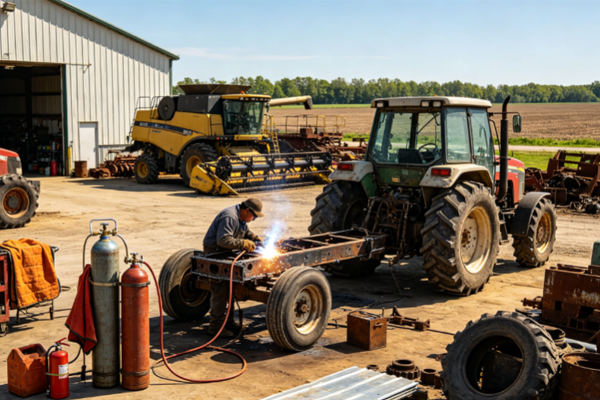
Why Agricultural Machinery Repair Stations Need Proper Acetylene Gas Cylinder Configuration?
With the continuous development of agricultural machinery, modern equipment has become more complex, and repair work has expanded from simple part replacement to include welding, cutting, adjustment, and component processing. Many agricultural machinery repair stations handle not only routine maintenance but also emergency repairs and field service tasks. If gas equipment is insufficient, repair progress may be affected and customer waiting times may increase.
For agricultural machinery repair stations, acetylene gas cylinders are not just welding accessories but also important tools for improving repair capabilities. By planning the configuration according to repair workload, equipment types, and working environments, repair stations can respond more efficiently to different agricultural machinery maintenance needs.
Meeting Welding and Cutting Requirements in Agricultural Machinery Repair
Many agricultural machinery components are made from metal structures, including frames, support parts, and connecting components. During long-term operation, these parts may experience deformation, cracks, or wear and require welding and cutting for repair.
- Supporting metal component cutting processes
- Assisting damaged part welding repairs
- Meeting equipment modification and processing needs
Proper acetylene gas cylinder configuration allows repair stations to develop stronger processing capabilities. Whether repairing small components or handling larger equipment structures, technicians can complete tasks more efficiently and improve overall service quality.
Improving Field Service Capabilities of Agricultural Machinery Repair Stations
When agricultural machinery breaks down during farming seasons, transporting equipment back to a repair station is not always practical. For example, during harvesting or planting periods, equipment downtime can directly affect agricultural operations. Repair technicians often need to bring equipment to the site and solve problems immediately.
- Supporting field repair operations
- Enabling mobile welding work
- Reducing equipment waiting time
- Improving emergency repair efficiency
Flexible acetylene gas cylinder configuration helps repair stations expand their service capabilities, allowing technicians to handle not only workshop repairs but also on-site agricultural machinery maintenance.
Planning Equipment Quantity Based on Repair Scale
Different agricultural machinery repair stations have different equipment requirements. Small repair shops mainly handle routine maintenance, while larger service centers may deal with multiple repair tasks at the same time.
- Small repair stations focus on equipment flexibility
- Medium-sized stations require continuous operation capability
- Large repair centers focus on overall gas supply capacity
Proper equipment planning helps avoid unnecessary investment or gas shortages during repairs, allowing acetylene gas cylinders to provide better support.
Factors to Consider When Configuring Acetylene Gas Cylinders for Agricultural Machinery Repair Stations
When selecting an acetylene gas cylinder configuration solution, agricultural machinery repair stations should not only consider equipment price but also evaluate repair volume, service range, and working environment. Different repair stations handle different types of agricultural machinery. Some mainly repair tractors, while others focus on harvesters, sprayers, and other large agricultural equipment. Actual repair tasks directly affect gas equipment requirements.
A suitable acetylene gas cylinder configuration solution should balance repair efficiency, equipment management, and long-term operating costs, providing reliable gas support whenever technicians face different agricultural machinery repair challenges.
Choose Configuration Based on Common Repair Tasks
The daily workload of agricultural machinery repair stations varies. Understanding the main repair tasks can help operators select a more suitable equipment combination.
- Daily component repair focuses on convenience
- Large equipment repair requires continuous supply
- Field repairs require mobility
Choosing acetylene gas cylinders according to actual repair tasks can reduce unnecessary investment while meeting different agricultural machinery maintenance requirements.
Acetylene Gas Cylinder Configuration Reference for Different Repair Scenarios
During daily operations, agricultural machinery repair stations often face different repair environments. Besides fixed workshop welding, they may also need to handle field repairs, equipment modifications, and seasonal repair peaks. Maintenance technicians usually care about whether equipment is sufficient, easy to manage, and capable of solving urgent problems quickly. The following table summarizes common repair scenarios to help users better understand the practical value of acetylene gas cylinders in agricultural machinery maintenance.
| Repair Scenario | Common Repair Tasks | Main Concerns of Repair Stations | Value of Acetylene Gas Cylinder Configuration |
| Daily agricultural machinery maintenance | Component repair and basic welding | Whether operation is convenient | Meets basic repair requirements |
| Harvest season repair peak | Large component repair | Whether continuous operation is supported | Improves repair response speed |
| Field emergency repair | Temporary welding and maintenance | Whether equipment is portable | Enhances mobile repair capability |
| Agricultural machinery modification | Structural adjustment and component processing | Whether applications are versatile | Supports various processing tasks |
By understanding different repair scenarios, agricultural machinery repair stations can select suitable acetylene gas cylinder configurations, improve equipment utilization, and provide more reliable repair services.
Focus on Equipment Storage and Daily Management
Acetylene gas cylinders are long-term-use equipment, and proper management directly affects working efficiency. Repair stations should establish appropriate equipment management methods to ensure normal repair operations.
- Organizing equipment storage properly
- Checking equipment conditions regularly
- Preparing backup equipment when needed
Good management practices help repair stations maintain stable workflows and handle busy repair periods more effectively.
How to Improve Acetylene Gas Cylinder Efficiency in Agricultural Machinery Repair Stations?
After completing acetylene gas cylinder configuration, improving daily usage efficiency is equally important. Agricultural machinery repair work often has seasonal peaks and unexpected maintenance demands. Repair stations need to prepare equipment in advance to ensure fast response when urgent repairs occur. Through proper operation, regular maintenance, and efficient management, acetylene gas cylinders can better support agricultural machinery repair operations.
Prepare Repair Equipment in Advance
Before entering busy repair seasons, repair stations can inspect related equipment in advance to avoid problems that affect work progress.
- Check equipment connections
- Confirm that necessary tools are available
- Arrange repair tasks properly
Early preparation helps technicians start work faster and improve agricultural machinery repair efficiency.
Arrange Equipment Usage According to Repair Tasks
Different agricultural machinery repairs require different processing methods. Proper scheduling can improve overall work efficiency.
- Separate routine maintenance from major repairs
- Plan equipment usage order
- Reduce unnecessary waiting time
Scientific scheduling allows acetylene gas cylinders to provide greater value and helps repair stations improve service capabilities.
Maintain Long-Term Equipment Management
During long-term use, acetylene gas cylinders require attention to equipment condition and maintenance. Proper maintenance helps maintain performance and reduce unexpected issues during repair operations.
- Inspect equipment regularly
- Keep maintenance records
- Handle abnormal situations promptly
Good maintenance habits can extend equipment service life and provide more stable support for agricultural machinery repair stations.
As agricultural machinery maintenance continues to demand higher efficiency and faster response, proper acetylene gas cylinder configuration can help repair stations improve welding, cutting, and metal processing capabilities. Whether working in a fixed repair workshop or handling agricultural machinery breakdowns in the field, a gas supply solution that matches actual needs allows technicians to complete repair tasks faster and more efficiently, providing reliable support for the continued operation of agricultural machinery.