
During auto repair, body panels, exhaust pipes, metal brackets, and other components often require welding, heating, or cutting. For an auto repair shop, an acetylene cylinder is more than just a gas supply device. It also affects the continuity of welding work and how easily technicians can operate around the repair bay. During busy periods, running out of gas or having to move a cylinder around can interrupt the job and throw off the technician’s workflow. In automotive repair applications, an acetylene cylinder solution needs to provide a stable gas supply while also fitting the equipment and working conditions on site.
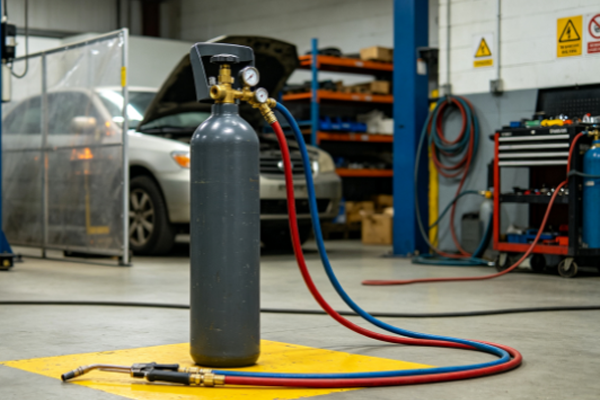
Why Do Auto Repair Shops Need an Acetylene Cylinder Welding Solution?
Metalwork in auto repair is often varied and task-specific. Different vehicles and repair problems can require different welding or heating operations. A large automotive repair facility may handle bodywork, exhaust repairs, and chassis components every day, while a smaller workshop may only use acetylene occasionally. The right acetylene cylinder solution should match these different usage patterns while taking welding equipment, working hours, and repair-bay conditions into account.
Which Auto Repair Jobs Use Acetylene Cylinders?
Acetylene is suitable for repair work that requires a high-temperature flame. Common automotive applications include:
- Auto body repair: Localized heating and metal shaping require a stable flame.
- Exhaust system repair: Removing or repairing rusty, damaged, or deformed metal components may involve heating and welding.
- Chassis and metal bracket repair: Certain metal parts may require welding, repair, or localized heating.
- Older vehicle repair: Heating can help loosen severely rusted bolts and make difficult removal work easier.
These jobs may look small, but when several repairs are handled continuously, a stable gas supply becomes important. Without a properly planned cylinder setup, an unexpected cylinder change can easily slow down an entire repair bay.
What Do Auto Repair Shops Care About Most When Choosing an Acetylene Cylinder?
| Auto Repair Application | Common Work | Main User Concern | Practical Configuration |
| Body repair | Heating, shaping, welding | Flame stability | Match the equipment’s gas demand |
| Exhaust repair | Heating, cutting, welding | Continuous working time | Keep an appropriate backup supply |
| Chassis repair | Heating, metal repair | Easy handling | Place cylinders conveniently near the work area |
| Small repair shop | Occasional repairs | Space and usage frequency | Use a flexible cylinder setup |
| Full-service repair shop | Multiple work bays | Continuous gas supply | Manage primary and backup cylinders separately |
How Do You Choose an Acetylene Cylinder for Auto Repair? Equipment Matching Matters
When choosing an acetylene cylinder for an auto repair shop, capacity should not be the only consideration. Actual use also depends on the welding torch, regulator, connection components, and daily working hours. A small repair shop with limited gas consumption may find oversized equipment harder to handle, while a busy workshop with insufficient gas supply may have to replace cylinders too frequently. Automotive repair applications are better served by a gas supply setup based on real working conditions.
What Usage Conditions Should Be Considered?
Before deciding on the cylinder configuration, the shop can keep a simple record of daily welding, heating, and cutting time. Repair facilities with long periods of continuous work may want to prepare backup cylinders in advance. Shops with lower usage can focus more on storage space and ease of access.
What Should You Check About the Connections?
The acetylene cylinder should be properly matched with the appropriate regulator, gas delivery system, and welding equipment. Connection components should not be replaced with unsuitable alternatives. The condition of the connections should also be checked regularly. After changing a cylinder, confirm that the connection is secure before continuing with the repair.
Why Isn’t “Bigger Capacity Is Always Better” a Good Rule?
A larger cylinder does not automatically make a repair shop easier to operate. Automotive repair bays can be relatively tight, and an oversized cylinder may interfere with vehicle movement, tool storage, or technician access. A practical setup should balance gas supply time, equipment requirements, and available workshop space.
How Should Acetylene Cylinders Be Arranged During Auto Repair Welding?
Auto repair shops are different from many industrial workshops because vehicles, tools, spare parts, and technicians are constantly moving around. If a cylinder is placed along a vehicle route or too close to a welding station, it can be exposed to accidental impacts. A properly arranged cylinder storage area makes the equipment easier to access while reducing unnecessary management problems.
Where Should Acetylene Cylinders Be Placed?
Cylinders should be stored in a well-ventilated, dry, and stable location, away from obvious heat sources and areas where sparks may be generated. The storage position should not block fire exits, vehicle routes, or main workshop entrances. For smaller auto repair shops, choosing a fixed storage location is especially useful.
What Can Be Checked Before and After Welding?
Automotive technicians are usually busy, so daily checks do not need to become complicated. A few consistent habits are enough:
- Check the cylinder and connection points for obvious abnormalities before use.
- Confirm that the welding equipment, regulator, and related connection components are in proper condition.
- After welding, shut down the relevant equipment and return the cylinder to its designated position.
- If an unusual odor, damaged component, or connection problem is found, do not continue using the equipment until it has been checked.
These simple steps take very little time but can make cylinder management much clearer. In workshops where several technicians share the same equipment, a consistent routine is much easier to manage than handling problems as they arise.
How Can Auto Repair Shops Manage Acetylene Cylinders Daily?
Acetylene cylinders may be used at very different frequencies depending on the type of repair shop. A workshop that performs welding every day can assign a specific person to handle routine checks, while a shop that only uses acetylene occasionally can carry out a basic inspection before each use. When not in use, cylinders should not be left among tools, parts, or next to vehicles. A fixed storage location keeps the repair area cleaner and easier to manage.
What Information Should an Auto Repair Shop Record?
| Management Item | Suggested Record | Practical Purpose |
| Usage date | Date of each use | Track usage frequency |
| Job type | Bodywork, exhaust repair, bracket repair, etc. | Identify common gas applications |
| Working time | Approximate operating hours | Monitor gas consumption |
| Cylinder changes | Replacement dates and frequency | Estimate backup supply needs |
| Equipment condition | Condition after use | Make follow-up checks easier |
When Is a Backup Acetylene Cylinder Useful?
If an auto repair shop regularly performs welding or heating work, having a backup gas supply can reduce work interruptions. During periods when accident-damaged vehicles are being repaired in large numbers or repair orders suddenly increase, gas consumption may rise quickly. Preparing backup cylinders in advance gives the workshop more flexibility.
How Can Multiple Technicians Avoid Leaving Cylinder Management Unclear?
The workshop can simply assign one person to check cylinder condition, record usage, and remind the team when replacement is needed. Other technicians can focus on their repair work without creating an unnecessarily complicated management process.
An acetylene cylinder welding solution for auto repair should ultimately address three practical questions: Is the gas supply sufficient? Is the equipment properly matched? And is the setup convenient to use? From body heating and exhaust repairs to metal bracket welding, different automotive repair applications have different gas-use patterns. Planning cylinder configuration, equipment connections, backup supply, and storage locations in advance can reduce unexpected interruptions and make daily workshop operations much easier.