
Some auto repair jobs are simply difficult to handle with ordinary tools. Steel components damaged in collisions, exhaust pipes weakened by years of corrosion, chassis brackets, and other metal parts can be surprisingly difficult to remove. When metal components need to be processed, suitable gas cutting equipment can provide another option, while an acetylene generator can serve as the acetylene gas source for compatible equipment. For auto repair shops, automotive supplies, and vehicle dismantling operations, a practical cutting gas supply solution should be easy to use without getting in the way of normal repair work.
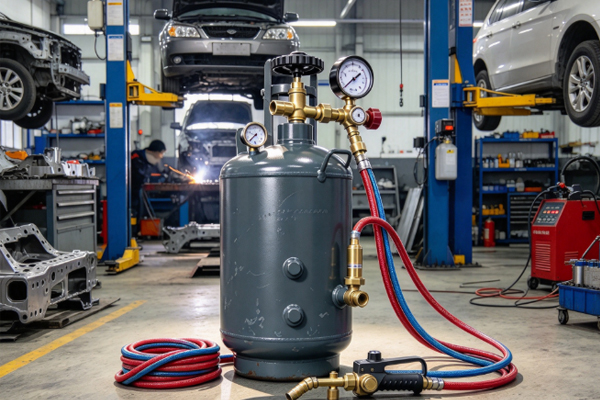
Why Do Auto Repair Shops Need an Acetylene Generator Cutting Solution?
Cutting in auto repair is not simply about cutting through a piece of metal. Accident vehicles may have distorted structures, older vehicles often have heavily corroded components, and exhaust systems can develop difficult-to-remove connections after years of exposure to high temperatures. Before cutting or removing these parts, technicians need to assess the condition of the component and select a suitable method.
An acetylene generator mainly provides the gas supply. When used with suitable gas cutting equipment, it can support the processing of certain automotive metal components. For repair shops, this type of equipment is most useful in work areas where cutting is a regular or specific requirement rather than something needed for every repair job.
What Are Acetylene Generators Used for in Auto Repair?
When people search for “acetylene generator for auto repair,” they often want to know where the equipment can actually be used. The following applications are among the more common scenarios:
| User Search Question | Practical Use in Auto Repair | Application |
| Can acetylene be used for auto repair cutting? | Provides acetylene gas for compatible gas cutting equipment | Auto repair shops |
| Can an acetylene generator cut automotive steel? | Used for processing certain automotive steel components | Auto body repair |
| Is acetylene used for chassis repair? | Can support suitable processing of metal brackets and components | Chassis repair |
| How do you cut a rusted exhaust pipe? | Works with suitable equipment for difficult-to-remove metal pipes | Exhaust system repair |
| Do accident cars need cutting equipment? | Helps process damaged or difficult-to-remove metal components | Accident vehicle repair |
| What cutting equipment is used for vehicle dismantling? | Can support the separation of certain metal structures | Vehicle dismantling |
These applications have something in common: technicians are often dealing with distorted, corroded, or difficult-to-remove metal structures rather than simple small parts. This is where suitable cutting equipment can become particularly useful.
How Should an Auto Repair Shop Choose an Acetylene Generator?
Auto repair shops usually have limited working space. Vehicles, lifts, tool carts, and repair equipment all need their own positions. An acetylene generator that is too large may take up valuable workshop space, while insufficient gas capacity may not match the actual workload.
Instead of looking only at generator capacity, it is more practical to consider how often the workshop performs cutting work. A small repair shop that occasionally handles exhaust pipes and metal brackets has very different requirements from a workshop specializing in accident vehicle repair or vehicle dismantling.
How Do You Choose an Acetylene Generator for Auto Repair?
| Search Need | What to Consider | Practical Recommendation |
| How do you choose an acetylene generator for auto repair? | Daily cutting volume and generator capacity | Plan around actual gas consumption |
| What size acetylene generator is needed for auto body cutting? | Cutting frequency and working hours | Avoid choosing an unnecessarily large unit |
| Is an acetylene generator suitable for a small auto repair shop? | Equipment size and usage frequency | Prioritize a manageable configuration |
| What accessories are needed for an auto repair acetylene generator? | Cutting equipment, hoses, connectors, and related components | Check equipment compatibility carefully |
| Where should an acetylene generator be placed in an auto repair shop? | Vehicle access, repair bays, and equipment distance | Keep it clear of vehicle and personnel movement |
| Is an acetylene generator safe for auto repair? | Installation, connections, ventilation, and routine inspection | Follow manufacturer instructions and local safety requirements |
There is no need to look for a “one-size-fits-all” model. Cutting frequency, working hours, equipment quantity, and available workshop space are more useful factors when planning a suitable configuration.
How Does an Acetylene Generator Work with Gas Cutting Equipment?
An acetylene generator does not perform the cutting itself. It needs to work with suitable gas cutting equipment and compatible supporting components. If vehicles and workstations are frequently moved or rearranged, the layout of hoses and equipment also needs enough room for convenient operation.
Common supporting equipment can include gas cutting equipment, pressure regulation and control devices, suitable hoses, and compatible connectors. Interfaces and operating requirements should not be mixed arbitrarily. Installation and operation should follow the equipment manufacturer’s instructions.
Which Automotive Metal Components Commonly Require Cutting?
Cutting requirements in auto repair are highly dependent on the repair situation. Body repair often involves damaged sheet metal, chassis work may involve corroded brackets, while exhaust system repair frequently involves metal pipes exposed to heat and corrosion for long periods.
Why Do Accident and Older Vehicles Often Require Cutting?
After a collision, some vehicle structures may become distorted, making normal disassembly more difficult. Older vehicles can also have corrosion, deformation, and aging components that complicate repair work.
- Accident vehicle body repair: Some damaged metal components may need to be processed before further repair can continue.
- Chassis component repair: Metal parts exposed to moisture, road debris, and dirt over long periods can become heavily corroded.
- Exhaust system repair: Long-term heat and corrosion can make certain exhaust connections difficult to remove directly.
- Vehicle dismantling: Separating metal structures from end-of-life vehicles can involve more concentrated cutting work than routine repair.
For technicians, cutting equipment is not about using it as much as possible. Its value is in providing a suitable option when conventional removal methods become difficult.
How Can Automotive Supplies and Repair Shops Make Cutting Work Smoother?
Auto repair depends heavily on efficient use of each repair bay. Once a vehicle enters the shop, inspection, disassembly, repair, cutting, replacement, and reinstallation may all be connected. If cutting equipment is poorly positioned, technicians may have to move back and forth unnecessarily, slowing down the job.
How Does Workshop Layout Affect Acetylene Generator Use?
This is easy to overlook. The equipment itself may work perfectly well, but the wrong position can make everyday use frustrating.
- Keep the equipment away from vehicle access routes and main repair passages.
- Keep gas hoses organized so they do not interfere with normal movement.
- Plan the generator position near frequently used cutting workstations to reduce unnecessary movement.
Small auto repair shops need to pay particular attention to available space. A setup that fits the workshop, connects properly, and can be used conveniently is often more practical than simply adding more equipment.
What Should Be Considered for Long-Term Acetylene Generator Use in Auto Repair?
Auto repair workshops are different from ordinary metalworking areas. Vehicles, fuel, lubricants, hot components, and other repair equipment may all be present at the same time. Installation, connections, operation, and storage of acetylene generators and related equipment should follow the manufacturer’s instructions and applicable local gas, fire, and occupational safety requirements.
What Simple Checks Should Be Made Before Daily Use?
Daily equipment management does not need to be complicated, but several key points are worth checking.
Before use, check:
- The equipment and valves for any obvious abnormal conditions.
- Hoses and connectors for aging, damage, or other visible problems.
- The work area for adequate ventilation.
- The area around the equipment for unsuitable heat sources or obstacles that could interfere with operation.
These checks are simple, but they can help technicians identify equipment problems early. For workshops that perform metal processing every day, keeping equipment in normal working condition is much easier than dealing with unexpected problems in the middle of a repair.
An acetylene generator cutting solution for auto repair is not about making the equipment as large or complicated as possible. It is about handling the metal cutting tasks that are genuinely difficult to complete with ordinary tools. Accident vehicle repair, auto body work, chassis repair, exhaust system service, and vehicle dismantling can all involve different cutting requirements. An acetylene generator can provide acetylene gas for compatible gas cutting equipment, with the configuration planned around workshop space, cutting frequency, and actual gas consumption. For automotive supplies and repair applications, practical equipment placement, proper compatibility, and responsible operation can make this type of system much easier to integrate into everyday repair work.