
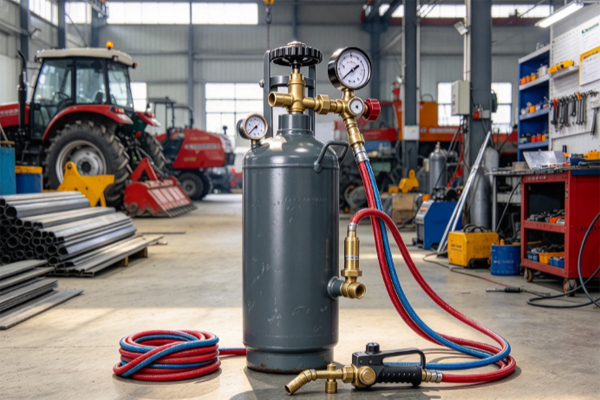
When the busy farming season arrives, tractors, combine harvesters, seeders, and other farm equipment start working at a much higher intensity, and maintenance work increases with it. The real headache for repair technicians is often not replacing ordinary parts, but dealing with metal components that have become badly rusted, deformed, or stuck after long-term exposure to soil, moisture, dust, and outdoor conditions. Ordinary wrenches and removal tools can take a lot of time and effort in these situations. For agricultural machinery repair shops, farm equipment service centers, and maintenance teams handling metal-related repairs, an acetylene cylinder can supply acetylene gas for compatible gas welding and cutting equipment, providing a practical gas source for certain cutting, welding, and metal processing tasks.
Why Do Farm Equipment Repair Shops Need Acetylene Cylinders?
The working environment of agricultural machinery makes metal components more likely to suffer from rust and wear than equipment used in cleaner indoor environments. Tractors regularly operate in fields, muddy areas, and outdoor conditions, while harvesters and seeders are exposed to dust, crop residue, and moisture for long periods. After years of operation, frames, brackets, guards, and metal connections can become damaged or heavily corroded. Some parts can simply be replaced, while others may require cutting, welding, or other metal processing. An acetylene cylinder does not perform these tasks by itself. Its main role is to provide the gas supply for compatible welding or cutting equipment. For agricultural machinery repair facilities with regular metal repair requirements, having a suitable gas supply can reduce the need to arrange equipment at the last minute and give technicians a more practical option when difficult metal components need to be handled.
What Farm Equipment Repair Jobs Use Acetylene Cylinders?
In agricultural machinery maintenance, acetylene cylinders are mainly used to supply compatible gas welding and gas cutting equipment. When steel frames, brackets, metal guards, or other farm equipment structures require cutting, welding, or suitable metal treatment, a properly matched acetylene gas supply can become a useful part of the repair setup.
- Metal cutting: Supplies acetylene gas for compatible cutting equipment when certain steel structures or metal components need to be cut.
- Repair welding: Works with suitable gas welding equipment to provide acetylene gas for selected agricultural machinery repair tasks.
- Metal heating: Certain maintenance jobs may involve controlled heating of metal components using suitable equipment and procedures.
- Old component removal: Severely rusted, deformed, or difficult-to-remove metal structures may require a suitable cutting or processing method supported by an acetylene gas supply.
Which Types of Farm Equipment Commonly Need It?
Agricultural machinery varies considerably in design, but many machines contain extensive metal frames, supports, and structural components that can create similar repair requirements.
| Farm Equipment | Common Repair Problems | Acetylene Cylinder Use |
| Tractor | Damaged frames, brackets, and metal connections | Gas supply for compatible welding and cutting equipment |
| Combine Harvester | Structural supports and damaged metal components | Supports selected metal cutting and welding work |
| Seeder | Worn frames and connecting components | Provides gas for suitable metal repair equipment |
| Tillage Equipment | Worn or deformed metal parts | Supports compatible gas welding or cutting equipment |
| Agricultural Transport Equipment | Damaged frames and metal structures | Gas supply for suitable metal processing equipment |
Not every repair job on these machines requires an acetylene cylinder. Simple bolt replacement, part adjustment, and routine maintenance can normally be handled with standard tools. Acetylene cylinders are more relevant when a repair involves cutting, welding, or processing metal structures that are difficult to remove or repair using ordinary tools.
How to Choose an Acetylene Cylinder for Farm Equipment Repair?
Agricultural machinery maintenance has one obvious characteristic: the workload can change considerably throughout the year. A repair shop may only handle a few minor faults during quieter periods, while tractors, harvesters, and other machines can arrive in large numbers during planting and harvesting seasons. If cylinder selection focuses only on cylinder size, important factors affecting everyday use can easily be missed. A more practical approach is to look at how many metal-related repair jobs the workshop normally handles, then consider usage frequency, compatible welding and cutting equipment, working hours, and available space. A small farm equipment repair shop and a large agricultural machinery service center naturally have different requirements, so the same configuration does not need to be used everywhere.
What Should Be Considered When Choosing an Acetylene Cylinder?
Cylinder capacity is only one consideration. The supporting equipment and actual working pattern are also important.
- Usage frequency: Occasional metal repair work and daily cutting operations can require very different gas supply arrangements.
- Supporting equipment: Check whether the acetylene cylinder specifications and connections are compatible with the existing gas welding and cutting equipment.
- Working hours: Longer repair sessions require more careful planning of the available gas supply.
- Repair type: A workshop mainly performing welding and cutting has different requirements from one that only occasionally handles metal components.
How Should a Small Farm Equipment Repair Shop Set Up Its Gas Supply?
Small repair shops usually have limited floor space, and they may not perform large amounts of metal cutting every day. A practical cylinder configuration should match the actual usage frequency rather than simply choosing the largest available equipment. The cylinder should be positioned where it can be managed conveniently without interfering with agricultural machinery movement, technician access, or other workshop equipment. If repair demand increases sharply during harvesting season, planning the gas supply in advance can also prevent a situation where several machines arrive for repair but the existing setup is not sufficient for the workload. For workshops regularly handling tractors and seeders, easy equipment management and convenient daily operation can be more valuable than simply increasing cylinder capacity.
What Is the Difference Between a Farm Service Center and a Large Repair Workshop?
Large agricultural machinery service centers usually handle more equipment types and more concentrated repair workloads, so their gas supply planning needs to be more organized.
- High-frequency repairs: If metal cutting or welding is performed every day, the available gas supply should be planned around regular and continuous use.
- Seasonal repairs: Repair demand can increase during planting and harvesting seasons, making advance cylinder and equipment planning useful.
- Multiple equipment types: When tractors, harvesters, and seeders are serviced at the same location, compatibility between the gas cylinder and welding or cutting equipment becomes especially important.
A suitable acetylene cylinder configuration should match the actual repair schedule instead of simply focusing on a larger cylinder.
Which Farm Equipment Metal Repairs Can Use Acetylene Cylinders?
One common problem in agricultural machinery repair is metal components that have become extremely difficult to remove because of corrosion. After several years of outdoor operation, soil and moisture can enter connection areas. Continuous vibration and mechanical wear can make brackets, connecting parts, and structural components even harder to remove. Repair technicians need to assess the material, damage, and intended repair method before deciding whether gas cutting or gas welding equipment is appropriate. The acetylene cylinder provides the gas supply, while the actual cutting or welding is performed by compatible supporting equipment, making proper equipment matching an important part of the setup.
What Are Common Acetylene Cylinder Uses in Tractor Repair?
Tractors often operate for long periods in demanding environments, so their frames, supports, and metal connections can experience significant wear or corrosion. When a metal component needs attention, technicians generally need to determine whether it can be removed or replaced directly before selecting an appropriate repair method.
- Frame repair: Some damaged or deformed steel structures may require professional metal processing before further repair work can continue.
- Support component repair: Structural supports exposed to mechanical loads over long periods can become worn, deformed, or damaged.
- Corroded component treatment: Outdoor equipment can develop severe corrosion, making certain metal parts much more difficult to remove.
Why Is a Stable Gas Supply Useful for Combine Harvester Repair?
Combine harvesters often operate intensively during specific agricultural seasons. Once harvesting begins, extended equipment downtime can put considerable pressure on repair teams. Metal guards, structural supports, and frame components may become damaged or deformed after long periods of heavy operation, creating different metal repair requirements. If the service center already has compatible gas welding or cutting equipment, planning a suitable acetylene gas supply can make these repair tasks easier to manage.
What Should Be Considered for On-Site Farm Equipment Repair?
On-site repair is different from work inside a fixed repair shop. The position of the cylinder and supporting equipment can be affected by available working space, machinery movement, and local conditions. Equipment placement should not only consider whether it can be used, but also whether it interferes with normal repair activities.
- Cylinders and related equipment should be positioned where they can be managed conveniently without interfering with machinery movement.
- Hoses and connecting equipment should be kept organized so they do not obstruct technicians.
- The work area should have suitable ventilation and should be kept away from inappropriate heat sources.
- Cylinder specifications, hoses, regulators, and welding or cutting equipment should be checked for compatibility.
Which Metal Components Are Commonly Repaired?
Agricultural machinery contains many different metal structures, and actual repair requirements depend on the machine and the type of damage.
- Farm equipment frames
- Metal support structures
- Metal guards
- Metal pipes and tubing
- Connecting structures
- Selected steel repair components
Not every component is suitable for gas cutting or gas welding. The appropriate repair method should be determined by qualified personnel based on the material, damage condition, and equipment requirements.
How Can Acetylene Cylinders Improve Efficiency in Farm Equipment Repair?
Repair efficiency is not determined by the cylinder alone. Equipment placement and workshop organization can also affect the daily repair process. Agricultural machinery repair shops often have tractors, harvesters, and other equipment parked in the same work area, along with tool carts, replacement parts, and repair equipment. If cylinders are placed randomly and hoses cross work paths, technicians may need to work around them repeatedly, which can make everyday maintenance unnecessarily inconvenient. A better arrangement is to establish a designated cylinder management area and keep the gas supply, welding or cutting equipment, and common repair stations within a practical working distance while still allowing machinery and personnel to move normally.
Where Should an Acetylene Cylinder Be Placed?
- Avoid placing it beside the main access routes used by agricultural machinery.
- Do not allow hoses to remain across primary walking paths.
- Choose a position that makes inspection, management, and routine operation convenient.
- Keep the area around the cylinder clear of unnecessary objects.
Why Is Compatible Supporting Equipment Important?
An acetylene cylinder mainly provides the gas supply. Gas welding and cutting work also requires compatible supporting equipment. Even if the cylinder itself has the right capacity, incompatible hoses, connections, or regulators can make the system difficult to use. This is why the cylinder should be considered as part of the complete gas supply setup rather than as an isolated product.
Key points include:
- Cylinder specifications and equipment requirements
- Connection compatibility
- Suitable hose specifications
- Appropriate regulation and control equipment
What Should Be Considered When Using Acetylene Cylinders for Farm Equipment Maintenance?
Agricultural machinery repair environments can be busy and complicated, with vehicles, lubricants, tools, and other equipment often operating in the same area. Installation, connection, operation, and storage of acetylene cylinders should follow the manufacturer’s instructions and applicable local gas, fire, and occupational safety requirements. Daily management does not need to be complicated, but the cylinder, valves, hoses, connections, and surrounding work area should be checked regularly. This is especially important during busy agricultural seasons when repair teams may use gas equipment more frequently. If any abnormal condition is found, the equipment should not continue to be used until it has been properly inspected by qualified personnel.
What Should Be Checked Before Daily Use?
A basic inspection can remain simple, but several items should not be overlooked.
- Check the cylinder: Look for obvious abnormalities on the cylinder and valve.
- Check the hoses: Watch for aging, damage, or other visible problems.
- Check the connections: Make sure connection points are in normal condition.
- Check the work area: Maintain suitable ventilation and remove unnecessary obstacles around the equipment.
What Should Be Checked After Frequent or Long-Term Use?
During busy farming seasons, repair workloads increase and acetylene cylinders and supporting equipment may be used more frequently. If equipment shows any abnormal condition, use should be stopped and the equipment should be inspected by qualified personnel rather than continuing operation simply to keep a repair job moving. After use, cylinders and related equipment should also be stored and managed according to the manufacturer’s requirements, helping reduce the risk of damage caused by impact, improper handling, or unsuitable storage conditions.
An acetylene cylinder solution for farm equipment maintenance is mainly about matching the gas supply with real repair requirements. Tractors, combine harvesters, seeders, and other agricultural machinery can develop corrosion, wear, deformation, and damaged metal structures after years of demanding outdoor work. When certain repair jobs require compatible gas cutting or welding equipment, an acetylene cylinder can provide the required acetylene gas supply. Planning the cylinder specifications, supporting equipment, usage frequency, available workshop space, and daily management together can make difficult metal repair work more convenient and help agricultural machinery repair shops maintain a practical and dependable gas supply setup.