
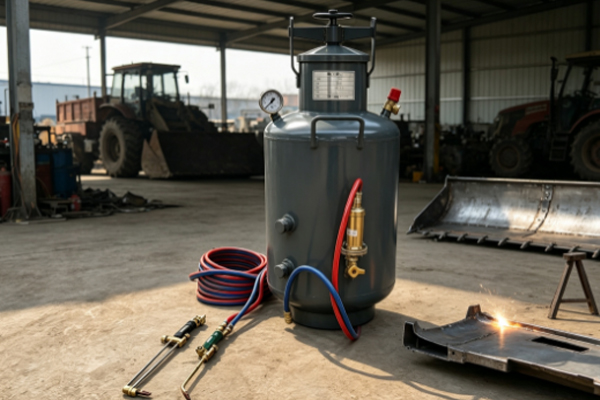
Combine harvesters often operate for several hours at a time during the harvesting season. The cutting platform, conveying system, frame, and threshing unit all withstand considerable mechanical stress. Long-term vibration, metal fatigue, and impacts from stones can cause support frames to deform, connecting parts to break, or old components to become damaged. When these problems occur, repair shops need to choose between cutting, welding, and replacing parts based on the material and extent of the damage. For workshops that regularly handle metal repairs, acetylene can be used as a fuel gas for certain welding and cutting operations. A mobile acetylene generator tank produces acetylene from calcium carbide and water, making it an option for agricultural machinery repair facilities with consistent gas demand and suitable operating conditions.
Which Metal Parts of a Combine Harvester Require Acetylene for Repairs?
Not all metal components on a combine harvester are repaired in the same way. Sheet metal parts, load-bearing supports, and transmission structures have different mechanical requirements. Repair technicians must identify the damaged area before deciding whether to replace a part, machine it, or use gas welding or cutting. Acetylene is mainly used for metal cutting and welding processes where the selected technique is appropriate. It is not a substitute for professional structural inspection.
Metal Repairs on the Cutting Platform and Conveying System
The front of the cutting platform is constantly exposed to crops and can be struck by stones, soil, and other debris. The conveying system operates continuously, so its support frames and connection points may become loose or damaged due to vibration.
Common repair locations include:
- Cutting platform support frames
- Conveying system connection plates
- Metal protective cover brackets
- Local mounting structures
During repairs, technicians need to check whether deformation affects the installation of other components rather than simply treating the visible damage. Parts related to transmission, load-bearing structures, and safety protection must be repaired according to the equipment manufacturer’s requirements.
Metal Components on the Frame and Threshing Unit
The frame is an important load-bearing structure of a combine harvester. The threshing unit also contains various metal supports and mounting components. After long-term use, some connection points may develop cracks, wear, or deformation. Qualified technicians can arrange welding repairs for suitable components based on their materials and process requirements. Old metal parts that need to be removed may be cut using an appropriate gas-cutting process under safe working conditions.
Which Repair Jobs Should Not Be Handled Directly with Gas Welding?
- Uncontrolled welding on high-strength load-bearing parts
- Direct heating of precision transmission components
- Cutting without confirming the material
- Hot work near oil or combustible materials
Metal repairs should not focus on speed alone. Welding heat can change the properties of the material in the affected area. Some high-strength steels also require controlled preheating and specific welding procedures. Technicians should check the material and repair requirements before starting work. For critical structural components, original manufacturer specifications or professional repair procedures should take priority.
How Should Agricultural Machinery Repair Shops Choose the Output Capacity of an Acetylene Generator Tank?
The most important part of choosing an acetylene generator tank is calculating actual gas demand rather than simply selecting the machine with the highest output. Combine harvester repairs usually have peak and off-season periods, so the workload at the same repair shop can vary considerably throughout the year. Choosing equipment based only on peak-season demand may result in low utilization during quieter months. On the other hand, insufficient output capacity can interrupt continuous repair work.
Record Daily Acetylene Operating Time First
Repair shops can keep records of actual gas welding and cutting time over one week or one month. Keep in mind that technicians spending an entire day in the workshop does not mean the acetylene equipment operates continuously. Record the actual time spent using the gas rather than automatically calculating eight hours of operation per day.
The following information is worth recording:
- Number of machines repaired each day
- Metal repair jobs for each machine
- Actual gas welding and cutting time
- Differences in gas demand between peak and off-seasons
- Whether continuous operations are required
These records help estimate daily gas consumption. Torch specifications, actual operating pressure, and the number of devices used simultaneously must also be considered. The required output capacity cannot be calculated from the number of machines alone.
How Much Acetylene Can One Ton of Calcium Carbide Produce?
Acetylene is produced through a reaction between calcium carbide and water. The quality of calcium carbide affects the final gas output. Common industrial reference figures indicate that one kilogram of calcium carbide can produce approximately 285–300 liters of acetylene. One metric ton can produce approximately 280–300 cubic meters under reference conditions. These figures are estimates. Actual usable output depends on carbide quality, equipment efficiency, and operating conditions.
| Calcium Carbide Quantity | Reference Acetylene Output |
| 10 kg | 2.85–3 m³ |
| 100 kg | 28.5–30 m³ |
| 500 kg | 142.5–150 m³ |
| 1 metric ton | 280–300 m³ |
Suppose a repair shop needs approximately 15 cubic meters of acetylene per day. Based on a reference output of 280–300 cubic meters per metric ton, the theoretical calcium carbide requirement would be around 50–54 kg per day. Actual purchasing quantities must also account for carbide quality, equipment efficiency, and operating losses. The theoretical figure should not be treated as a fixed consumption rate.
How Much Extra Output Capacity Should Be Allowed?
Equipment selection must also account for peak gas demand. A repair shop may normally operate only one welding torch, but during the busy season, two repair jobs may need to run simultaneously. In that case, the instantaneous gas demand must be recalculated. Generator output, gas buffering capacity, and the requirements of the connected equipment are different things. The rated output should not automatically be treated as a continuous supply level under every operating condition.
Equipment technicians should calculate the required output based on the actual gas equipment, operating pressure, and working hours. They should also confirm whether the generator supports simultaneous operation of multiple gas-consuming devices. All parameters must comply with the equipment nameplate and technical documentation. Operators must never increase pressure or modify safety settings to speed up repairs.
How to Calculate the Cost of Using a Mobile Acetylene Generator Tank for Agricultural Machinery Repairs?
For workshops that regularly perform metal repairs, gas expenses become more noticeable as repair volumes increase. Traditional cylinders involve gas purchasing, filling, transportation, and cylinder turnover costs. A mobile acetylene generator tank requires an initial equipment investment, followed by ongoing expenses for calcium carbide, maintenance, and operator management. Neither option is automatically better. The right choice depends on the workshop’s actual annual gas consumption.
Cost Differences Between Traditional Cylinders and Generators
| Cost Item | Traditional Acetylene Cylinders | Mobile Acetylene Generator Tank |
| Initial investment | Cylinder purchase or rental | Equipment purchase |
| Gas supply cost | Purchased acetylene | Calcium carbide and operating expenses |
| Transportation | Cylinder delivery and return | Equipment and calcium carbide transportation |
| Daily maintenance | Cylinder inspection and turnover management | Equipment inspection and maintenance |
| Personnel requirements | Proper cylinder handling | Trained equipment operators |
How to Calculate Annual Operating Costs?
Repair shops can use the following formulas for a basic comparison:
- Annual Cylinder Cost = Annual Gas Consumption × Gas Purchase Cost per Unit + Annual Transportation and Turnover Costs.
- Annual Generator Cost = Equipment Depreciation + Annual Calcium Carbide Cost + Maintenance Costs + Labor and Other Operating Expenses.
For example, suppose a repair shop uses 3,000 cubic meters of acetylene per year. If the reference output is 280 cubic meters per metric ton of calcium carbide, the theoretical requirement would be approximately 10.7 metric tons. Actual purchasing quantities need to be adjusted for raw material quality and equipment efficiency. By entering local carbide prices, equipment depreciation, maintenance expenses, and cylinder purchasing costs into the formulas, the workshop can compare the annual costs of both options.
When Is a Generator a More Suitable Choice?
- High annual gas consumption
- Relatively stable repair workloads
- Reliable calcium carbide supply
- Suitable and compliant operating facilities
- Trained equipment operators
If a repair shop only uses acetylene for a short period during the harvesting season, the initial equipment investment may be difficult to recover. Traditional cylinders may be a more practical option. When gas consumption is high, the operating period is long, and raw material costs are favorable, a mobile generator may offer better cost efficiency. Under certain suitable project conditions, total operating costs may be reduced by 40%–60%. However, this is not a guaranteed saving. Actual costs must be calculated using local prices and operating data.
What Supporting Conditions Are Needed for an Acetylene Generator Tank Used in Combine Harvester Repairs?
Purchasing the equipment does not mean it can be put into operation immediately. Acetylene generation involves flammable gas, so workshop layout, raw material management, piping, and operator training all need to be arranged in advance. For agricultural machinery repair shops, an equipment solution must meet gas demand while also fitting the available workshop space and daily management requirements.
Check Equipment Accessories and Supporting Components
Before purchasing, confirm that the generator and its safety accessories meet the technical documentation requirements. Pay particular attention to the pressure gauge, safety relief device, filter components, and connecting pipes. All accessories must match the equipment specifications. Safety devices must never be modified or removed.
What Conditions Must the Installation Area Meet?
- Maintain good ventilation.
- Keep away from open flames and heat sources.
- Avoid storing incompatible materials together.
- Install necessary safety warning signs.
- Arrange calcium carbide storage as required.
If the workshop also stores lubricants, diesel, cleaning agents, or other combustible materials, the equipment area should be planned carefully to prevent different operations from interfering with one another. Equipment installation, operation, and raw material storage must comply with the product manual and local regulations.
Which Components Should Be Checked During Daily Inspections?
During operation, technicians should inspect pressure gauge readings, pipe connections, valves, and safety devices according to the required procedures. If abnormal pressure, leakage, unusual odors, or equipment faults are detected, operations must stop immediately. Qualified personnel should then handle the situation according to the applicable emergency procedures.
After-Sales Service and Equipment Lifespan
Ongoing maintenance also affects long-term operating costs. Before purchasing, confirm the warranty coverage, availability of replacement parts, repair support, and routine maintenance requirements. With proper operation and maintenance, the equipment has a designed service life of 6–8 years. The actual lifespan depends on the product’s technical documentation and operating conditions. Related products can be supplied with a 2-year warranty.
For combine harvester repair shops looking to determine the right acetylene generator tank capacity, please provide your estimated daily gas consumption, actual operating hours, number of machines repaired, and intended location. We can help calculate calcium carbide consumption, equipment capacity, supporting accessories, and total costs, as well as arrange transportation based on the destination country and port.