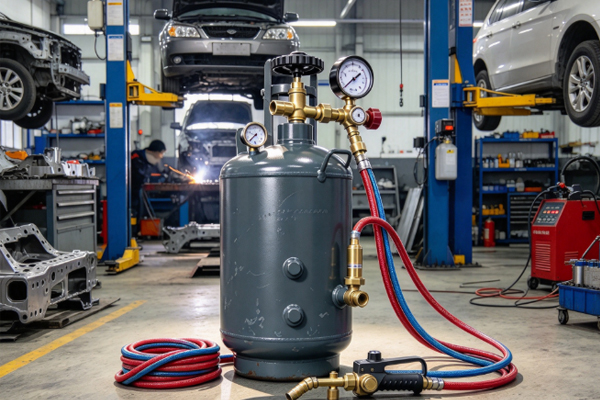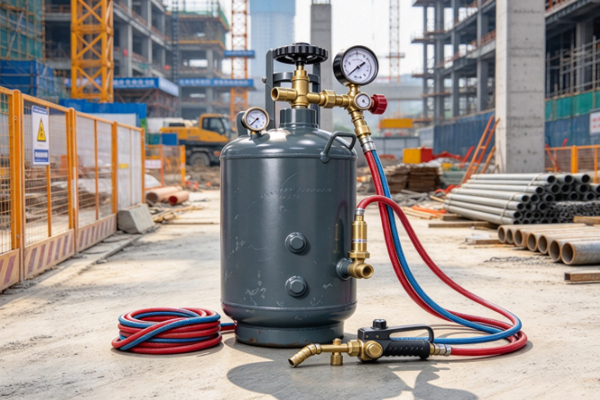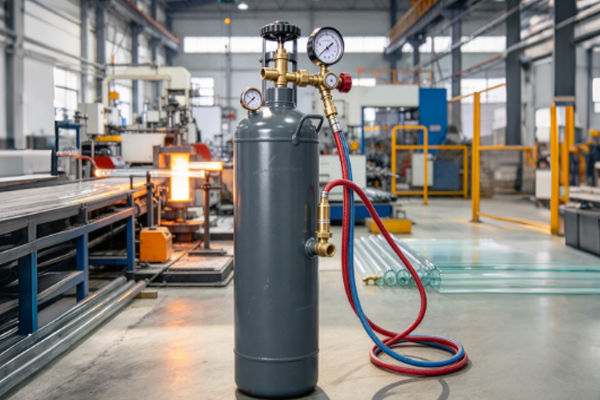
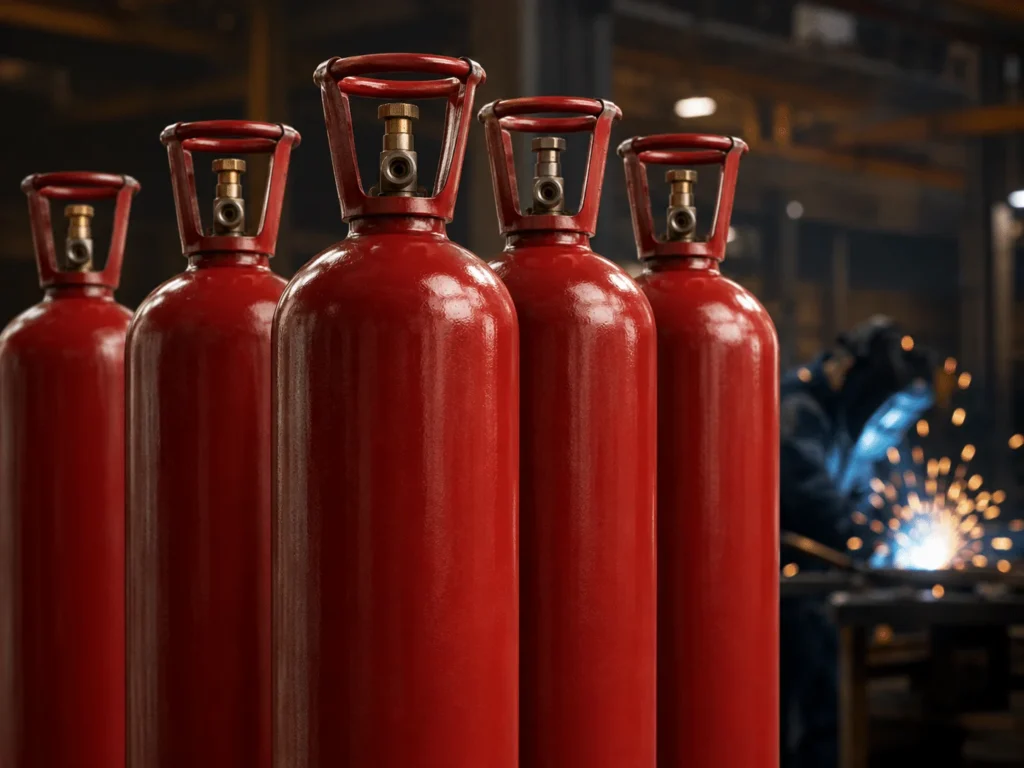
Industrial production and on-site construction continue to demand higher stability in gas supply. Scenarios such as metalworking, metal welding, equipment maintenance, and scrap cutting all rely on dependable heat support. With its moderate capacity, stable gas output, and easy handling, the 45-pound propane cylinder has gradually become a common supply configuration in industrial settings. It can meet continuous operation needs without occupying as much space as a large storage tank, making it suitable for a wide range of small and medium-sized industrial applications. For companies looking to improve gas supply efficiency and optimize on-site management, understanding the structure, applications, and management methods of the 45-pound propane cylinder has strong practical value.
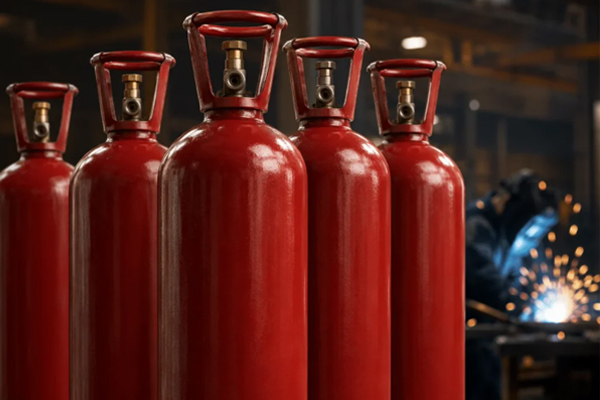
Structural Features and Capacity Advantages of the 45-Pound Propane Cylinder
The 45-pound propane cylinder is a medium-sized industrial gas container designed with safety, practicality, and versatility in mind, making it suitable for long-term use across multiple industries. It is not only easy to place due to its dimensions, but also performs well in terms of supply duration, pressure stability, and maintenance convenience, which is why it is widely used in industrial environments.
Standardized Industrial Structural Design
This type of cylinder is usually made of high-strength steel and can withstand relatively high-pressure environments.
- The tank body is solid and maintains good pressure resistance over long-term use, while still offering strong stability during frequent handling and on-site movement.
- The valve assembly is designed to standard specifications, making it easy to connect quickly with common industrial equipment, reducing installation and commissioning time and improving deployment efficiency.
- The interface is standardized and highly compatible, allowing it to meet the connection needs of different brands of equipment and reducing the difficulty of matching components.
- The surface protection treatment is relatively complete, making it suitable for use in a variety of environments and maintaining good external protection in workshops, storage areas, or temporary job sites.
Standardized structure not only improves equipment versatility, but also makes installation, inspection, and replacement more convenient. For industrial scenarios that require frequent movement or multi-point use, this design helps reduce adaptation costs and improve on-site deployment efficiency.
Medium Capacity Is Better Suited to Continuous Industrial Operation
The 45-pound capacity offers a good balance in industrial applications.
- It can meet medium-intensity work requirements and support longer heating, welding, or cutting tasks without frequent interruptions.
- It reduces the number of cylinder changes, allowing on-site personnel to spend more time on actual production instead of repeatedly handling gas switching.
- It improves continuous gas supply capability and performs more steadily in multi-station rotation or long-duration process workflows.
- It is suitable for long-running processes, especially in metalworking and maintenance scenarios where continuous heat supply is critical.
For processes that require a stable heat source, this capacity configuration is more practical. It avoids the interruptions caused by frequent replacement of small cylinders and the inconvenience of handling and placement associated with larger cylinders, making it ideal for companies that value both efficiency and flexibility.
Industrial Applications of the 45-Pound Propane Cylinder
The 45-pound propane cylinder has a broad application range and can play a role in many industrial processes, especially in scenarios that require both mobility and stable gas supply. Its advantages are reflected not only in supply capacity, but also in its ability to adapt to different production rhythms and site conditions.
Metalworking and Welding Support Operations
In metal processing, propane cylinders are often used to provide a stable heat source.
- Metal preheating and localized heating improve material temperature distribution, making subsequent processing smoother and reducing stress caused by large temperature differences.
- Material preparation before welding helps improve weld quality and makes it easier to meet process requirements.
- Surface baking and shaping of workpieces can help remove moisture or assist in correcting minor deformation, improving product consistency.
- Temperature adjustment before cold bending enhances material ductility and reduces the risk of cracking and deformation during processing.
Stable heat output helps improve processing quality. In the metalworking industry, preheating and localized heating can improve material ductility and reduce cracks, deformation, and welding defects during processing, thereby improving product consistency and process stability.
Equipment Maintenance and Temporary Construction
Many maintenance sites do not have fixed gas supply conditions, and the flexibility of the 45-pound propane cylinder becomes especially valuable.
- Suitable for temporary maintenance heating, providing heat support quickly during emergency repairs or localized treatment and reducing waiting time.
- Supports heating for equipment disassembly, playing an important role in loosening bolts, removing parts, or repairing structures.
- Meets energy needs for outdoor construction, maintaining good operational continuity even in areas without fixed pipelines.
- Can be quickly deployed to different work areas, allowing companies to flexibly adjust gas supply locations according to changing site tasks.
Its mobility makes on-site preparation faster. For emergency repairs, installation, disassembly, and other temporary tasks, the 45-pound cylinder can be put into use quickly, reducing the time needed to connect fixed energy systems and improving response speed.
Comparison Between the 45-Pound Propane Cylinder and Other Sizes
Different propane cylinder sizes are suitable for different scenarios. The advantage of the 45-pound size lies in its balance between supply duration and portability. It is not simply about pursuing larger capacity, but about finding a better balance among industrial efficiency, space usage, and operating cost.
More Suitable for Continuous Operation Than Small Cylinders
Although small cylinders are lightweight and convenient, they are more likely to cause supply interruptions in industrial settings.
- Frequent replacement means on-site personnel must spend more time handling refills and switching, which affects overall workflow.
- It disrupts operational continuity, especially in processes that require long heating or repeated ignition.
- It is not suitable for medium-intensity production needs and often cannot meet stable supply requirements in continuous industrial environments.
- Management costs are higher in high-frequency use scenarios because frequent replacement increases both labor input and site management complexity.
The 45-pound size offers greater efficiency. For processes that require continuous heating, repeated ignition, or long operating cycles, small cylinders often cannot provide stable supply, while the 45-pound cylinder significantly reduces the need for mid-process refills and replacements.
More Flexible Than Large Cylinders
Large cylinders are suitable for fixed locations, but they are less convenient in mobile scenarios.
- They occupy more space and place higher demands on workshop layout, passage arrangement, and equipment placement.
- They are more difficult to move and are less flexible in multi-station switching or temporary construction environments.
- They require more demanding site layout conditions and need better storage and transport arrangements to function properly.
- They are not ideal for rapid switching between multiple workstations and may reduce efficiency in fast-changing task environments.
The 45-pound cylinder is better suited for multi-station and multi-area use. In workshops, maintenance points, and temporary construction zones, it provides good gas supply capacity without placing excessive pressure on site passages or equipment layout.
| Cylinder Size | Supply Duration | Mobility | Suitable Scenarios | Operating Cost |
| Small Cylinder | Short | Very High | Light maintenance, short-term tasks | Frequent replacement |
| 45-Pound Cylinder | Medium to Long | Relatively High | General industrial use, medium-scale tasks | Balanced overall |
| Large Cylinder | Long | Relatively Low | Fixed factories, continuous production | Higher initial investment |
From the comparison, the 45-pound propane cylinder achieves a better balance among supply capacity, mobility, and cost control, making it more suitable for industrial sites.
Key Management Points for the 45-Pound Propane Cylinder
Scientific management is an important prerequisite for safe cylinder operation, especially in industrial environments where standardized procedures can effectively reduce risk. In addition to the quality of the equipment itself, inspection, storage, and transportation methods during use also directly affect overall performance.
Storage and Transportation Standards
How cylinders are stored directly affects safety. Proper zoning, good ventilation, and keeping them away from ignition sources can further reduce management risks.
- Avoid placing cylinders near high heat or open flames to reduce the impact of external heat sources and lower potential safety risks.
- Maintain a well-ventilated storage environment so that gas can disperse quickly in abnormal situations, improving site safety.
- Keep cylinders upright to prevent tipping and leakage, which is not only a basic requirement but also helps reduce extra pressure on valves and interfaces.
- Secure cylinders firmly during transport to avoid collisions, reducing the risk of tank damage and loose accessories.
Proper storage is a basic safety requirement. Reasonable storage methods not only reduce the impact of the external environment on the cylinder, but also lower the risk of mechanical damage during handling and extend the service life of the equipment.
Safety Control During Use
Operations should remain steady and careful, as any negligence may affect both performance and safety. Checking valve sealing before use can help identify leaks early and prevent problems from escalating; regular leak detection helps discover abnormalities in time and reduce accident risks; controlling temperature and ventilation conditions in the operating environment allows the cylinder to function in a more stable setting; avoiding prolonged overload use can reduce overheating and component aging, extending equipment life. Good operating habits not only improve safety, but also help extend service life. For industrial sites, establishing fixed inspection procedures, assigning responsible personnel, and conducting daily checks can make cylinder management clearer and make early hazards easier to detect.
Selection Value and Application Summary of the 45-Pound Propane Cylinder
The reason the 45-pound propane cylinder is widely used in industrial settings lies in its good balance of capacity, efficiency, and flexibility. It is suitable for medium-intensity tasks and mobile work environments, making it a practical and economical gas supply solution.
Balancing Cost and Efficiency
The 45-pound propane cylinder also performs well in cost control. While ensuring stable gas supply, it reduces the time and transportation costs caused by frequent replacement.
- It reduces time loss caused by frequent replacement, allowing on-site personnel to focus more on core production tasks.
- It lowers transportation and management costs, since the moderate capacity reduces refill frequency and overall scheduling pressure.
- It improves operational continuity and stability, allowing process workflows to run with fewer interruptions.
- It reduces rework caused by supply interruptions, helping companies control hidden costs and improve delivery efficiency.
For medium-sized industrial companies, this configuration offers better value for money. It can improve overall gas supply efficiency and site stability without requiring excessive equipment investment.
Strong Compatibility and Wide Application Range
The 45-pound propane cylinder has strong adaptability across different industrial scenarios and can meet the continuous gas supply needs of many medium-intensity tasks.
- It can be used with a variety of industrial equipment and meet the gas supply needs of different types of thermal processing equipment.
- It is suitable for welding, heating, cutting, and other processes, playing a role in multiple production stages.
- It supports different types of on-site operations and adapts well to both fixed workstations and temporary tasks.
- It is suitable for mixed workshop and outdoor environments, maintaining good flexibility even in complex settings.
Its versatility is one of its key advantages. Whether in fixed production lines or temporary job sites, the 45-pound propane cylinder provides strong adaptability, helping companies organize production and maintenance tasks more flexibly.
The 45-pound propane cylinder is not only a gas supply device in industrial settings, but also a key tool for improving production efficiency and on-site flexibility. Whether in metalworking, welding maintenance, or scrap metal processing, it can provide stable and reliable heat support. When selecting equipment, companies that combine actual process requirements, workload intensity, and site conditions often achieve better results. Zhongcheng Gas Tank provides high-quality industrial propane cylinders and supporting solutions to help businesses build safer and more efficient gas supply systems.