
Auto body repair often involves cutting, heating, welding, and reshaping metal parts. When dealing with damaged body panels, rusted bolts, exhaust components, and other metal parts, acetylene is still widely used as a fuel gas for heating and cutting applications. For auto repair shops, body repair centers, and comprehensive automotive service businesses, choosing an acetylene cylinder is not simply about whether it can be used. Cylinder capacity, gas supply stability, portability, equipment compatibility, and storage all affect daily repair work. A practical Acetylene Cylinder for Auto Body Repair Solution can help reduce interruptions and make it easier for technicians to manage their automotive supplies.
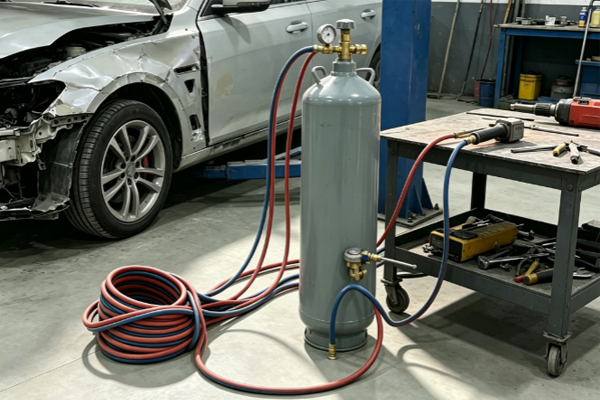
Why Do Auto Body Repair Shops Need Acetylene Cylinders?
After a vehicle collision, body panels, metal frames, exhaust components, and other parts may need to be heated, cut, or reshaped. Compared with routine vehicle maintenance, auto body repair has more varied gas requirements. The cylinder needs to match the equipment while also fitting the working environment of the repair shop.
Acetylene cylinders are commonly used with oxy-fuel equipment for flame heating, cutting, and certain welding applications. Different vehicles and metal components require different levels of heat, so cylinder selection should not be based only on cylinder size.
Which Auto Body Repair Jobs Can Use Acetylene?
In daily repair work, acetylene is particularly useful when technicians need concentrated heat or metal-cutting capability. These jobs may only take a few minutes each, but an unstable gas supply can slow down the entire repair process.
- Local heating and reshaping of vehicle body panels
- Heating rusted bolts and metal connections for removal
- Cutting exhaust pipes and other metal components
- Flame welding and heating during selected body repair operations
For small repair shops, an oversized cylinder may create unnecessary handling difficulties. A better choice is usually a cylinder that matches the equipment and daily workload while remaining easy to move around the workshop.
| Auto Repair Application | Typical Gas Use | Key Cylinder Considerations | Practical Shop Requirement |
| Body panel reshaping | Localized and intermittent heating | Stable gas supply | Easy movement between workstations |
| Exhaust system repair | Heating and metal cutting | Suitable gas delivery | Fewer interruptions during repair |
| Rusted component removal | Short-duration high-heat work | Valve and regulator compatibility | Quick connection to equipment |
| Small auto repair shop | Irregular gas consumption | Capacity and footprint | Easy storage and handling |
| Large repair facility | Multiple workstations | Spare cylinder planning | Continuous supply during busy periods |
For a small automotive workshop, the largest cylinder is not necessarily the best choice. Matching cylinder size with actual work frequency, equipment, and storage conditions is much more practical.
How to Choose an Acetylene Cylinder for Auto Body Repair?
When technicians select an acetylene cylinder, the questions are usually straightforward: How long will it last? Can it connect to the existing equipment? Is it easy to move? These concerns directly affect repair efficiency. Shops that manage automotive supplies, welding equipment, and body repair tools should also check whether the cylinder fits their existing regulators, hoses, and torches.
Choose Cylinder Capacity Based on Repair Workload
If a shop only performs occasional heating or cutting, a smaller and easier-to-handle cylinder may be sufficient. If the workshop handles accident vehicles throughout the day, a cylinder with greater usable capacity and a suitable spare supply can reduce unnecessary cylinder changes.
- Small repair shops: prioritize manageable size and convenient handling
- Medium-sized workshops: consider a primary cylinder plus spare cylinders
- High-volume repair centers: plan for longer periods of continuous gas use
- Multiple workstations: estimate whether several pieces of equipment may operate at the same time
When purchasing, check the applicable filling specifications, service requirements, and equipment compatibility rather than focusing only on nominal capacity. Cylinders should also come from qualified suppliers and be inspected and maintained as required.
Check Compatibility with Existing Repair Equipment
An acetylene cylinder normally works together with regulators, hoses, torches, and other oxy-fuel equipment. If the connection type, operating requirements, or regulator specifications do not match, the cylinder may not work properly with the existing setup.
Before purchasing, it is useful to list the models and specifications of the equipment already used in the workshop. The supplier can then confirm whether the cylinder and related components are compatible. This simple step can save time and avoid purchasing a cylinder that looks suitable but cannot be integrated into the current system.
How Many Acetylene Cylinders Are Needed for a Day of Auto Body Repair?
There is no single cylinder quantity that works for every auto repair shop. A vehicle requiring only several minutes of heating will consume much less gas than a repair involving cutting, repeated heating, and metal reshaping. Daily acetylene consumption can vary significantly even when the number of repaired vehicles is similar.
Track Gas Consumption by Repair Task
For better inventory control, shops can record actual cylinder usage over a period of time. Tracking the repair work together with cylinder changes gives a more useful picture than simply counting the number of vehicles serviced.
| Daily Repair Situation | Gas Consumption Pattern | Spare Cylinder Planning | Management Priority |
| Occasional body repair | Intermittent gas use | Small spare stock | Avoid unexpected shortages |
| Several vehicles repaired daily | More heating and cutting | Primary + spare cylinders | Record daily consumption |
| Accident vehicle repair peak | Short-term increase in gas demand | Prepare additional stock | Maintain repair continuity |
| Several technicians working simultaneously | Higher simultaneous demand | Separate cylinder allocation may help | Prevent supply conflicts |
A workshop can record cylinder replacement frequency for one or several weeks and use the results to estimate its normal consumption. This makes purchasing and inventory planning much easier, especially during periods when accident repair workloads increase.
How Can Acetylene Cylinders Be Used More Safely in Auto Body Repair?
Auto repair shops are busy working environments where vehicles, welding equipment, paint products, oils, tools, and various automotive supplies may be present at the same time. Acetylene cylinders should not be treated like ordinary workshop tools. A designated storage and handling area is especially important when the workspace is limited.
What Should Technicians Check During Daily Use?
Acetylene cylinders should be handled by properly trained personnel and operated according to the cylinder and equipment requirements. Rushing through connection or inspection steps may create unnecessary risks.
- Keep cylinders upright and properly secured to prevent tipping
- Inspect valves, connections, regulators, and hoses before use
- Keep cylinders away from excessive heat and uncontrolled ignition sources
- Close the relevant valves and store cylinders properly when they are not in use
If a cylinder, valve, regulator, or connection shows signs of damage or abnormal operation, stop using it and have it checked by qualified personnel rather than attempting unauthorized repairs or modifications.
Make Cylinder Replacement and Storage Easier
For workshops that use acetylene regularly, separating cylinders into categories such as “in use,” “spare,” and “ready for replacement” can make daily management much easier. Keeping cylinders in designated locations also helps technicians find the right cylinder quickly and makes inventory checks more straightforward.
Recording cylinder replacement dates, workstations, and approximate consumption can also be useful. It may seem unnecessary for a small repair shop, but once gas consumption increases, simple records can help prevent unexpected shortages and make automotive supplies easier to manage.
A suitable acetylene cylinder solution for auto body repair should match the equipment, daily workload, handling conditions, and storage setup. When cylinder capacity, equipment compatibility, spare supply, and safe handling are all properly planned, acetylene can support heating, cutting, and other metal repair tasks without becoming a bottleneck in the workshop. For auto repair businesses, a practical Acetylene Cylinder for Auto Body Repair Solution is ultimately about keeping repair work steady, manageable, and efficient.