
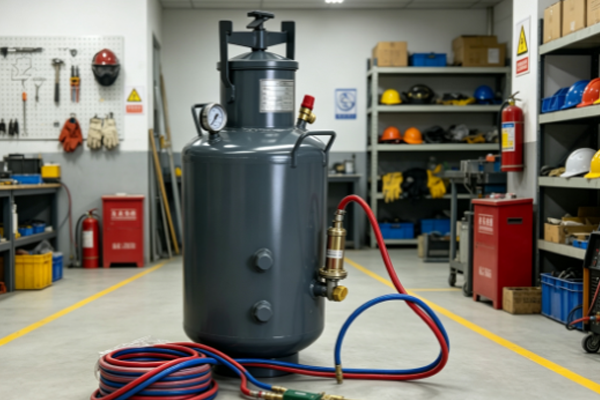
In an artisan workshop, the part that is often overlooked is not how an acetylene generator is used, but where it is placed when it is not in use. After cutting, welding, or repair work, equipment may simply be left against a wall. Once steel materials, tools, and spare parts start piling up around it, the area can quickly become crowded. For artisans, a practical acetylene generator storage solution does not need to be complicated. A fixed location, suitable environment, easy access, and a clean surrounding area can make equipment management much easier.
Why Do Artisan Workshops Need an Acetylene Generator Storage Solution?
Artisan workshops are usually compact, with processing equipment, steel materials, tools, and various spare parts sharing the same space. When an acetylene generator is used frequently, it can easily end up being placed wherever there happens to be room after each job. Over time, this can make the equipment harder to access. What artisans really need is not a complicated storage system, but an acetylene generator storage solution that fits naturally into their daily workflow.
Which Artisan Workshops Need Better Equipment Storage?
Metalworking, repair, welding, and handmade production workshops may all use acetylene generators. The more frequently the equipment is used, the easier it is for temporary storage to become a habit. This is especially true for small personal workshops, where equipment placement can have a direct impact on how smoothly daily work is carried out.
- Metalworking workshops: Cutting jobs may be carried out every day, so the equipment should be stored somewhere convenient and easy to reach.
- Repair workshops: Work can change from one day to another. One job may involve cutting metal, while another may only require localized heating, so the equipment should not interfere with other repair tasks.
- Handcraft workshops: Materials and small tools are often scattered around the workspace, making it important to keep the acetylene generator in a relatively separate area.
- Small artisan studios: Space is already limited, and without a fixed storage location, the generator can easily end up wherever someone happens to find an empty spot.
Common Storage Problems in Artisan Workshops
Many storage problems do not come from the equipment itself. They develop gradually as the surrounding workspace changes. The area may look spacious at first, but as steel pipes, sheets, toolboxes, and spare parts accumulate, the original equipment space can slowly disappear.
| Workshop Type | Typical Use | Main Storage Concern | Practical Arrangement |
| Metalworking workshop | Frequent cutting and heating | Easy access | Near the work area but away from traffic routes |
| Repair workshop | Temporary cutting and dismantling | Easy movement | Keep access routes clear |
| Handcraft workshop | Irregular equipment use | Space and organization | Create a dedicated small area |
| Personal workshop | Limited floor space | Equipment taking up room | Avoid occupying the main workbench |
| Multi-purpose workshop | Several operations at once | Area organization | Keep it reasonably separate from material storage |
Why Should It Not Be Stored in a Cluttered Area?
A cluttered area may seem like a convenient empty spot, but it can quickly become crowded. A toolbox may be placed there today, followed by several steel pipes a few days later, until accessing the generator becomes difficult. For artisans who work with equipment every day, setting a fixed storage location from the beginning is much easier than repeatedly moving materials out of the way later.
Where Should an Acetylene Generator Be Stored? A Practical Layout for Artisan Workshops
The storage area does not have to be large, but it should make equipment placement and routine operation convenient. When choosing a location, artisans can look at normal walking routes, material handling paths, and how often the equipment is used before deciding where the storage area should be. A well-positioned generator is much easier to organize, inspect, and return to its place after use.
What Conditions Should the Storage Area Meet?
Workshop conditions can change throughout the day, so choosing a storage location should not simply come down to finding an empty corner. A suitable area should minimize interference from people, material handling, and clutter.
- Keep the area ventilated.
- Use a stable, level surface with little risk of standing water.
- Keep the equipment away from obvious heat sources.
- Do not fill the space around the generator with materials; leave enough room for normal access.
These requirements are simple, but they are easy to overlook in a busy workshop. Smaller artisan workshops need to pay even more attention to keeping the equipment area separate from general storage.
Why Should Space Be Left Around the Equipment?
An acetylene generator is not equipment that can simply be placed somewhere and forgotten. Artisans may need to check it before or after use, and a crowded area can make even a basic inspection inconvenient. If steel materials, toolboxes, or scrap are piled around it, someone has to clear the area every time the generator is needed.
Leaving enough working space makes access, inspection, and storage much easier. It also reduces unnecessary contact with surrounding materials when equipment is being moved.
Why Should Damp and High-Temperature Areas Be Avoided?
Some workshop areas may appear convenient but have changing environmental conditions. Locations near cleaning areas, hot-processing equipment, or poorly ventilated corners may not be suitable for long-term storage.
Which Locations Are Not Suitable for Long-Term Storage?
A few simple principles can make location planning much easier without adding complicated workshop rules.
- Avoid main walkways, where people and materials move frequently and equipment can become an obstruction.
- Be careful around steel handling routes, since large materials can hit nearby equipment when they are being moved.
- Keep away from damp or water-prone areas, especially when equipment will remain there for long periods.
- Do not use a cluttered storage zone, because once the generator is surrounded by materials, cleaning and inspection become unnecessarily difficult.
How Should an Acetylene Generator Be Stored When Not in Use?
The easiest approach is to give the equipment a fixed location and return it there after use. Artisans do not need to find a new storage spot every time. Once everyone in the workshop knows where the generator belongs, returning it to the same place becomes a natural habit. For small workshops, this simple approach is often easier to maintain than a complicated record-keeping system.
What Should Artisans Record When the Equipment Will Not Be Used for a Long Time?
When an acetylene generator has been unused for an extended period, it is useful to check its condition before putting it back into service. The records do not need to be complicated. The storage location, last use date, and any noticeable issues can provide useful information for later inspection.
| Record Item | What to Record | Practical Concern |
| Storage location | Whether the fixed position has changed | Is the equipment easy to find? |
| Exterior condition | Any visible abnormalities | Does it need further inspection? |
| Connection areas | Condition after use | Does anything need to be checked before use? |
| Surrounding environment | Moisture and clutter | Has the storage environment changed? |
| Usage date | Most recent use date | Has the equipment been idle for a long time? |
What Should Be Checked Before Using It Again?
An acetylene generator that has been sitting unused for some time should not simply be taken out and put straight back into operation. Check the exterior and relevant areas for any obvious changes, then carry out the inspections required by the equipment’s operating instructions. If anything appears abnormal, deal with the issue before continuing with the job.
Why Should Tools and Materials Not Be Piled Around the Equipment?
This is a common problem in artisan workshops. A material may be placed beside the generator with the thought that it will only stay there temporarily. Once the workshop gets busy, nobody moves it, and the equipment area gradually turns into a temporary storage zone.
Keeping the area around the generator clear is not just about appearance. It means the equipment can be accessed immediately when needed, while routine inspection and organization remain straightforward.
Keep the Return-to-Storage Process Simple
If returning the equipment requires a long walk or involves moving around several obstacles, people are more likely to leave it somewhere temporarily. A fixed location that is reasonably close to the normal work area makes the storage habit much easier to maintain.
How Can Artisan Workshops Make Daily Acetylene Generator Storage Easier?
Good storage management should not create a long list of extra tasks for artisans. The most practical approach is to make equipment storage part of the normal workflow: check it before use, return it after the job, and inspect the surrounding area during routine workshop cleaning. This keeps equipment management simple rather than turning it into another burden.
A Fixed Storage Location Is Easier Than Moving the Equipment Repeatedly
Once the generator has a fixed location, artisans do not need to look for a new place every time they finish a job. It also reduces the chance of the equipment being buried behind other materials. This becomes particularly useful when several people share the same workshop, since everyone knows where the generator should be and where it should go after use.
Four Storage Habits Artisan Workshops Can Maintain
The list does not need to be long. What matters is making these habits part of the normal work routine.
- Return it after every job, instead of leaving it somewhere with the intention of putting it away later.
- Keep the surrounding space clear, even when the workshop is busy and materials are constantly coming in and out.
- Take a quick look at the equipment regularly and deal with obvious abnormalities as soon as they are noticed.
- Assign basic responsibility when several people share the equipment, so everyone knows who handles routine storage and inspection.
How Can Multiple Users Avoid the “Someone Else Will Handle It” Problem?
When several people use the same equipment, it is easy for everyone to assume that someone else will put it away. A simple rule can solve the problem: the person who uses the equipment returns it to its fixed location, while one designated person carries out a basic periodic check.The simpler the rule, the easier it is to follow in a busy workshop.
Equipment Checks Can Be Done During Routine Cleaning
When artisans clean their workbenches, organize tools, or remove scrap materials, they can also take a quick look around the acetylene generator. Check whether new materials have blocked the area or whether the equipment has been moved from its designated position. A few minutes of routine organization is much easier than waiting until the equipment is completely surrounded by materials.
For artisan workshops, acetylene generator storage does not need to become complicated. A fixed location, a suitable environment, clear space around the equipment, and a simple return-and-check routine can make daily management much easier. Even in a small workshop, keeping the equipment area organized means artisans can find the generator quickly, access it without unnecessary movement, and return it to the same place after the job is finished.