
As the automotive repair industry continues to demand higher standards for welding, cutting, heating, and panel straightening processes, stable, safe, and cost-effective gas supply equipment has become an essential part of modern body repair workshops. An acetylene generator tank can continuously produce acetylene gas on-site, providing a reliable flame source for auto body and sheet metal operations. Compared with traditional acetylene cylinder storage and transportation methods, acetylene generators offer significant benefits in cost control, gas utilization, and workshop efficiency. They are widely used in automotive repair centers, collision repair facilities, spray painting workshops, commercial vehicle service stations, and metal fabrication shops.
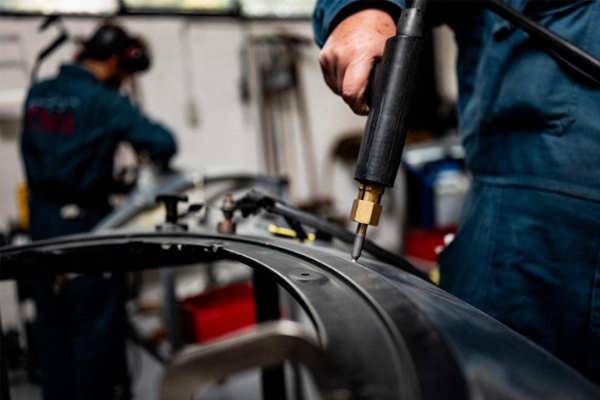
Working Principle of an Acetylene Generator Tank and Its Role in Auto Body Repair
An acetylene generator tank produces acetylene gas through the chemical reaction between calcium carbide and water. The generated gas is then purified, cooled, pressure-regulated, and delivered to welding or cutting equipment.
During automotive body repair operations, many procedures require a high-temperature flame source, including dent correction, sheet metal cutting, welding, panel reshaping, and localized heating for component removal. Traditional acetylene cylinders require frequent replacement, while an acetylene generator can provide a continuous gas supply according to operational demand, reducing downtime and improving productivity.
When combined with oxygen, acetylene can produce flame temperatures exceeding 3,000°C, making it highly effective for heating and welding steel panels. For busy repair workshops handling large volumes of vehicles, a stable gas supply helps streamline repair schedules and minimizes equipment idle time.
Operating Process of the Acetylene Gas Generation System
When the generator is in operation, calcium carbide reacts with water to produce acetylene gas. The gas then passes through several stages before reaching the welding equipment:
- Initial gas generation
- Impurity filtration and purification
- Moisture separation
- Pressure stabilization
- Delivery to welding and cutting equipment
This continuous cycle allows the system to provide a stable gas supply for extended periods, supporting all-day operations in automotive repair facilities.
The Value of Using an Acetylene Generator in Auto Body Workshops
For automotive repair businesses, equipment investment involves more than the initial purchase cost. Long-term operating expenses also play an important role in profitability.
| Comparison Item | Acetylene Generator Tank | Traditional Acetylene Cylinder |
| Gas Source | On-site gas production | Purchased externally |
| Supply Continuity | High | Interrupted during replacement |
| Transportation Requirement | Minimal | Frequent transportation |
| Operating Cost | Lower over time | Continuous purchasing costs |
| Gas Utilization Rate | High | Residual gas losses |
| Suitable Applications | Medium and large workshops | Small-scale operations |
For repair centers with high daily gas consumption, an acetylene generator can reduce purchasing frequency, lower logistics costs, and improve equipment utilization.
Key Advantages for Reducing Operating Costs
A continuous gas generation system helps repair businesses optimize operational efficiency and resource allocation.
- Reduces transportation expenses associated with frequent cylinder purchases
- Lowers inventory management costs
- Minimizes production interruptions
- Improves welding equipment utilization
- Reduces waste caused by unused residual gas
For companies engaged in long-term collision repair and sheet metal restoration services, the value of the equipment becomes increasingly apparent over time.
Advantages of Acetylene Generator Tanks in Auto Body and Sheet Metal Applications
Automotive body repair processes require consistent flame temperature and reliable gas delivery. Acetylene generators are designed to support continuous welding, cutting, and heating operations.
How Acetylene Generators Improve Repair Efficiency
In daily repair operations, acetylene generators can significantly improve productivity.
- Continuous gas supply reduces cylinder replacement time
- Supports high-volume repair workloads
- Allows multiple workstations to operate simultaneously
- Provides stable flames for precision welding
- Reduces rework caused by gas pressure fluctuations
- Adapts to various vehicle repair requirements
- Enhances overall workshop workflow efficiency
For collision repair centers, large dealership body shops, and heavy vehicle maintenance facilities, a stable gas supply system helps maintain smooth production schedules and consistent service quality.
When used together with oxygen cylinders, an acetylene generator provides a reliable and continuous heat source for automotive repair operations. It is widely used for vehicle body cutting, metal welding, localized heating, panel straightening, dent correction, and the removal of rusted components. Whether repairing thin body panels or processing thicker metal parts, this gas supply combination delivers high flame temperatures and excellent controllability. Technicians can perform heating, cutting, and welding tasks more efficiently and accurately. For busy workshops handling complex repair projects, the system enhances productivity, improves operational stability, and reduces costly rework caused by insufficient gas supply or unstable flames.
Suitable Applications and Safe Operating Practices for Acetylene Generator Tanks
Acetylene generators are not limited to automotive repair facilities. They are also widely used in metal fabrication, steel structure construction, industrial equipment maintenance, and manufacturing industries.
Common Application Scenarios
Acetylene generators are suitable for the following environments:
- Automotive body repair workshops
- Automotive paint and collision repair centers
- Commercial truck maintenance stations
- Construction machinery repair facilities
- Metal cutting and fabrication workshops
- Steel structure construction sites
- Manufacturing and engineering companies
Businesses of different sizes can select equipment specifications based on their gas consumption requirements.
To ensure safe operation, the installation area should remain well ventilated, gas pipelines should be inspected regularly for leaks, and pressure levels should be maintained according to operational guidelines. Establishing routine safety inspections and ensuring operators receive proper training can further improve system reliability and workplace safety.
As the automotive repair industry continues to pursue higher efficiency and lower operating costs, acetylene generator tanks are becoming an increasingly popular choice for body repair workshops. By producing acetylene gas on-site and providing a continuous supply, these systems support welding, cutting, and heating applications while improving productivity and reducing long-term operating expenses. This makes them a valuable investment for modern automotive repair businesses.