
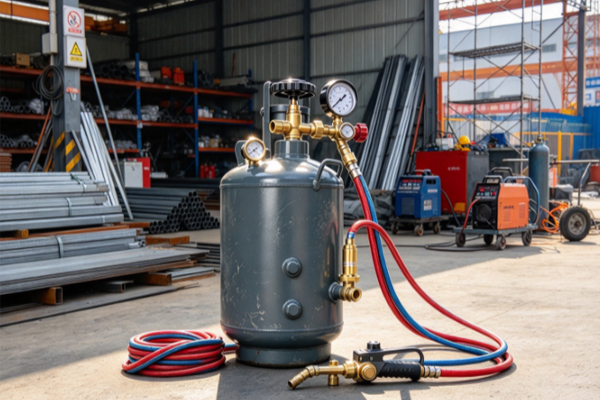
Hardware manufacturing relies heavily on metal joining, localized heating, welding, and cutting. Products such as brackets, pipe fittings, metal frames, and hardware tools often involve different metal shapes and thicknesses during production and repair. For the Hardware Industry, an acetylene generator can provide a suitable gas source for compatible oxy-fuel welding equipment, giving workshops more flexibility during metalworking. This is especially useful for small-batch production, custom hardware, and repair or rework tasks where production requirements can change frequently.
Which Hardware Welding Jobs Can Use an Acetylene Generator?
Hardware products may look relatively simple, but their manufacturing processes can involve many different operations. Metal brackets may require several connection points, pipe fittings may need joint treatment, and hardware tools may require localized heating or welding during repair. For these tasks, where manual operation and changing workpieces are common, a properly configured acetylene generator can provide gas support for compatible welding equipment.
How Do Welding Needs Differ Across Hardware Products?
Hardware factories often produce a wide range of products, so the way equipment is used can change from one job to another. Looking at common products alongside their actual applications makes it easier to identify where an acetylene generator can provide useful support.
| Hardware Product | Common Processing Tasks | Acetylene Generator Application |
| Metal Brackets | Welding, joining, local finishing | Works with compatible gas welding equipment |
| Pipe Fittings | Joint treatment, metal joining | Supports suitable welding operations |
| Metal Frames | Structural joining, localized heating | Supports work in different positions |
| Hardware Tools | Part repair, welding and rework | Suitable for flexible manual operations |
| Custom Hardware Parts | Small-batch production, rework | Convenient for non-standard workpieces |
Small-batch hardware production has different equipment requirements from standardized mass production. When workpieces change frequently, the flexibility of the gas supply system becomes more important.
Why Do Non-Standard Hardware Parts Need Flexible Welding Equipment?
Custom hardware parts rarely follow exactly the same production schedule. One day a workshop may produce metal frames, while the next order involves pipe fittings or hardware tools. Welding positions, workpiece dimensions, and processing times can all change.
When used with suitable welding equipment, an acetylene generator can support these changing workstations without forcing every task onto a large fixed production system. This flexibility is particularly useful for hardware workshops and small- to medium-sized processing facilities.
What Are the Advantages of Using an Acetylene Generator for Hardware Welding?
Once a hardware workshop gets busy, equipment usability can directly affect the operator’s workflow. The value of an acetylene generator is not limited to gas supply. Its flexibility across different welding workstations can also make daily production easier. For Hardware Industry companies handling small orders, metal repairs, and rework, a flexible gas supply setup can reduce unnecessary equipment adjustments.
Flexible Gas Supply for Different Processing Tasks
A hardware workshop may have welding stations, repair areas, and metalworking zones operating at the same time. Each area can involve different workpieces and different processing requirements.
- Flexible workstation use: Can work with suitable welding, heating, or cutting equipment.
- Convenient for small-batch jobs: Small custom orders can be handled without repeatedly changing the main production process.
- Useful for rework and repair: Suitable gas equipment can support localized repair tasks.
- More freedom for manual operations: Operators can adjust the work position more easily when workpieces change.
For hardware factories with frequently changing orders, equipment that can adapt to the production rhythm can be more practical than simply adding complicated configurations.
Why Is a Stable Gas Supply Important for Continuous Welding?
During peak production periods, welding stations may operate for longer hours. If work is repeatedly interrupted because of gas supply problems, the surrounding production processes can also be affected.
With a properly configured acetylene generator, compatible welding equipment can receive a continuous gas supply within its intended operating conditions. This helps operators maintain a smoother workflow, particularly in workshops with regular daily welding tasks.
What Are the Product Features of an Acetylene Generator for Hardware?
Once an acetylene generator enters a hardware workshop, it needs to work around different workpieces, workstations, and operating schedules. Product structure, gas supply, equipment compatibility, and routine maintenance all influence the actual user experience. An acetylene generator designed for Hardware Industry applications should fit into real production environments rather than being limited to one specific type of workpiece.
What Role Does an Acetylene Generator Play in Hardware Manufacturing?
An acetylene generator can serve as a gas supply unit working with compatible welding, cutting, and heating equipment. Different projects can use the equipment according to their actual processing requirements.
| Product Feature | Value for Hardware Processing | Typical Application |
| Gas Supply | Provides gas support for compatible equipment | Welding stations |
| Flexible Use | Adapts to changing workpieces | Custom hardware |
| Equipment Compatibility | Works with suitable processing equipment | Welding and heating |
| Workstation Adaptability | Supports work in different positions | Brackets, fittings, frames |
| Easy Maintenance Management | Supports routine inspection and maintenance | Hardware workshops |
Once the equipment is installed in a production environment, practical factors become more noticeable. Easy operation, convenient workstation changes, and compatibility with existing equipment all contribute to the overall user experience.
Useful for Repair and Rework Stations
Rework is difficult to avoid in hardware manufacturing. Weld repair, part adjustment, and localized processing are common tasks in many workshops.
Rearranging an entire production line for a small component issue can consume additional time and labor. When used with suitable equipment, an acetylene generator can provide gas support for qualified repair and localized processing work.
This is particularly useful for custom hardware manufacturers, where products in the same order may have different dimensions and structures. More flexible equipment can make these smaller, irregular tasks much easier to manage.
How Can an Acetylene Generator Welding Solution Improve Hardware Workshop Efficiency?
Hardware manufacturing is highly flexible. Small workshops need to respond quickly to changing orders, while larger factories may handle mass production, equipment repair, and product rework at the same time. An acetylene generator does not need to handle every production process. Instead, it can support workstations where suitable welding, heating, or cutting operations are required, giving the workshop a more flexible gas supply solution.
Where Do the Practical Advantages Show Up?
Once the equipment becomes part of daily production, its value is usually easy to see. Less equipment switching, easier handling of non-standard parts, and additional support for repair stations can all make a difference in hardware manufacturing.
- Reduces reliance on large fixed equipment for certain processing tasks.
- Makes small-batch orders more flexible to handle.
- Simplifies localized welding and rework when workpieces change.
- Allows gas supply to be arranged for different compatible workstations according to actual production needs.
For hardware workshops handling a wide range of orders, the biggest value is practical flexibility. When production requirements change, the gas supply setup can also be adjusted accordingly.
Proper Maintenance Helps Keep Equipment Stable
An acetylene generator should be inspected and maintained according to the manufacturer’s operating and maintenance instructions. If the piping, valves, connections, or other components show abnormal conditions, the equipment should be taken out of service and handled by qualified professionals.
Daily equipment management does not need to be complicated. Keeping records of inspection dates, maintenance work, and equipment issues can make long-term management much easier. For hardware factories with regular welding operations, this simple maintenance routine can help keep equipment in a more reliable working condition.
Hardware manufacturing involves many types of workpieces, from metal brackets and pipe fittings to hardware tools and custom frames. Welding, localized heating, cutting, and repair may all be required depending on the production task. An acetylene generator can provide gas support for suitable oxy-fuel applications while offering flexible use, workstation adaptability, and convenient equipment integration for the Hardware Industry. For companies focused on small-batch production, non-standard hardware, repair, and rework, a suitable acetylene generator can make related metalworking tasks more flexible and easier to organize.