
Hardware manufacturing enterprises involve processes such as cutting, welding, grinding, and assembly in production. As an important fuel gas, the stability of acetylene supply directly affects production rhythm and processing quality. A well-designed acetylene tank configuration plan can improve workshop efficiency while reducing gas waste and management costs. With the industry moving toward refinement and automation, enterprises are placing increasingly higher demands on the safety, continuity, and flexibility of gas supply systems. Systematic planning of acetylene tanks has therefore become an important foundation for enhancing competitiveness.
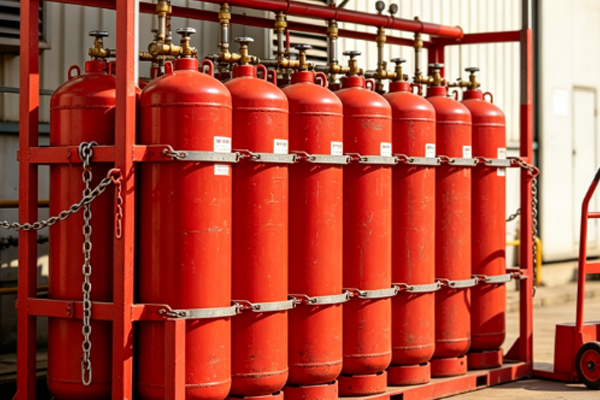
Why Should Hardware Manufacturing Enterprises Pay Attention to Acetylene Tank Configuration?
Hardware processing involves complex procedures and dispersed gas consumption points, placing continuous and stable requirements on the acetylene supply system.
Meeting Continuous Multi-Process Production Needs
Hardware manufacturing enterprises typically include multiple processing workflows with high dependence on acetylene, requiring continuous and stable supply. Metal cutting requires long-duration, stable high-temperature flames to ensure efficiency and quality. Welding processes require continuous and uniform flames, and pressure fluctuations can affect weld quality. Repair and precision finishing demand even higher flame stability and controllability. Once acetylene supply is interrupted or pressure becomes unstable, production rhythm is easily disrupted, affecting delivery cycles and overall efficiency.
Adapting to Distributed Gas Usage Across Multiple Workshops
Many hardware manufacturing enterprises adopt a zoned production model, where different areas undertake different processing tasks.
- Stamping and welding workshops are set separately to improve efficiency.
- Assembly and processing areas operate independently to reduce interference.
- Multi-station simultaneous operation requires high gas supply synchronization.
A properly configured acetylene tank and supply system enables stable multi-point gas delivery, improving coordination efficiency and overall production rhythm across workshops.
Reducing Safety and Management Risks
Acetylene is a flammable and explosive gas, and improper storage or use may lead to safety hazards.
- Excessive centralized cylinder storage increases management difficulty and risk.
- Frequent cylinder replacement may lead to improper operation and human error.
- Transportation and handling also involve certain risks.
A well-planned acetylene tank configuration reduces storage and circulation pressure, lowering accident risks at the source and improving overall safety.
Design Approach for Acetylene Tank Configuration in Hardware Enterprises
Enterprises of different scales and production modes should adopt differentiated design approaches for acetylene tank configuration to balance cost control and production efficiency.
Configuration Based on Production Scale
Different enterprise sizes have different requirements for gas supply systems.
- Small hardware workshops usually use single-point gas supply with simple structure and easy management, but stability must be ensured.
- Medium-sized enterprises typically adopt zoned gas supply to improve distribution efficiency.
- Large factories often use centralized gas supply combined with pipeline networks to achieve stable and continuous plant-wide supply.
Reasonable configuration based on scale helps avoid waste and overbuilding.
Planning Based on Gas Consumption Intensity
Different processing operations have significantly different acetylene usage frequency and intensity, requiring tiered planning. High-frequency welding areas require continuous and stable gas supply to maintain production rhythm. Intermittent processing areas can use reserve-based supply systems to reduce continuous supply pressure. Temporary maintenance or outsourced processing points are more suitable for mobile gas supply equipment to improve flexibility. Through intensity-based tiered configuration, enterprises can meet production needs while achieving better economic efficiency.
System Optimization Based on Workshop Layout
Workshop layout directly affects gas supply efficiency, so spatial structure must be carefully planned.
- Main gas supply points should be close to high-frequency operation areas to reduce transmission loss.
- Pipeline layout should be as straight as possible to reduce bends and pressure loss.
- Expansion interfaces should be reserved for future capacity upgrades.
A well-designed layout can significantly improve gas supply efficiency and system stability.
Comparison of Acetylene Tank Configuration Solutions for Hardware Enterprises
Different acetylene supply configurations have their own advantages and limitations in practical applications. Enterprises should choose based on their actual conditions.
| Configuration Method | Applicable Scale | Advantages | Limitations |
| Single-cylinder decentralized supply | Small enterprises | Low cost, flexible usage, suitable for early-stage production | Dispersed management, average stability, limited efficiency |
| Centralized pipeline supply | Medium to large enterprises | High stability, continuous supply, suitable for large-scale production | High initial investment, complex system |
| Mobile gas supply system | All types of enterprises | Flexible deployment, suitable for multi-station environments | Higher operational and management requirements |
When selecting a gas supply method, enterprises should consider production scale, process characteristics, and future development potential rather than relying solely on initial cost.
Key Optimization Measures to Improve Acetylene System Efficiency
A reasonable acetylene tank configuration is only the foundation. Later operation management and optimization also determine overall system efficiency and safety level.
Establish a Standardized Gas Supply Management System
Strengthening daily management is essential for ensuring safe operation of the acetylene supply system.
- Regularly inspect cylinder pressure, valve sealing, and pipeline conditions to ensure safe operation.
- Standardize operating procedures to reduce differences in personnel operation and minimize human error.
- Assign dedicated personnel for gas management with clear responsibilities for traceability.
Standardized management effectively improves system safety and stability.
Improve Equipment Utilization Efficiency
In system operation and management, refined control and maintenance should be emphasized.
- Avoid long-term idle operation to reduce gas waste.
- Adjust flame parameters according to different processes to improve gas efficiency.
- Regularly maintain pressure regulators, pipelines, and connectors to ensure stable supply.
The more stable the equipment operation, the higher the gas efficiency and production quality.
Introduce Flexible Gas Supply Equipment
In temporary or special production scenarios, more flexible gas supply methods can be used as a supplement.
- Suitable for temporary maintenance, emergency repair, and outsourced processing.
- Can quickly supplement gas when the main system pressure is insufficient or under maintenance.
- Enhances workshop emergency response and production continuity.
The use of flexible gas supply equipment improves the adaptability of the enterprise production system.
In hardware manufacturing production, the rational configuration of the acetylene supply system is directly related to processing rhythm and on-site safety management. Through systematic design of the gas supply structure and optimization based on actual production load, overall operational efficiency can be effectively improved while reducing unnecessary energy waste and operating costs. Zhongcheng Gas Tank specializes in industrial gas supply solutions. Its mobile acetylene generator adopts a flexible and efficient design, providing hardware manufacturing enterprises with safer, more stable, and highly adaptable gas supply support solutions.