
In metal processing workshops, operations such as cutting, welding, and heat treatment typically run continuously under high intensity. The stability of acetylene gas supply directly affects production rhythm and processing quality. Once fluctuations or interruptions occur, welding formation quality and cutting precision will be impacted. Traditional decentralized gas cylinder systems in multi-station operations are prone to frequent replacements and unstable pressure, leading to production interruptions and failing to meet the efficiency requirements of modern workshops. As a result, more and more enterprises are adopting centralized and systematized acetylene supply solutions to achieve stable delivery, reduce interruptions, and improve multi-station coordination and overall production efficiency.
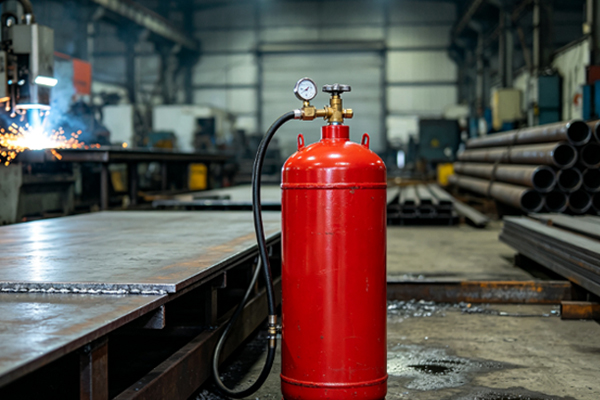
Why Do Metal Processing Workshops Need Centralized Acetylene Tank Supply?
Metal processing environments are typically equipment-dense and process-complex, requiring extremely high stability and continuity of gas supply.
Meeting High-Intensity Continuous Operation Requirements
Workshop production often requires long-term uninterrupted operation, and centralized gas supply effectively supports this production model.
- Ensures continuous welding and cutting operations, reducing downtime.
- Maintains stable flame output, resulting in smoother cutting edges and more uniform weld seams.
- Supports multi-shift production to ensure 24/7 stable gas supply.
- Maintains stable pressure output under high-load conditions.
A stable gas supply is the foundation for continuous production capacity release.
Adapting to Multi-Station Collaborative Production
Modern metal processing workshops usually operate multiple stations simultaneously.
- Multiple cutting machines and welding machines can use acetylene gas at the same time.
- Welding, processing, and maintenance areas can be supplied simultaneously.
- Avoid production line interruptions caused by single-cylinder replacement.
- Improve process coordination efficiency.
- Reduce labor intensity associated with gas cylinder handling.
A centralized gas supply system enables simultaneous operation of multiple stations, significantly improving overall production rhythm.
Core Structure of an Acetylene Tank Gas Supply System
A complete acetylene tank gas supply system consists of multiple functional modules that work together to ensure safe and stable operation.
System Core Components Overview
This section focuses on explaining the system’s core components and its operating mechanism.
| Module Name | Function | Operating Characteristics |
| Acetylene Storage Unit | Provides stable gas source | Strong continuous supply capability |
| Pressure Reducing & Stabilizing Device | Controls output pressure | Prevents pressure fluctuations |
| Gas Pipeline System | Gas transmission and distribution | Supports multi-point supply |
| Safety Monitoring System | Real-time operation monitoring | Automatic alarm for abnormalities |
| Centralized Control Module | Unified scheduling management | Improves management efficiency |
Each module has a clear function, making system operation more standardized and controllable.
Storage Capacity and Supply Capability Design
Proper design of the storage system is a key factor in ensuring long-term stable gas supply.
- Determine the number and specifications of acetylene tanks based on daily workshop production volume.
- Design the system according to peak gas consumption to avoid insufficient supply.
- Reserve 10%–30% safety redundancy in the design.
- Plan system expansion interfaces based on future production capacity growth.
- Avoid additional costs caused by frequent later modifications.
Scientific capacity planning effectively balances cost and supply stability.
Pressure Stability and Safety Control Mechanism
Acetylene is a flammable and explosive gas; therefore, safety control must be the top priority.
- Multi-stage pressure reduction structure to release pressure gradually and avoid sudden fluctuations.
- Pressure stabilizing devices continuously adjust output to ensure stable and controllable flame.
- Gas leakage detection system for real-time monitoring and alarm.
- Flashback arrestors to prevent flame backflow.
- Safety shutoff mechanisms at key points to enhance emergency response capability.
Multiple safety designs work together to reduce production risks.
Pipeline Layout Optimization Design
The pipeline system is the “blood vessel” connecting the gas source and equipment. Its design quality directly affects gas supply efficiency. It is typically necessary to use pressure-resistant and corrosion-resistant materials to extend service life, optimize pipeline routing to reduce bends and pressure loss, prioritize high-frequency stations for gas supply, and divide zones reasonably to avoid local overload. Maintenance access channels should also be reserved for future inspection and repair. Through scientific pipeline layout, overall gas supply efficiency and stability can be significantly improved.
Key Configuration Points for Acetylene Supply in Metal Processing Workshops
Workshops of different scales and production modes require differentiated system design.
System Planning Based on Workshop Scale
Selecting appropriate gas supply solutions according to enterprise size can effectively reduce costs and improve efficiency.
- Small workshops: basic gas supply system with simple structure and low investment.
- Medium workshops: centralized gas supply for multi-station unified supply.
- Large factories: zoned gas supply for parallel production areas.
- Extra-large production lines: intelligent systems for automated scheduling.
Proper planning avoids repeated modifications and improves investment efficiency.
Matching Equipment with Gas Supply Capacity
The gas supply system must match equipment load; otherwise, insufficient supply or waste may occur.
- Count simultaneously operating stations and calculate peak gas demand to avoid underestimation.
- Design with 10%–30% safety margin.
- Match pressure and flow parameters according to equipment type.
- High gas-consuming equipment should have dedicated supply optimization.
Only with proper matching can stable operation under high load be ensured.
Establishing a Standardized Maintenance System
Long-term stable operation of the gas supply system depends on scientific management and maintenance.
- Regularly inspect acetylene tanks and pipeline sealing to prevent leakage risks.
- Establish pressure and gas consumption data recording systems for operational analysis.
- Handle abnormal fluctuations promptly to prevent minor issues from escalating.
- Regularly replace key safety components such as valves and seals.
- Train operators to improve standardized operation levels.
A complete maintenance system significantly extends system service life.
Practical Value of Acetylene Tank Gas Supply Solutions
A centralized gas supply system is not only equipment upgrading but also an optimization of the production model.
Improving Processing Efficiency
Stable gas supply directly enhances production rhythm and processing quality.
- Greatly reduces downtime caused by cylinder replacement, improving continuous operation capability.
- Increases processing output per unit time.
- Ensures more stable and consistent cutting and welding quality.
- Makes overall production rhythm smoother and more efficient.
- Reduces rework rates caused by pressure fluctuations.
Efficiency improvement is highly significant in real production.
Reducing Overall Operating Costs
From a long-term operational perspective, centralized gas supply offers clear cost advantages, including reduced labor costs from handling and frequent cylinder replacement, improved gas utilization efficiency with less waste, reduced equipment wear from frequent start-stop cycles, and optimized energy efficiency and workshop management cost structure. Over time, these advantages become increasingly significant.
Supporting Workshop Expansion and Upgrading
Modern gas supply systems typically have strong scalability.
- Pipeline systems can be flexibly expanded for new production lines.
- Supports multi-zone simultaneous supply and zoned management.
- Adapts to continuous enterprise capacity expansion needs.
- Modular design facilitates future upgrades and modifications.
- Can be integrated with intelligent management systems.
This provides continuous support for future enterprise development.
With the metal processing industry moving toward higher efficiency and large-scale production, centralized acetylene tank gas supply systems have become essential infrastructure for modern workshops. They not only improve production efficiency and safety levels but also optimize overall operational structure, giving enterprises a stronger competitive advantage and stability. Zhongcheng Gas Tank focuses on industrial-grade gas supply system solutions, providing stable, efficient, and reliable acetylene supply support for metal processing workshops.