
Waste recycling stations handle large volumes of scrap metal, decommissioned mechanical equipment, and large steel structure dismantling tasks in their daily operations. Among these processes, metal cutting is one of the most critical and time-consuming stages. Propane gas cutting, with its high flame temperature, relatively low fuel cost, and flexible equipment operation, has been widely adopted in the recycling and renewable resources industry. By scientifically designing cutting solutions, recycling stations can improve metal dismantling efficiency, reduce energy consumption and operational safety risks, and ensure stable and efficient operations.
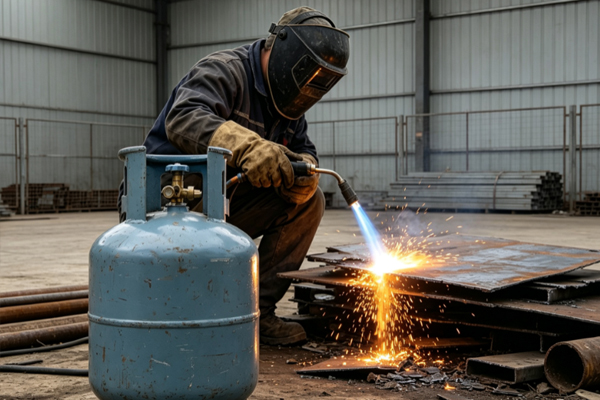
Why Do Waste Recycling Stations Need a Propane Gas Cutting System?
Recycling stations operate in complex environments with diverse metal types and varying sizes, requiring high adaptability and stability from cutting equipment. Therefore, a reliable propane gas cutting system is essential.
Meeting High-Intensity Metal Dismantling Requirements
The metal structures processed in recycling stations are complex and vary in thickness, making them difficult to dismantle with conventional tools.
- Scrap vehicle frames are thick and require fast cutting and separation.
- Large steel structures are bulky and must be processed on-site.
- Industrial equipment has complex structures and is difficult to dismantle.
Propane cutting provides a concentrated flame and stable high temperature, enabling efficient cutting of thick metals, improving efficiency while reducing labor intensity.
Adapting to Complex and Changing Work Environments
Recycling stations often lack fixed workshops, with dispersed work areas and variable site conditions, requiring high equipment flexibility.
- Outdoor operations are highly affected by weather, requiring stable equipment performance.
- Metal storage is scattered, and cutting positions often need adjustment.
- Frequent dismantling tasks require rapid equipment deployment.
Propane cutting equipment has a simple structure and is easy to move, allowing flexible positioning according to operational needs, improving continuity and adaptability in different environments.
Reducing Overall Operating Costs
Cost control is crucial for long-term operations in the recycling industry, and propane offers clear economic advantages.
- Lower procurement cost, suitable for high-frequency use.
- Simple structure, resulting in low maintenance costs.
- High energy utilization efficiency with minimal loss.
Long-term use of propane cutting systems helps reduce operating expenses while maintaining efficiency, improving overall profitability.
How to Scientifically Configure a Propane Gas Cutting System?
Configuration should be based on the scale of the recycling station, operational intensity, and development planning.
Equipment Configuration Based on Operational Scale
In the scrap metal recycling industry, different-sized stations have significantly different requirements for gas cutting systems.
- Small recycling stations: use portable equipment for scattered dismantling tasks.
- Medium-sized stations: deploy multiple cutting workstations to improve parallel operation capacity.
- Large recycling centers: adopt centralized gas supply or management systems to support continuous operations.
Proper configuration helps avoid equipment idle capacity or insufficient productivity.
Zoning Design Based on Work Areas
In metal processing workshops, different work zones have varying requirements for gas supply.
- Metal dismantling area: high-frequency operations requiring stable gas supply.
- Sorting and processing area: intermittent operations requiring flexibility.
- Temporary storage area: emergency dismantling requiring fast response.
Zoning design reduces transmission loss and improves overall operational efficiency.
Strengthening Safety Protection Systems
Since propane is a flammable and explosive gas, safety management must be prioritized. Anti-flashback devices should be installed to prevent flame backflow. Pressure relief protection and gas leakage alarm systems should be configured to monitor operating conditions in real time. Gas cylinders should be stored properly in ventilated areas, away from heat sources and open flames. With comprehensive safety measures, risks can be effectively reduced, ensuring personnel and equipment safety.
Comparative Analysis of Propane Gas Cutting Solutions
Different gas supply methods vary in application scenarios, cost, and management requirements. Recycling stations should choose based on actual conditions.
| Gas Supply Method | Application Scenario | Advantages | Limitations |
| Single-cylinder mobile supply | Small recycling stations | Flexible, low investment, easy operation | Limited gas supply capacity, suitable for low-intensity work |
| Centralized pipeline system | Medium to large recycling stations | Stable, suitable for continuous operation | High construction cost, long implementation cycle |
| Mobile centralized gas supply equipment | Multi-area recycling stations | Flexible and relatively stable, adaptable to complex environments | Requires strong management capability |
Enterprises should make decisions based on operational intensity, staffing, and development needs to ensure long-term stable operation.
Key Measures to Improve Propane Cutting Efficiency
In actual production, efficiency can be significantly improved and energy consumption reduced through optimized management and operational methods.
Establish Standardized Operating Procedures
Standardized workflows help reduce efficiency fluctuations and safety risks.
- Standardize ignition, flame adjustment, and shutdown procedures to ensure consistency.
- Regularly inspect hoses and joints to prevent gas leakage.
- Clearly define job responsibilities to avoid cross-operation.
Standardized management improves stability and reduces accident risks.
Optimize Cutting Operation Methods
Proper adjustment of cutting methods can reduce energy consumption while ensuring quality.
- Adjust flame and speed according to metal thickness.
- Use segmented cutting for large workpieces to reduce waste.
- Plan cutting paths in advance to improve efficiency.
Optimized operations improve overall efficiency without additional investment.
Strengthen Equipment Maintenance and Inspection
Equipment condition directly affects cutting quality and operational safety. A comprehensive maintenance system must be established. Regularly clean carbon deposits inside nozzles to maintain stable flame output. Inspect regulator performance to ensure consistent pressure delivery. Replace aged hoses and seals in time to prevent safety hazards. Good maintenance practices not only extend equipment lifespan but also reduce failure rates.
In the process of improving processing efficiency and strengthening safety management, proper configuration of propane gas cutting systems in recycling stations is particularly important. By optimizing gas supply structures, standardizing operational procedures, and improving safety management mechanisms, overall operational performance and economic benefits can be effectively enhanced. Zhongcheng Gas Tank focuses on industrial gas solutions, providing more efficient, safe, and flexible mobile gas supply equipment for the recycling industry.