
In the scrap metal recycling industry, cutting efficiency and operational safety are key factors that directly affect profitability. In recycling stations where the environment is complex, materials are diverse, and storage is often disordered, traditional cutting methods struggle to balance speed, cost, and safety. Oxygen-acetylene flame cutting offers advantages such as high concentrated temperature, strong adaptability, flexible operation, and low environmental requirements. It has become an important method for processing scrap steel, waste equipment, and large metal structures. By properly designing a cutting plan, operational efficiency can be significantly improved, labor intensity and safety risks can be reduced, and the overall economic benefits of recycling stations can be enhanced.
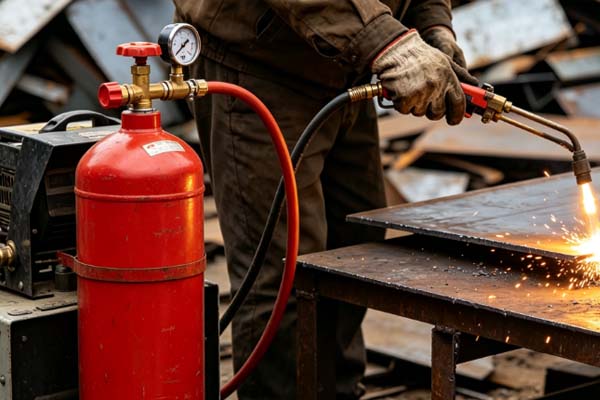
Why Do Recycling Stations Use Oxygen-Acetylene Flame Cutting?
The working environment in recycling stations is usually complex, with large metal volumes, irregular shapes, and high material mobility, which places high demands on adaptability and stability of cutting methods.
Adaptability to Complex Scrap Metal Structures
Recycling stations handle a wide variety of scrap metal sources, including industrial dismantled parts, construction waste, and decommissioned machinery structures. These materials often vary in thickness, have irregular shapes, and are heavily corroded. Oxygen-acetylene cutting can stably cut thick steel plates, waste machine shells, and large metal frames. Even complex assembled structures can be efficiently dismantled. It also maintains strong penetration capability for long-exposed, heavily rusted, or deformed metals without interruption. In addition, it does not rely on fixed power supply, making it suitable for open yards, temporary dismantling areas, and mobile operations. Even under unstable and complex scrap conditions, it maintains continuous cutting performance, improving on-site processing efficiency.
Improving Recycling Processing Efficiency
Oxygen-acetylene flame cutting uses a high-temperature concentrated flame for rapid heating and separation, offering significant efficiency advantages when processing large volumes of scrap.
- High flame temperature and concentrated energy enable fast preheating and penetration.
- Large equipment can be quickly dismantled into smaller metal pieces for easier handling and transport.
- Reduces manual hammering and mechanical dismantling steps, making the workflow smoother.
The rapid high-temperature cutting capability significantly shortens processing cycles and improves operational efficiency.
Reducing Equipment Investment Costs
For most recycling stations, equipment investment and maintenance costs are key considerations.
- Compared with large CNC or heavy dismantling equipment, oxygen-acetylene systems have lower purchase costs.
- Simple structure, with maintenance mainly focused on gas line inspection and consumable replacement.
- High mobility allows flexible adjustment of working positions based on scrap distribution.
With relatively low investment, high operational capability can be achieved, offering strong economic value and practicality.
Oxygen-Acetylene Flame Cutting System Components and Configuration Plan
A well-designed system configuration is essential to ensure cutting efficiency and operational safety. It should be tailored according to operational scale.
Basic System Components
The oxygen-acetylene cutting system consists of several key components that work together to ensure stable operation.
- Oxygen cylinder: provides combustion-supporting oxygen to increase flame temperature and cutting capability.
- Acetylene source: provides fuel gas and serves as the core energy source of the high-temperature flame.
- Pressure regulator: adjusts gas pressure to ensure stable output.
- Cutting torch: controls flame shape and cutting oxygen flow for precise cutting.
- Gas hoses: connect system components and must be pressure-resistant and explosion-proof.
All components work together to ensure stable and safe cutting operations
Selecting appropriate system combinations based on scale and workload helps balance efficiency and cost.
| Recycling Station Type | Configuration Method | Application Features |
| Small Station | Mobile oxygen-acetylene unit | Flexible, suitable for scattered and small-batch operations |
| Medium Station | Fixed + mobile hybrid system | Supports multi-station operation and improves scheduling efficiency |
| Large Recycling Base | Centralized gas supply + multi-cutting layout | Supports continuous high-intensity operation and large-scale processing |
Proper configuration improves efficiency and reduces long-term operating costs.
Oxygen-Acetylene Cutting Process
A standardized operation process is essential to ensure stable cutting quality and operational safety.
- Before operation, check cylinder pressure, pipeline sealing, and valve status to ensure no leakage.
- After ignition, adjust flame to neutral or slightly oxidizing flame.
- Preheat the cutting point until it reaches a red-hot state.
- Open cutting oxygen to perform cutting while maintaining a stable path.
- After operation, shut off gas supply and clean the work area.
Following standard procedures improves cutting quality and reduces safety risks.
Safety Management Key Points for Oxygen-Acetylene Cutting in Recycling Stations
Due to the complex environment, presence of flammable materials, and high personnel mobility in recycling stations, safety management must be strictly enforced throughout the entire process.
Pre-Operation Safety Inspection
Pre-operation inspection is a critical step in preventing accidents and reducing risks. Check whether gas cylinders are securely fixed to prevent tipping or collision, use soap water or detection tools to check for gas leaks at all connections, confirm that safety devices such as flashback arrestors are functioning properly, and clear flammable materials, oil stains, and debris from the work area to maintain a safe environment. Comprehensive inspection effectively reduces potential hazards.
Operational Safety Control
During actual cutting operations, strict adherence to safety procedures is required to ensure personnel and equipment safety.
- Operators must maintain a safe distance to avoid injury from flames or splashes.
- Cutting in enclosed or poorly ventilated areas is prohibited to prevent gas accumulation.
- Avoid prolonged heating at a single point to prevent localized overheating.
- Protective equipment such as face shields, fire-resistant gloves, and protective clothing must be worn.
Standardized operation is key to ensuring safety.
Post-Operation Management Measures
Post-operation management is equally important to eliminate residual hazards and ensure site safety.
- Close all gas valves and confirm gas supply is stopped.
- Inspect the work area to ensure no residual fire or high temperature remains.
- Organize hoses, cutting torches, and other equipment and return them to storage.
- Record daily operations and equipment status for future management.
A complete closing procedure helps ensure site safety and improves management standardization.
Application Advantages of Oxygen-Acetylene Flame Cutting in Recycling Stations
Oxygen-acetylene cutting technology not only improves scrap metal processing efficiency but also enhances operational flexibility and economic returns.
Improving Scrap Metal Processing Capacity
With high-temperature cutting capability, processing efficiency and capacity are significantly improved.
- Rapid dismantling of large scrap equipment for easier transport and processing.
- Improved metal sorting efficiency for better recycling classification.
- Reduced manual dismantling time, increasing operational efficiency.
Overall processing capacity is enhanced, improving station productivity and operational performance.
Enhancing Operational Flexibility
Oxygen-acetylene equipment has strong environmental adaptability and can be used in various scenarios. It is suitable for both indoor and outdoor operations without site limitations. The equipment is mobile and can be flexibly repositioned. It can cut metals of different shapes, thicknesses, and materials. This flexible operation improves on-site adaptability and efficiency. In addition, its simple operation helps reduce training costs and improve operational safety.
Increasing Economic Benefits
High-efficiency operation improves processing capacity and economic returns.
- Faster turnover of scrap metal improves cash flow.
- Higher recycling purity and classification value improve resource utilization.
- Reduced equipment and labor costs optimize operational expenses.
Overall economic benefits are significantly improved, enhancing long-term profitability and market competitiveness of recycling stations.
The application of oxygen-acetylene flame cutting solutions in recycling stations significantly improves scrap metal processing efficiency and operational safety. Through scientific equipment configuration, standardized operating procedures, and strengthened safety management, more efficient and stable recycling operations can be achieved. ZC Gas Tank focuses on industrial gas equipment solutions, providing reliable oxygen-acetylene gas supply support for recycling stations. In addition, this solution helps reduce manual handling and sorting pressure while improving overall resource recycling efficiency.