
Door, window, and guardrail products are commonly used in residential buildings, commercial properties, factories, and municipal projects. Although they may appear to be simple metal structures, every stage—from material cutting and welding to grinding—depends on stable processing conditions. Welding is particularly critical because it directly affects the strength of the product, the appearance of the welds, and the long-term durability of the finished product. To make the welding process smoother and more stable, acetylene cylinders have become commonly used gas supply equipment in many door, window, and guardrail fabrication workshops.
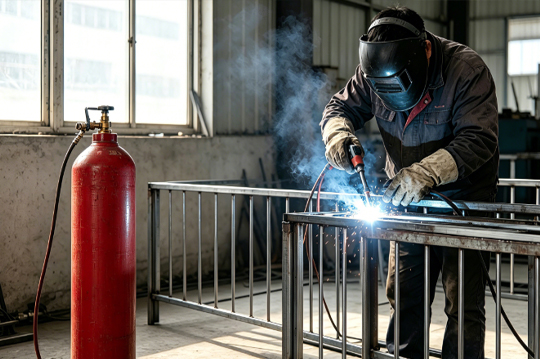
In door, window, and guardrail manufacturing facilities, different orders often involve different dimensions, materials, and welding requirements. Workers must quickly complete assembly and welding according to engineering drawings, making a stable gas supply especially important. Properly configuring acetylene cylinders and supporting gas supply systems not only ensures a more stable welding flame but also reduces downtime caused by cylinder replacement, resulting in smoother workshop production and more convenient daily management.
Basic Functions of Acetylene Cylinders in Door, Window, and Guardrail Welding
Although door and window guardrails come in many styles—including wrought iron, stainless steel, square tubes, and round tubes—they all share one common feature during manufacturing: various components must be securely joined through welding. If the heat source is unstable during welding, defects such as uneven welds, weak joints, or poor weld formation may occur. Therefore, stable gas supply equipment has always been an important part of the workshop, with acetylene cylinders serving as one of the core components.
What Is an Acetylene Cylinder?
An acetylene cylinder is an industrial gas cylinder specially designed for storing and transporting acetylene gas. Since acetylene is a flammable gas, it cannot be stored as simply as ordinary gases. Therefore, the cylinder is typically designed with special porous filler materials and solvents that allow acetylene to be stored and transported under relatively safe conditions, reducing risks during use.During welding, acetylene passes through a pressure regulator and gas delivery pipeline before entering the welding torch, where it is mixed with oxygen and burned to produce a high-temperature, concentrated flame. This flame is well suited for door and window guardrail welding, localized heating, metal finishing, and other common workshop applications.
Why Is Acetylene Welding Needed for Door and Window Guardrail Manufacturing?
Door and window guardrail products are generally made from steel pipes, stainless steel pipes, square tubes, round tubes, and other metal materials. During fabrication, these materials require tack welding, full welding, and localized repair work.
Common applications include:
● Wrought iron guardrail welding
● Stainless steel railing fabrication
● Door and window frame assembly
● Security window welding
● Metal component joining
When acetylene is mixed with oxygen and burned, it produces a high-temperature flame with concentrated heat and rapid heating capability. This makes it particularly suitable for welding and finishing metal structural components such as doors, windows, and guardrails.This method not only improves welding efficiency but also makes weld seams easier to control, resulting in better appearance and stronger finished products.
Advantages of Acetylene Cylinders in Door and Window Guardrail Production
As the door and window guardrail industry continues to shift toward customized production, small batch manufacturing, and multiple product specifications, companies are placing increasingly higher demands on gas supply equipment.Acetylene cylinders are widely used because they are easy to move, provide stable gas supply, and adapt well to different processing environments.
| Comparison Item | Acetylene Cylinder Gas Supply | Ordinary Temporary Gas Supply |
| Gas Supply Stability | High | Average |
| Welding Efficiency | High | Low |
| Operational Flexibility | Good | Average |
| Suitable for Continuous Production | Yes | Generally |
| Management Convenience | Good | Relatively low |
Acetylene cylinders provide a relatively stable gas supply, reducing production interruptions caused by insufficient pressure or frequent cylinder replacement.As a result, welding stations can operate more smoothly, allowing the overall workshop efficiency to remain at a stable level.
Acetylene Cylinder Usage Process in Door and Window Guardrail Welding
To ensure welding quality and production safety, acetylene cylinders require proper planning, standardized installation, and continuous management before being put into service. Standardized operating procedures not only improve gas supply efficiency but also make the entire production process more efficient.
Gas Supply Planning Before Production
Different door and window guardrail manufacturers vary in size and order types, resulting in significant differences in acetylene consumption.Some workshops produce only a small number of customized products each day, while others operate multiple welding stations simultaneously for extended periods with high gas consumption.
Companies usually evaluate the following factors:
● Daily production volume
● Number of welding stations
● Product specifications
● Work shifts
● Gas usage frequency
Based on these factors, the number of acetylene cylinders and the gas supply method can be determined to better match actual production requirements.This prevents production delays caused by insufficient gas preparation while avoiding waste from excessive equipment allocation, resulting in a more efficient overall arrangement.
Acetylene Cylinder Installation and Equipment Connection
After acetylene cylinders arrive at the workshop, they should not simply be placed in a corner and used immediately. Their placement location, securing method, and pipeline connections all affect operational safety and gas supply performance.Especially in door and window guardrail fabrication workshops, where numerous welding machines and frequent worker movement are common, installation work should be carried out carefully to avoid unnecessary problems later.
The following points generally require attention during installation:
| Installation Requirement | Description |
| Stable placement | Prevent tipping |
| Good ventilation | Maintain proper air circulation |
| Avoid high temperatures | Keep away from fire and heat sources |
| Pipeline connection | Ensure reliable sealing |
| Securing measures | Prevent movement and collision |
After installation is completed, the pressure regulator, valves, and gas hoses should all be inspected to ensure proper connection and verify that there are no loose fittings, gas leaks, or abnormal pressure conditions.A trial operation should preferably be conducted before formal production begins. Confirming stable equipment performance before operation is both safer and more consistent with standard workshop management practices.
Gas Supply Management During Welding
Once formal welding begins, the acetylene gas supply system must operate continuously.At this stage, gas pressure stability, flame consistency, and unobstructed gas pipelines all directly affect weld quality.If gas supply fluctuates, welding becomes more difficult for operators, and inconsistent weld joints are more likely to occur.
During production, the following items should typically be monitored:
● Cylinder pressure changes
● Flame combustion condition
● Gas pipeline condition
● Gas consumption rate
● Daily operating records
By recording these conditions, workshop managers can more easily evaluate equipment status and quickly identify abnormal situations.For example, excessively rapid pressure drops, unstable flames, or overheated pipelines may all indicate that equipment inspection is required.Paying closer attention during routine operation helps prevent many potential problems later.
Supporting Technologies for Acetylene Cylinders in Door, Window, and Guardrail Welding
Nowadays, many workshops are no longer satisfied with simply having a gas supply available. Instead, they place greater emphasis on whether the gas supply is stable, safe, and capable of supporting long periods of continuous production. For this reason, the supporting technologies used with acetylene cylinders have become increasingly important.
Stable Gas Supply Technology
During door, window, and guardrail welding, flame stability directly affects weld formation quality. If the gas supply pressure fluctuates significantly, problems such as uneven weld spots, irregular weld seams, and localized overheating can easily occur. Although these issues may seem minor, they can affect finished product quality and increase rework.Gas supply systems typically use pressure regulators and flow control devices to maintain a stable gas supply, allowing the welding torch to produce a more uniform and controllable flame. This makes welding easier for operators and helps maintain consistent weld quality.
Stable gas supply can provide the following benefits:
| Item | Performance |
| Weld Quality | More uniform |
| Flame Stability | More stable |
| Welding Efficiency | Higher |
| Gas Utilization | Improved |
| Product Consistency | Better |
A stable gas supply not only improves the appearance of finished products but also reduces the need for rework and repair welding. For workshops, this improvement is highly practical because it directly affects production schedules and delivery efficiency.
Continuous Production Gas Supply Technology
Many door, window, and guardrail manufacturers use production lines or semi-automated production lines. Once welding stations begin operating, they often continue working for extended periods.If the gas supply cannot keep up, welding stations are forced to stop, disrupting the entire production line. Therefore, continuous gas supply capability is particularly important.By properly configuring the number of acetylene cylinders and selecting an appropriate gas supply method, a more stable gas output can be maintained while reducing interruptions caused by frequent cylinder replacement.
This approach offers the following advantages:
● Reduce cylinder replacement frequency
● Improve equipment utilization
● Reduce downtime
● Ensure production continuity
● Improve processing efficiency
Continuous gas supply has become a common configuration for many large-scale manufacturers. It not only makes operation more convenient for workers but also helps managers schedule production more efficiently, resulting in more stable overall productivity.
Safety Protection Technology
Since acetylene is a flammable gas, safety is always the top priority during operation. While many workshops focus on production efficiency, they also pay close attention to issues such as gas leakage, flashback, and abnormal pressure.When proper safety measures are in place, equipment operates more reliably and employees can work with greater confidence.Gas supply systems are typically equipped with comprehensive safety protection devices to improve operational reliability and reduce the likelihood of accidents.
Common configurations include:
● Flashback arrestor
● Pressure reduction protection device
● Gas leak detection equipment
● Emergency shut-off device
● Pressure monitoring device
These devices help operators quickly detect abnormal conditions such as flashback, excessive pressure, or pipeline leakage. Once an abnormal situation occurs, the system can respond rapidly to reduce risks and ensure workshop safety.
Equipment Management and Maintenance in Door, Window, and Guardrail Welding
Acetylene cylinders and their supporting equipment cannot simply be installed and left unattended. Daily inspections, regular maintenance, and operator training are all essential.Many equipment failures do not occur suddenly but gradually develop because routine inspections and scheduled maintenance are neglected.Careful management allows equipment to support production more reliably over the long term.
Daily Inspection System
Simple inspections before starting work and after shutting down each day help identify problems early and reduce the impact of equipment failures.
Inspection items generally include:
● Cylinder appearance
● Valve condition
● Gas pipeline
● Pressure regulator operation
● Safety accessories
Consistent inspections help ensure the long-term stable operation of the equipment.
Equipment Maintenance
After prolonged use, acetylene cylinders and their supporting equipment may accumulate dust, sealing components may age, and hoses may become worn due to repeated bending.Regular maintenance is therefore essential for keeping equipment in good operating condition.Proper maintenance often extends equipment service life and ensures more stable operation.
Maintenance tasks include:
● Cleaning equipment surfaces
● Inspecting sealing components
● Replacing aged hoses
● Calibrating pressure gauges
● Inspecting safety devices
Proper maintenance helps reduce equipment failures and extend service life.
Operator Training
No matter how advanced the equipment is, proper operation is still essential.In door, window, and guardrail welding workshops, operators work with gas cylinders, valves, pipelines, and welding torches every day. Without standardized operating procedures, improper operation or management confusion can easily occur.Training is important not only for safety but also for improving production efficiency.
Companies can regularly organize:
● Operating procedure training
● Safety knowledge training
● Emergency response training
● Routine maintenance training
● Management system training
Through continuous training, employees become more familiar with proper equipment operation and gain a clearer understanding of which practices should be avoided.As a result, the overall safety level of the workshop is improved, and production efficiency becomes more consistent.
Frequently Asked Questions
Q: How should door and window guardrail manufacturers choose the appropriate size of acetylene cylinder?
A: The selection of acetylene cylinder specifications should be based on the company’s production scale, the number of welding stations, and daily gas consumption.Small workshops with relatively light welding workloads may choose a gas supply solution using fewer cylinders that are easier to move.For larger door and window guardrail manufacturers operating multiple welding stations with continuous production, larger-capacity gas supply systems—or even centralized gas supply systems—are recommended. This helps reduce downtime caused by frequent cylinder replacement and improves overall production efficiency.Before purchasing, it is advisable to consult with a professional supplier to determine the most suitable configuration based on actual production requirements.
Although door, window, and guardrail welding is a common metal fabrication process, welding quality and production efficiency always depend on a stable and reliable gas supply.With advantages such as stable gas delivery, convenient mobility, and strong adaptability, acetylene cylinders have become essential equipment for many door, window, and guardrail manufacturers.From material cutting and frame assembly to welding, forming, and final finishing, acetylene gas provides continuous and stable heat support throughout the entire manufacturing process, ensuring smoother production.
Properly configuring acetylene cylinders, standardizing installation procedures, and strengthening routine maintenance management not only improve welding quality but also reduce equipment downtime and lower production costs.Choosing reliable acetylene gas supply products provides stronger support for stable production and sustainable business development.If you are looking for acetylene cylinders and complete gas supply solutions for door, window, and guardrail welding applications, please feel free to contact us. We will recommend the most suitable products and solutions based on your specific production requirements.