Acetylene tank installation may seem like nothing more than a simple on-site connection task, yet it actually involves multiple critical steps such as equipment selection, site layout, pipeline sealing, pressure control, and safety protection. If any detail is handled improperly, it may affect gas supply stability and even create safety hazards. For industrial scenarios such as welding, cutting, and maintenance, whether acetylene tank installation is carried out in a standardized way directly determines whether subsequent operations can proceed smoothly, and it also affects a company’s production efficiency and management costs. Only by refining, implementing, and standardizing the installation process can the entire gas supply system operate stably over the long term.
Basic Preparation Before Acetylene Tank Installation
Before the acetylene tank is officially installed, the site and equipment conditions should be confirmed in advance so that the subsequent work will proceed more smoothly and the risk of rework and hidden hazards can be reduced.
- The installation area should be well ventilated to prevent gas accumulation.
- Keep away from open flames, high-temperature equipment, and storage areas for flammable materials.
- The ground should be flat, solid, and capable of bearing sufficient load.
- Reserve operating space and maintenance passages for future servicing.
- The installation location should allow easy observation of the pressure gauge and valve status.
Equipment inspection should also be completed at the same time. Before installation, the tank body, valve condition, pressure gauge readings, and all connection accessories must be checked item by item to confirm that there is no damage, looseness, or abnormal condition before use.
- Check whether the tank body has dents, deformation, or corrosion.
- Inspect whether the valves, pressure gauge, and connectors are intact.
- Verify whether hoses, sealing parts, and flashback arrestors are complete.
- Any abnormal component should be handled before entering the installation process.
- Confirm that the equipment model matches the on-site gas consumption requirements.
Only after completing the above checks can the formal installation stage begin, ensuring safe and stable operation of the acetylene tank system.
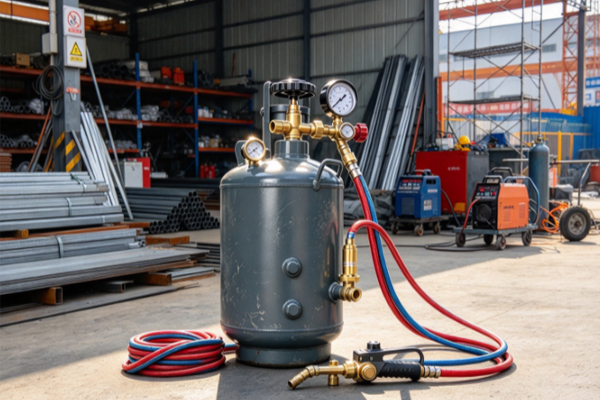
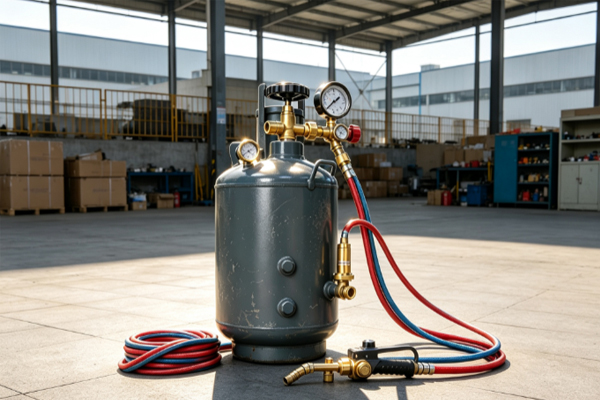
Description of the Acetylene Tank System Structure
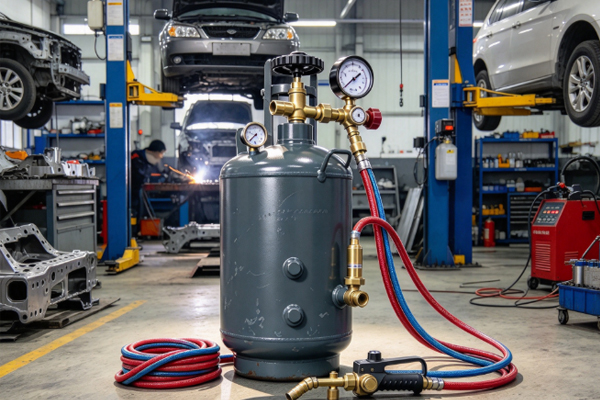
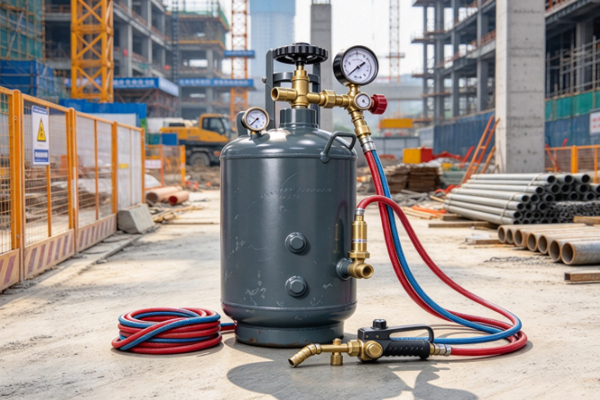
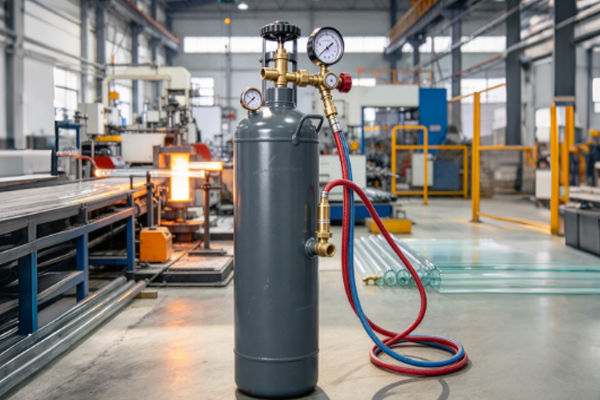
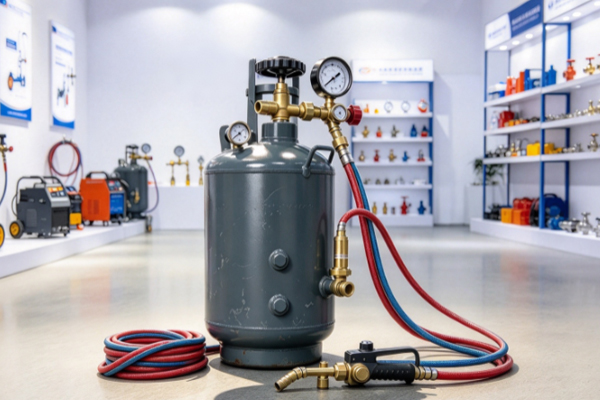
Acetylene tank installation is not simply about placing equipment on site; it is a complete gas supply system combination. Each component performs a different function, and only when they work together can a stable and safe operating state be achieved.
- The acetylene tank body is responsible for gas storage.
- The pressure-reducing device is used to control output pressure.
- The flashback arrestor provides safety protection.
- The delivery pipeline is responsible for gas transmission.
- The monitoring system is used to track operating conditions.
- The valve assembly is used for start-stop control and flow adjustment.
This type of system design is consistent with common industrial gas supply concepts, with the focus placed on stable gas supply and safety control. For enterprises that require long-term continuous operation, a systematic configuration is more reliable than temporary assembly and is also more convenient for later maintenance.
Pipeline connection quality directly affects the performance of the entire system. Use dedicated pressure-resistant hoses, seal the joints properly, avoid excessive bending, stretching, or compression of the hoses, check whether each connection point is secure after installation, and keep the pipeline layout as simple as possible to reduce crossing and friction.
Standard Acetylene Tank Installation Procedure
The installation process should be carried out step by step to reduce omissions and operational mistakes. A clear workflow makes on-site execution easier to standardize and also simplifies later inspection and acceptance.
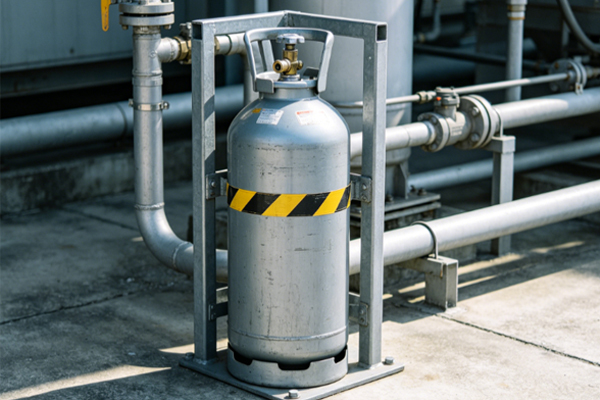
- Equipment positioning and fixing:The placement of the equipment determines whether future use will be convenient and safe, and it also affects daily inspection efficiency. Therefore, the acetylene tank should be kept in a vertical position, secured with a fixing bracket to prevent tipping, maintained at a safe distance from surrounding equipment, provided with enough space for maintenance and daily operation, and kept away from areas with frequent pedestrian traffic.
- Pipeline and equipment connection:The key points in the connection stage are sealing performance and sequence compliance. The pressure-reducing device should be connected first, followed by the installation of the flashback arrestor, and then the pipelines should be connected one by one according to the equipment interface requirements. Check the tightness of each joint, confirm that the hose routing is reasonable and free from crossing or entanglement, and verify the valve status again after the connection is completed.
- System commissioning and testing:After installation, the system should not be put into use immediately. Commissioning is required first, including pressure testing, checking whether the interfaces and pipelines are leaking, observing pressure changes during operation, confirming that there are no abnormalities before formal operation, and recording the commissioning results for future tracking.
Only when each step is properly implemented can the acetylene tank system be put into long-term use in a more stable and safer manner.
Key Points for Safety Control in Acetylene Tank Installation
Acetylene tanks are high-risk gas equipment, so safety control must run through the entire process. When safety is emphasized during installation, operation will be more reassuring later on.
- Keep the installation site continuously ventilated.
- Prohibit open flames, sparks, and high-temperature heat sources from approaching.
- Set up clear safety warning signs.
- Construction personnel should receive professional training before taking the job.
- Use dedicated tools for installation and commissioning.
- Do not use hammering, forced tightening, or other rough operations.
- The installation area should be equipped with necessary emergency response measures.
A continuous inspection mechanism should also be established during operation. Through regular inspections of pressure status, sealing conditions, valve action, and pipeline connections, abnormalities can be detected and handled in time, allowing the acetylene tank to remain stable, safe, and controllable during long-term use.
- Check regularly whether the pressure status is normal.
- Inspect pipeline sealing and joint tightness.
- Record inspection results and build a maintenance file.
- Stop the system and handle abnormalities immediately.
- Replace aging components in time to avoid operation with hidden defects.
Only by doing daily inspections well can the acetylene tank system maintain stable and safe operation over the long term.
Practical Value Brought by Standardized Acetylene Tank Installation
Standardized installation is not only related to safety, but also affects production efficiency and later costs. Many enterprises find that the more standardized the initial installation is, the easier later maintenance becomes and the more stable the overall operation will be.
- More stable gas supply, making welding and cutting operations more continuous.
- Smaller operating fluctuations, reducing downtime and rework.
- Risks such as leakage and flashback are easier to control.
- Clear system structure, making later maintenance more convenient.
- Better equipment service life and lower management costs.
- More orderly on-site operations and higher overall efficiency.
For enterprises that require long-term stable gas supply, standardized installation is often a key step in improving comprehensive benefits.
Acetylene tank installation standards and operating procedures are not complicated. The key lies in executing each step according to standards, implementing site preparation, equipment connection, system commissioning, and safety management properly, so that the entire gas supply system can operate stably over the long term. For industrial welding and cutting, metal processing, and equipment maintenance applications, standardized installation is not only a safety requirement but also an important foundation for improving efficiency. Zhongcheng Gas Tank can provide reliable support for industrial gas systems and help enterprises build a safer and more efficient working environment.