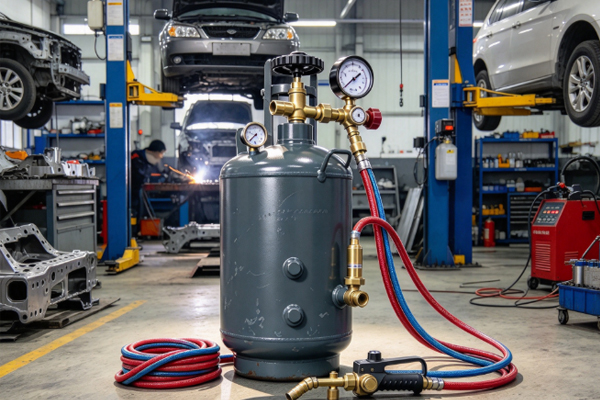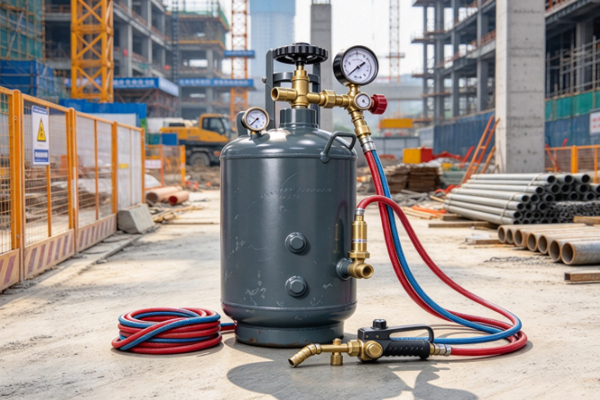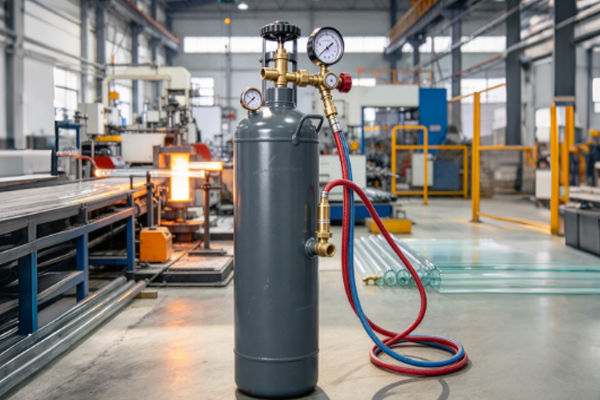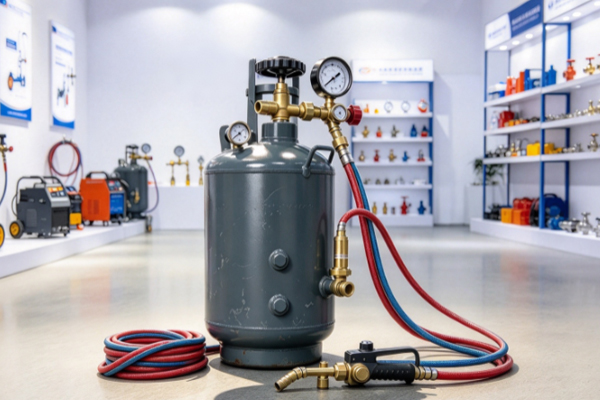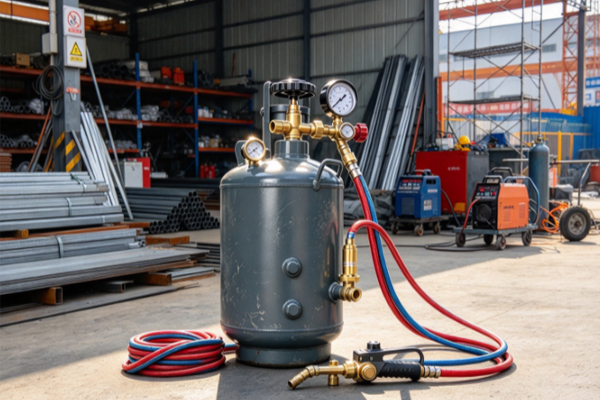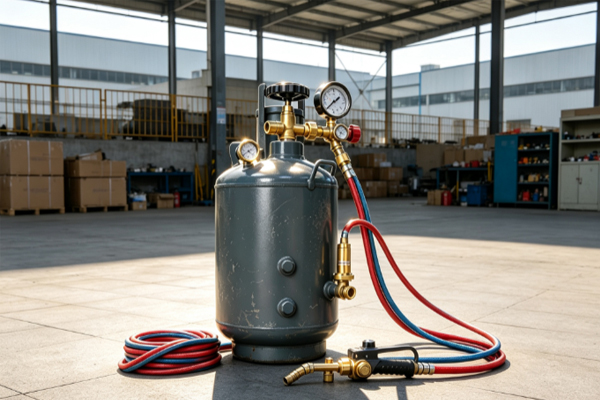
Industrial acetylene tanks are commonly used in hardware processing, metal cutting, welding repair, and other work sites, making them high-frequency gas supply equipment. During installation, many people focus more on tank specifications, pipeline connections, and valve configurations, while easily overlooking the planning of surrounding operating space. In fact, whether the space is sufficient directly affects whether the equipment can be started and stopped safely, whether daily inspections are smooth, and whether later maintenance is efficient. For an acetylene system, operating space is not an optional condition, but a basic requirement that must be implemented in advance within the installation plan.
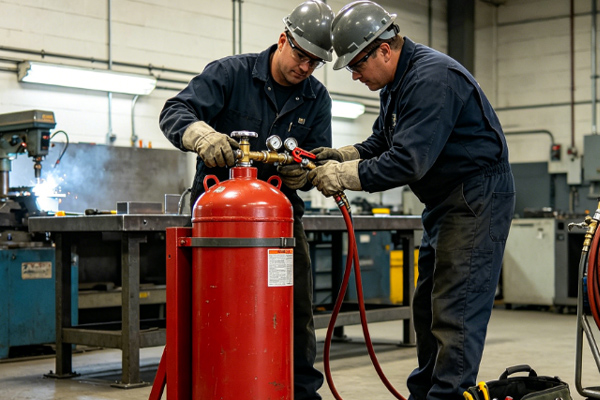
Operating Space and Safety Boundaries
The spatial arrangement around acetylene equipment directly determines whether the on-site safety boundary is clearly defined.
Making Emergency Response More Manageable
Acetylene is a flammable gas. Once the equipment becomes abnormal, on-site personnel need to quickly approach the valve, pressure gauge, and connection points for handling. When the surrounding space is sufficient, personnel can rapidly complete actions such as shutting off the valve, cutting off the gas supply, and checking for leaks without being blocked by equipment, walls, or clutter, making emergency response more continuous and helping keep the risk within a smaller range.
- It is easier to quickly reach key parts, reducing movement restrictions in emergencies and improving the efficiency of shutting off the gas source and checking abnormalities.
- In sudden situations, personnel do not need to detour or squeeze into narrow areas, allowing them to complete judgment and handling more quickly and reducing the possibility of risk spread.
- The more spacious the area, the easier it is for on-site personnel to maintain a stable operating rhythm and avoid mistakes caused by panic.
Reasonably reserving operating space is not only for convenience in operation, but also to leave a safe passage for the acetylene tank during operation.
Reducing Accidental Contact and Mechanical Damage
If tools, materials, or other equipment are stacked around the acetylene tank, collisions are likely to occur during daily movement. Once key parts such as pipelines, joints, and valves are squeezed or accidentally touched, the result may be mild instability in gas supply, or in severe cases, leakage risks, and even equipment failure in a short time. Reserving enough operating space can prevent personnel from accidentally touching the equipment while passing by, keep the area around the tank clearer, and reduce unnecessary contact; it can also reduce the chance of hoses and joints being squeezed, preventing loosening, deformation, or seal failure caused by external force; it can also lower the risk of valve damage and loosening, allowing the equipment to remain more stable during long-term use. Reserving enough operating space is not only for easier use, but also to ensure that the acetylene tank operates in a safe and stable environment for the long term.
Facilitating Safety Isolation Management
Reasonable spatial planning can also help establish a clearer safety zone on site. If an independent operating zone can be reserved around the acetylene tank, workers will more easily identify the equipment range during inspection, startup, shutdown, and maintenance, and it will also be easier to set warning signs and protective measures, making the overall safety management of the site more intuitive and unified.
- It is easier to divide the operating area and the passage area, keeping clear boundaries between different functional zones and reducing cross-interference.
- It is convenient to arrange safety signs and isolation measures, allowing on-site personnel to identify the equipment location and hazard range at a glance.
- It helps form standardized management habits, making safety requirements easier to implement and maintain in daily operations.
Reserving enough operating space is not only for easier use, but also to make every step after acetylene tank installation more secure and controllable.
Operating Space and Daily Maintenance
Equipment installation does not mean the work is finished; subsequent maintenance also depends on a reasonable spatial layout.
Improving Inspection Efficiency
An acetylene tank is not a device that can be left unattended after installation. It requires regular checks of pressure status, interface sealing, hose wear, and valve flexibility. When the operating space is sufficient, inspectors can observe the equipment from multiple angles, and the inspection actions are more complete, allowing many detailed problems to be discovered and handled earlier.
- It is convenient to check the pressure gauge and valve status, making it easier for inspectors to understand the equipment operating condition.
- It is easier to check whether there are leaks at the connections, preventing some minor abnormalities from being overlooked in the early stage.
- It helps identify hose aging and wear problems, making maintenance more targeted and timely.
The more reasonable the operating space reservation is, the smoother the inspection, maintenance, and safety management of the acetylene tank will be, and long-term operation will also be more stable.
Making Repair Work Easier
After the equipment has been running for a period of time, issues such as seal aging, loose pipelines, or valve abnormalities are inevitable. Repair work requires tools to be disassembled, angles adjusted, and parts replaced. If the surrounding space is narrow, tools cannot be fully deployed and personnel cannot find suitable operating positions, repair efficiency will drop significantly, and downtime may even be prolonged due to restricted operation.
- It is convenient for tools to be deployed and parts to be disassembled, allowing maintenance personnel to complete inspection and replacement more thoroughly.
- It reduces posture restrictions during repair, lowering the difficulty caused by bending, turning sideways, or reaching too far.
- It shortens downtime and troubleshooting time, allowing the equipment to resume operation more quickly and reducing the impact on production rhythm.
Reserving enough maintenance space is not only for operational convenience, but also to ensure higher safety and stability in the later maintenance of the acetylene tank system.
Facilitating Future Upgrades and Replacement
The gas supply needs of industrial sites are not fixed. As output increases or processes change, the acetylene system may need additional accessories, pipeline adjustments, or replacement with more suitable equipment. If operating space is reserved in advance during installation, later upgrades will not require large-scale dismantling and reconstruction, and many adjustments can be completed based on the original layout.
- It is convenient to add pressure-reducing devices or auxiliary accessories, so system expansion does not require re-planning the entire structure.
- It is easier to replace pipelines and connectors, reducing interference and rework during dismantling and installation.
- It lowers secondary construction and rework costs, saving enterprises both time and effort during later adjustments.
Reserving operating space is not only for smooth installation at the present stage, but also to leave room for future upgrades and long-term use.
Operating Space and Site Layout
When space planning is done well, the relationship between equipment becomes clearer and on-site operation becomes more orderly.
Making Equipment Flow More Clear
An acetylene tank usually does not exist alone; it is part of a working system together with oxygen cylinders, welding and cutting tools, and gas pipelines. When the spatial planning is reasonable, the relationship between equipment becomes clearer, and the routes for personnel to access, inspect, and operate become smoother, making the entire work process more orderly.
- Equipment placement becomes more layered, keeping a reasonable distance between different devices and reducing mutual interference.
- Personnel operating routes become clearer, making actions such as access, inspection, startup, and shutdown easier to complete.
- Cross-interference and back-and-forth detours are reduced, making the on-site work rhythm more stable and easier to manage.
When operating space is properly reserved, the safety, efficiency, and site management level of the acetylene tank system will all improve further.
Adapting to Different Work Scenarios
Different scenarios have different space requirements. Hardware workshops focus more on continuous operation efficiency, scrap dismantling sites focus more on mobility, and remote construction sites focus more on flexible temporary setup. In any scenario, acetylene tank installation should not only consider whether it can fit, but also whether it can be operated, maintained, and handled in emergencies. Workshop scenarios require stable equipment layout, smooth operation, and convenient maintenance; construction sites require rapid setup, rapid adjustment, and rapid relocation; dismantling sites place more emphasis on transfer efficiency. The more reasonable the spatial planning, the easier it is to move and redeploy the equipment. By reserving operating space properly, acetylene tank installation can truly balance safety, efficiency, and long-term user experience.
Improving the Standardization of Site Management
In a site with clear spatial planning, equipment zoning will be more distinct, and inspection routes will be easier to fix. When arranging work, managers can more quickly determine which areas are operating zones, which are safety zones, and which areas need to remain unobstructed. This clear layout makes management actions more unified and easier to implement.
- It is convenient to fix inspection routes, making inspection work more regular and easier to turn into a standardized process.
- It is convenient to define responsibility zones, so each position knows which equipment and areas it needs to monitor.
- It is convenient to implement unified management standards, keeping site order more stable and reducing confusion caused by temporary adjustments.
Such spatial reservation is not only for easier operation, but also to keep acetylene tank installation management stable over the long term.
Consequences of Insufficient Operating Space and Reservation Suggestions
Whether the reserved space is reasonable often becomes evident directly during later operation.
Chain Reactions Caused by Insufficient Space
If the space around the acetylene tank is too small, problems often do not appear as isolated issues, but as chain reactions. Inconvenient operation affects inspection, incomplete inspection increases the probability of failure, and difficult fault handling prolongs downtime. The operating experience of the entire system will be affected.
- Inspection actions are incomplete, and many details can only be checked hastily, making it difficult to detect potential problems in time.
- Fault troubleshooting efficiency decreases, as personnel have difficulty quickly locating abnormal points in a narrow environment.
- Downtime losses and maintenance costs increase, and over time the equipment usage efficiency will decline significantly.
Only by reserving enough operating space can the acetylene tank remain stable in safety, maintenance, and efficiency at the same time.
Key Points to Pay Attention to When Reserving Space
When planning space before installation, it is not enough to look only at the tank body size. The valve opening angle, tool operating range, personnel standing position, maintenance passage, and emergency evacuation route must all be considered together. The area around the equipment should remain well ventilated and should not be too close to heat sources, ignition sources, or frequently trafficked areas. Only then can the reserved space truly play its role.
- Reserve valve operating angles so that opening, closing, adjustment, and inspection can all be completed smoothly.
- Ensure that maintenance passages remain unobstructed so repair personnel can enter and exit quickly when needed.
- Avoid high-temperature and ignition-source areas to reduce additional risks from the external environment to the acetylene equipment.
The more detailed the space reservation, the smoother and safer the later use of the acetylene tank will be.
Establishing a Long-Term Mindset from the Installation Stage
Acetylene tank installation is not simply about placing the equipment once; it is about laying the foundation for long-term operation. Good space reservation makes equipment use more stable, maintenance easier, and site management more orderly. This kind of early investment often brings higher returns in later operation. Considering long-term maintenance during the installation stage makes later inspection and upkeep more convenient; with a reasonable operating area, the equipment runs more stably and the interference and safety hazards caused by insufficient space are reduced; leaving some expansion room also allows enterprises to respond more calmly to process adjustments or capacity increases.
Reserving operating space before acetylene tank installation is essentially about leaving room for safety, maintenance, and efficiency at the same time. When the space is sufficient, personnel can more smoothly complete valve inspection, pipeline inspection, pressure observation, and emergency handling, while the area around the equipment is less likely to experience collisions, accidental contact, or restricted operation. For an industrial gas supply system that operates over the long term, this kind of spatial planning not only reduces later rework and maintenance costs, but also makes site management clearer and work rhythm more stable. Zhongcheng Gas Tank provides professional acetylene tank and industrial gas supply system solutions to help enterprises build a safer and more efficient production environment.