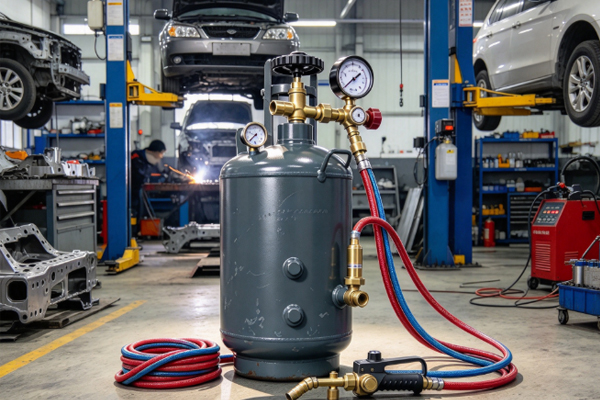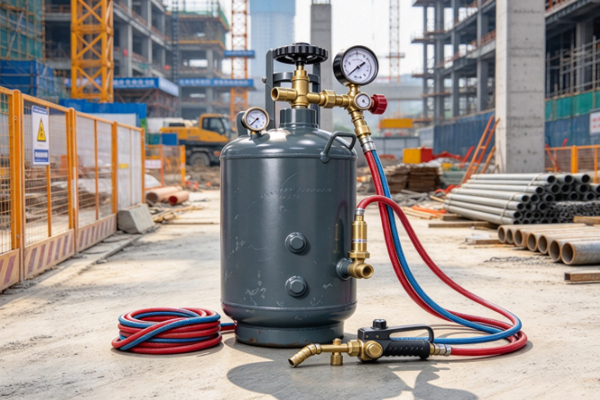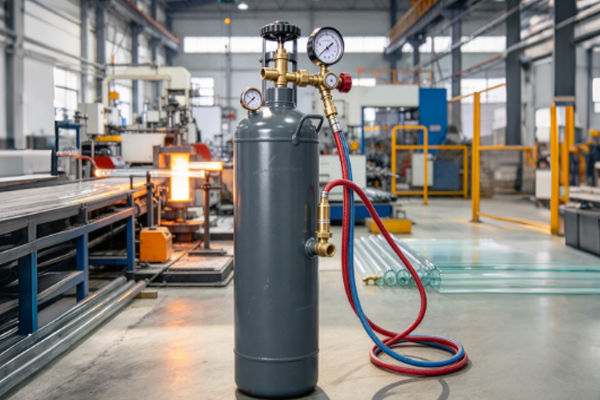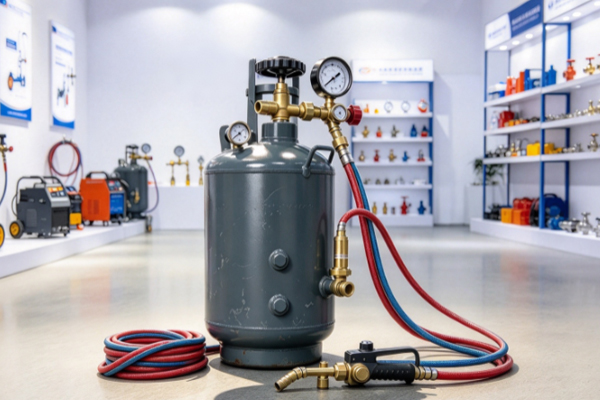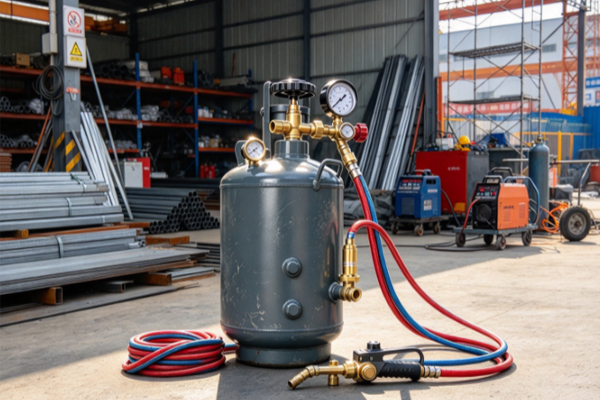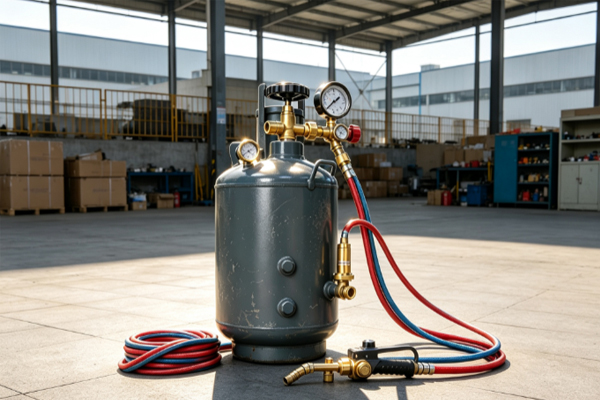
Acetylene tanks are widely used in hardware processing, metal cutting, equipment repair, scrap recycling, and other industrial scenarios, making them a crucial part of industrial gas supply systems. After installation, many companies shift their attention to production tasks and overlook ongoing maintenance and inspections. Acetylene systems operate under pressure for long periods, and valves, pipelines, seals, and safety accessories all age gradually with use. Once maintenance is neglected, small hidden issues can turn into major problems that affect production. If you want the equipment to maintain stable output, post-installation maintenance cannot be left out.
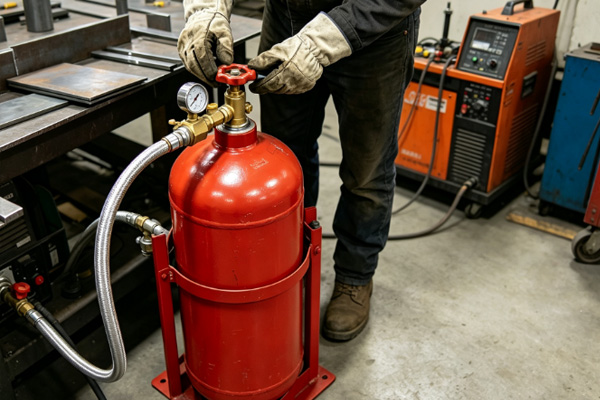
If an Acetylene Tank Is Not Maintained After Installation, Hidden Risks Will Accumulate from the Details
Problems usually do not erupt all at once; they build up slowly from details that are easy to ignore.
Sealing Performance Will Gradually Decline
Acetylene systems place very high demands on sealing. After long-term operation, joints and sealing parts are prone to changes. Many abnormalities are not obvious at the beginning, but they will gradually become more serious during continued use.
- As sealing rings age, their elasticity decreases, and joints are more likely to loosen under repeated pressure and vibration. Connections that were originally stable will slowly lose their tightening effect.
- Vibration at pipeline joints may cause tiny leaks that are difficult to detect with the naked eye. By the time unusual odor, pressure changes, or flame abnormalities appear, the problem has often existed for some time.
- Long-term friction on valve sealing surfaces weakens the closing effect. In mild cases, gas supply stability is affected; in severe cases, leakage risks may still exist even when the system is shut down.
These changes are not obvious at first. By the time gas leakage or pressure abnormalities appear, the issue has often been accumulating for a while.
Safety Accessories Will Lose Their Original Function
Safety accessories are an important protective layer in an acetylene system. If they are not checked for a long time, their performance will gradually decline, and components originally designed for protection may fail to function properly at critical moments.
- The inside of the flashback arrestor may accumulate impurities, affecting both flow resistance and protective performance. In severe cases, its ability to block abnormal flashback may also be weakened.
- The sensitivity of the safety valve is affected by the operating environment. When exposed to high temperatures, dust, or frequent start-stop conditions for long periods, its response accuracy can easily decline.
- The regulating accuracy of the pressure reducer may deviate. When output pressure is not stable enough, welding and cutting results will also be affected.
Once these components become unstable, the system is more likely to face risks during high-load operation.
Neglecting Maintenance Will Create a Chain Reaction in Production and On-Site Safety
Once equipment performance declines, the impact is not limited to operating results; it also affects the entire production rhythm.
Gas Supply Stability Will Decline
When an acetylene tank is in poor operating condition, gas supply performance is directly affected. The originally smooth output will gradually become more fluctuating, and on-site operation will become less efficient.
- Output pressure becomes unstable, forcing operators to adjust the flame repeatedly, which significantly reduces work efficiency.
- Flame combustion becomes less stable, causing deviations in cutting edges and welding formation, which also affects product quality.
- Welding and cutting quality are easily affected. In continuous operation scenarios, unstable gas supply directly slows production and increases rework rates.
For companies with continuous operations, unstable gas supply will directly slow down the production rhythm.
Failure Rates Will Gradually Increase
Many equipment failures do not happen suddenly; they are the result of long-term lack of maintenance. If small problems are not addressed early, they often develop into more complicated repair tasks later.
- Pipeline blockages affect gas transmission efficiency. When gas flow is not smooth, equipment output capacity decreases and localized gas shortages may occur.
- Valves become less responsive, and resistance during opening and closing becomes more noticeable, making operation less smooth.
- If worn parts are not replaced in time, small issues that could have been handled easily may later require shutdown inspection and full-system troubleshooting.
Once failures occur in clusters, downtime for repairs increases, and production plans are easily disrupted.
Safety Risks Will Continue to Accumulate
Acetylene is a flammable gas. When the system is in poor condition, risks are amplified, especially in environments with poor ventilation and frequent operations, where hidden dangers are more likely to build up.
- Tiny leaks may accumulate in poorly ventilated areas. Once the concentration reaches a certain level, contact with an ignition source or high temperature can lead to serious consequences.
- After safety accessories fail, protective capability drops significantly, and the defense line originally used to block abnormal conditions is weakened.
- When equipment continues to operate with faults, the probability of accidents rises, and on-site management pressure increases accordingly.
For industrial sites, safety issues are often more important than equipment wear.
Daily Maintenance of an Acetylene Tank Should Focus on Key Areas
Maintenance is not complicated; the key is to target the parts most likely to develop problems.
Connection Points Must Be Inspected Carefully
Connection points are among the most common problem areas. During inspections, special attention should be paid here, as many leaks and pressure abnormalities are related to these locations.
- Check whether the threads are secure and confirm that there are no signs of loosening after connection, so they do not gradually shift under operating vibration.
- Inspect whether the joints show signs of wear, especially in areas that are repeatedly disassembled and reassembled, where surface condition and fit should be monitored closely.
- Confirm whether the sealing parts are in normal condition. If aging, deformation, or obvious compression marks are found, they should be handled immediately and not kept in service.
Reliable connections make the gas supply system more stable and help reduce issues such as leakage and pressure fluctuation.
Safety Accessories Must Be Checked Regularly
Safety accessories are not components that can be installed and then ignored for a long time. Their condition must be confirmed regularly. Only when they remain in normal working order does the system have basic protection capability. The flashback arrestor should be checked for proper operation and whether internal passages are blocked; the pressure reducer should be checked for smooth adjustment and stable output pressure; the safety valve should also be confirmed as responsive, and operating records should be reviewed when necessary to avoid protection failure going unnoticed.
Pipelines and Equipment Surfaces Should Be Kept Clean
Cleaning is not only about appearance; it also helps reveal abnormalities. Many small issues are easier to identify when the equipment is clean.
- Remove dust and debris from the equipment surface to prevent buildup from affecting visibility and to reduce obstruction around valves and joints.
- Check pipelines for rust or cracks, especially in areas exposed to humid environments for long periods.
- Inspect hoses for aging, hardening, or cracking. If surface abnormalities are found, they should be replaced as soon as possible to avoid continued risky use.
When the surface is clean, many small problems can be detected more quickly. Regular cleaning also reduces interference from dust and impurities.
Make Maintenance a Long-Term and Effective Management Practice
Maintenance should not remain at the level of verbal reminders. Only when it becomes a system can it truly be implemented.
Establish a Fixed Inspection Rhythm
Maintenance should not depend on remembering it at the moment. A fixed rhythm is more suitable for industrial sites, and regular management is easier to turn into a habit. Daily, weekly, and monthly inspection items can be arranged separately, pressure changes and equipment status can be recorded, and inspection results can be retained for later comparison and anomaly tracking. When problems are found, they should be handled promptly and repairs arranged as soon as possible to prevent small risks from expanding further. A structured inspection rhythm allows problems to be discovered early.
Replace Wear Parts Promptly
When wear parts reach their service life, they should be dealt with quickly and not delayed. The longer they are postponed, the higher the later repair cost tends to be.
- Replace aging sealing rings in time to prevent reduced elasticity from affecting joint sealing performance.
- Replace worn hoses early to prevent cracks or damage during high-pressure gas transmission.
- Arrange repairs when valves become abnormal to avoid continuing operation with poor movement or incomplete closure.
Timely part replacement keeps the equipment running more smoothly, and many seemingly minor wear issues can be addressed early before they affect gas pressure, sealing performance, or overall service life.
Incorporate Maintenance into the Company’s Management Process
Maintenance is not extra work; it is part of equipment management. Only when it is built into the process will execution remain stable.
- Create equipment files to record installation date, maintenance cycle, part replacement history, and abnormal handling results.
- Keep inspection records so that every inspection has traceable evidence and future accountability is easier.
- Define responsible personnel and inspection standards so maintenance tasks are assigned to specific positions, reducing omissions and shifting of responsibility.
Once the process is clear, maintenance becomes easier to sustain over the long term and helps form a consistent inspection habit.
Installing an acetylene tank is only the starting point of putting the equipment into use. What truly determines whether it can operate stably over the long term is whether maintenance continues afterward. Regular inspections, timely replacement of wear parts, and keeping safety accessories in normal working condition can effectively reduce failure rates, extend equipment life, and make production more continuous and site management more controllable. Zhongcheng Gas Tank provides professional acetylene tank and industrial gas supply solutions, creating a safe, stable, and efficient industrial gas experience for enterprises.