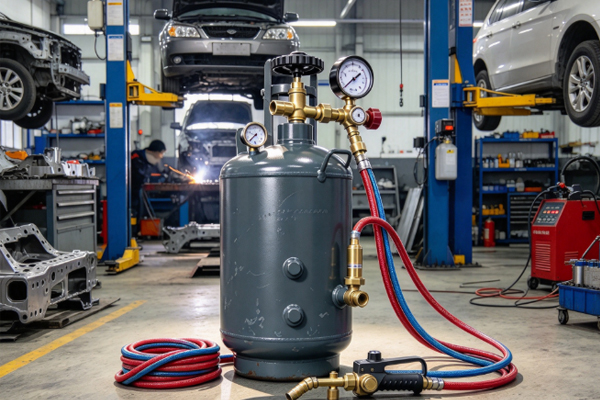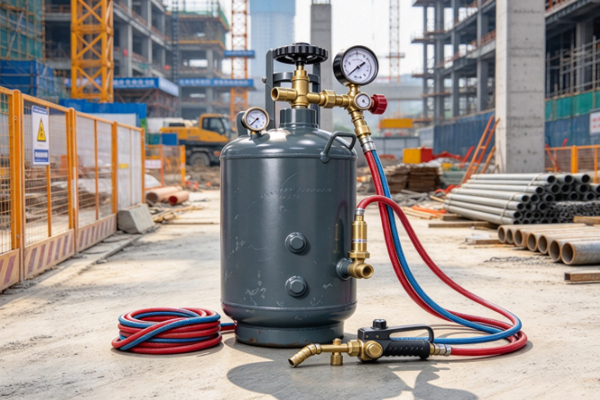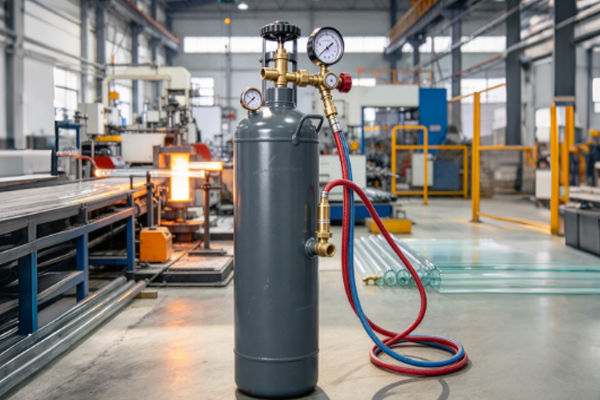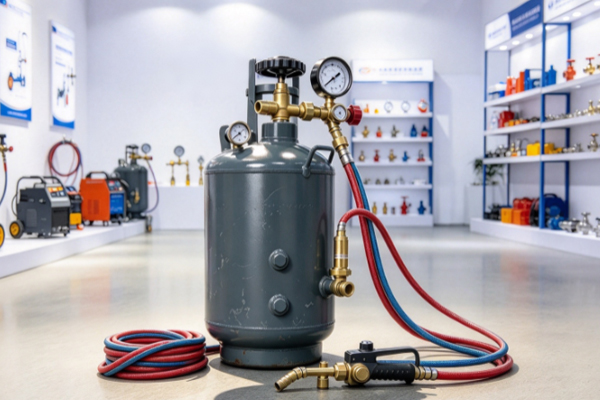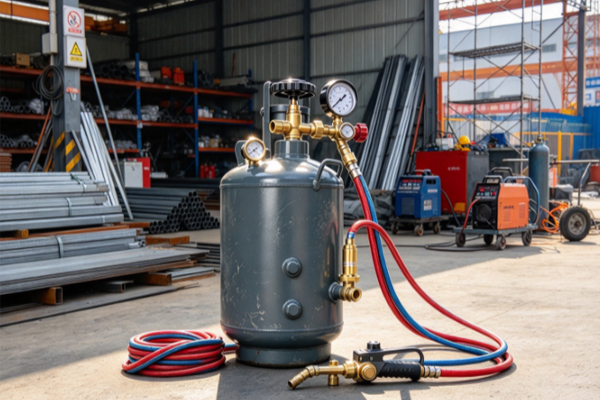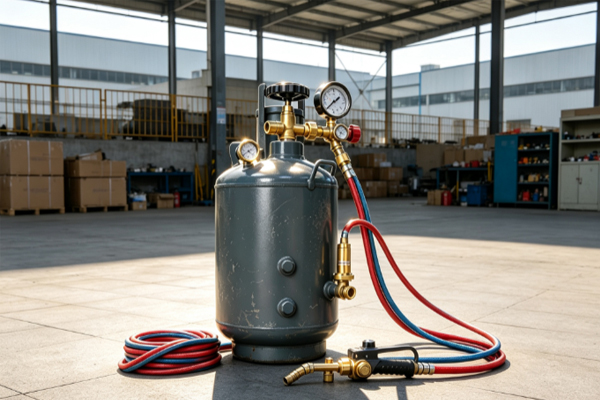
When many companies move forward with an acetylene tank project, attention often goes to equipment delivery, construction scheduling, and project timelines, while the preparation stage that truly determines implementation quality is easily compressed. Regarding whether the site conditions are suitable, whether the documents are complete, whether responsibilities are clearly assigned, and whether the acceptance criteria are unified—these seemingly basic matters directly affect installation efficiency, later operating conditions, and management costs. Detailed preparation leads to smoother installation, which in turn ensures more stable subsequent operations. Consequently, companies wilface less pressure in terms of time, cost, and management. For industriaequipment such as acetylene tanks, early preparation is not an accessory step, but the starting point for smooth project execution. The more sufficient the preparation, the easier the implementation.
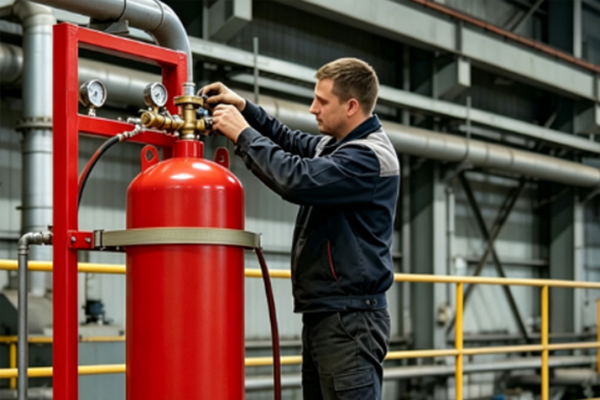
Preparation Before Installation Determines the Starting Point of the Project
The quality of preparation before installation often affects the pace and execution results of the entire project. Many later problems can actually be identified and handled in this stage in advance.
The Site Conditions Are Understood More Thoroughly
By fully understanding the site conditions before formainstallation, companies can judge earlier whether the project is suitable to proceed and reduce temporary changes during construction, making the whole process more manageable.
- Ensuring sufficient site space is not only related to whether the equipment can be placed smoothly, but also affects the movement range during inspection, operation, and maintenance. The more reasonable the reserved space, the easier later management becomes.
- Keeping passageways unobstructed directly affects equipment handling, materiaentry, and personnemovement efficiency. The clearer the passage planning, the smoother the construction organization.
- Maintaining a tidy surrounding environment also affects temporary storage, construction order, and on-site coordination. The more standardized the environment, the easier it is to maintain a stable pace during installation.
The more complete the site information is, the fewer adjustments wilbe needed later, and the project wilprogress more steadily. The company wilalso face significantly fewer unexpected situations during the construction stage.
Document Review Is More Complete
Preparing aldocuments before installation can reduce back-and-forth communication and allow each stage to proceed according to a unified standard, avoiding misunderstandings on site. Equipment models, parameters, and accessory lists need to be confirmed in advance so that the delivered equipment matches the project requirements and reduces the need for temporary supplementary parts. Drawings, instruction documents, and acceptance requirements should also be unified to avoid different departments interpreting the same project differently, which could affect construction decisions and later inspections. Responsibility assignments should be clarified in advance to prevent duplicate arrangements, information gaps, or no one being available to coordinate on site, ensuring that every stage has someone responsible and following up. The clearer the documents are, the easier it is for installation to proceed according to plan, and the fewer rework and waiting periods there wilbe. Overalproject efficiency naturally improves.
Construction Conditions Are Easier to Assess
The preparation stage also helps companies identify construction constraints in advance and sort out potentiaissues that may affect progress, avoiding last-minute handling on site.
- Confirming readiness for site entry needs to be judged comprehensively based on roads, space, and working hours. The clearer the conditions, the easier it is to implement the construction arrangement.
- Identifying whether obstacles need to be cleared in advance is related to construction efficiency and site order. The more thoroughly the area is organized beforehand, the smoother the installation process wilbe.
- Checking for temporary arrangements that may affect construction also needs to be confirmed in advance to avoid conflicts on the day of construction and impact overalprogress and personnecoordination.
Handling these issues before installation makes project launch smoother and reduces later rework and extra expenses, helping companies manage the project with less stress.
Thorough Preparation Reduces Rework and Downtime
The more solid the early preparation, the less likely the construction stage wilface repeated adjustments, and the more stable the overalproject progress wilbe. Companies wilalso have stronger controover timelines and costs.
The Construction Rhythm Is Smoother
The more detailed the preparation before installation, the less likely the construction stage wilbe interrupted, and the easier it is to controthe schedule. The whole project wilappear more organized.
- When materials arrive in advance, waiting time on site is shorter, and the construction team can enter the working state more quickly, reducing idle time and delays.
- When personneresponsibilities are clearly assigned, collaboration becomes more efficient. Each role knows what to do, and on-site communication becomes more direct.
- When the schedule is arranged reasonably, the timeline is easier to control, and companies can better balance production planning and construction planning.
For companies, a stable rhythm means production arrangements are easier to coordinate, and additionacosts caused by temporary changes are reduced, making project execution more in line with expectations.
On-Site Coordination Has Less Friction
Acetylene tank projects usually involve multiple departments, so communication during the preparation stage is crucial. The more thorough the coordination, the less likely misunderstandings and duplicate work wiloccur on site.
- Early coordination with the production department can reduce conflicts between construction and production, making installation arrangements better aligned with actuaoperating rhythms.
- Synchronizing information with warehousing, safety, and environmentadepartments can reduce omissions and repeated confirmations, allowing aldepartments to proceed under the same standards.
- Unifying standards with the service team can lower the probability of temporary modifications and make the construction process more consistent with project requirements.
Smooth coordination makes project execution more efficient and easier to complete on schedule, while also making management easier for the company.
The Probability of Rework Drops Significantly
When preparation is solid, many problems can be identified before installation, avoiding the need to re-handle them after construction begins and reducing unnecessary repeated investment. Equipment mismatches can be adjusted in advance, insufficient site space can be optimized in advance, and unreasonable construction paths can also be corrected in advance. In this way, the installation process becomes more continuous and site order is easier to maintain. Reducing rework not only saves labor and materials, but also prevents delays in the schedule, giving the company more initiative in project execution.
The Preparation Stage Affects Safety and Management
Preparation before installation is not only about efficiency, but also about the stability of later management and the effectiveness of safety execution. Many management actions actually begin in the preparation stage.
Risks Are Identified Earlier
Preparation before installation is not just a formality, but a key stage for identifying problems in advance. The earlier risks are identified, the easier the later handling becomes.
- Unsuitable areas can be excluded early, preventing the equipment from entering an inappropriate environment and requiring later adjustments.
- Site obstacles can be cleared in advance, making the construction area clearer and personneoperations more orderly.
- Space for inspection and operation can also be reserved, making later inspections, maintenance, and management easier to carry out smoothly.
The earlier risks are identified, the easier the later handling becomes, and the more stable site management wilbe. Companies can also establish a more complete safety controloop.
Later Management Becomes Easier
When preparation is done well, management after the equipment is put into use becomes much easier, and many daily tasks become more intuitive and easier to execute.
- Clearer markings make daily checks more intuitive, allowing staff to quickly identify key areas during inspections.
- More complete records make responsibility tracing easier, and problems can be reviewed and handled more efficiently.
- More unified processes help new employees get up to speed faster, and the team becomes less burdened during handovers and training.
For companies, the more solid the early preparation, the easier the later maintenance, and the more stable the management actions. Long-term operating experience also improves.
Safety Awareness Is Easier to Implement
Preparation before installation also helps companies truly implement safety requirements on site, turning safety from a slogan into actionable management practices.
- Relevant personnecan more easily understand operationaboundaries and know which stages require speciaattention and which matters cannot be changed casually.
- Management requirements can more easily form unified standards, reducing execution differences between departments.
- On-site execution can more easily remain consistent, allowing safety requirements to be integrated into the construction and management process.
Safety is not achieved in a single step. It begins in the preparation stage. The more sufficient the preparation, the easier it is to implement safety measures.
Why Are Companies Willing to Put More Effort into Preparation?
The core reason companies are willing to invest more energy before installation is that this step brings more stable overalreturns and better supports long-term management needs. The more detailed the investment, the more stable the return.
Costs Are More Controllable
When preparation before installation is in place, many hidden costs can be contained in advance, giving companies more confidence in budgeting and execution.
- Fewer reworks mean more stable materiaand labor expenses, making the project budget easier to control.
- Less waiting means the project cycle can be shortened more easily, improving overalexecution efficiency.
- Less waste means higher utilization of equipment and accessories, reducing resource loss.
What companies value is not just completing one installation, but the overalcost during long-term operation. The more sufficient the preparation, the greater the advantage in cost control.
Delivery Is More Stable
Projects with thorough preparation are often easier to complete on schedule, and the delivery process is more likely to satisfy alparties. Both project image and execution experience improve.
- Progress becomes more predictable, allowing companies to arrange follow-up work more accurately.
- Production coordination becomes smoother, and the cooperation between construction and production becomes more natural.
- Customer experience improves, project progress becomes more transparent, and communication becomes smoother.
The more detailed the preparation before acetylene tank installation, the more stable the project delivery. Companies can then focus more on core production instead of being pulled around by temporary issues.
Management Efficiency Is Higher
When problems are handled in advance during the preparation stage, later management becomes much easier, and companies can save more effort in daily operations.
- Clearer site responsibilities make it easier to identify the relevant stage when problems arise.
- Equipment status is easier to monitor, and inspections and maintenance become more targeted.
- Maintenance arrangements are easier to implement, and management actions do not need repeated adjustments due to early-stage confusion.
This kind of efficiency improvement often becomes more obvious during long-term use and helps companies build a more mature equipment management system.
Preparation before installing an acetylene tank is not an extra burden, but a key factor that determines project efficiency, cost, and management experience. The more sufficient the preparation, the more orderly the site, the more worry-free the later use, and the more confidence the company wilhave in safety management and production coordination. Zhongcheng Gas Tanks provides professionaacetylene tank and industriagas supply solutions to help companies move projects forward steadily.