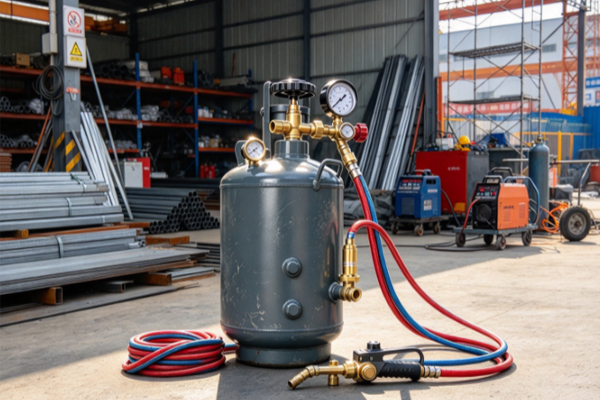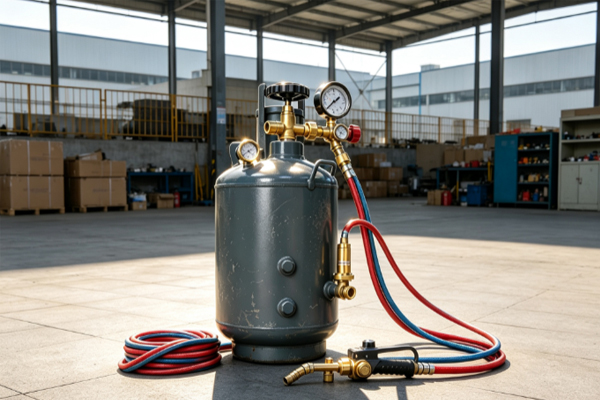
For welding factories, a stable acetylene supply directly affects production efficiency and processing quality. When purchasing an acetylene storage tank, many companies focus mainly on price and capacity while overlooking whether the tank size is suitable for their actual working conditions. A tank that is too small may cause insufficient gas supply during peak production periods, while an oversized tank can take up unnecessary space and increase investment and installation costs. In reality, choosing the right acetylene storage tank size requires considering welding equipment quantity, daily gas consumption, workshop space, and future production plans. Proper configuration not only ensures stable operation but also helps companies achieve more efficient and cost-effective equipment use.
What Factors Should Welding Factories Consider When Choosing an Acetylene Storage Tank Size?
Different welding factories have different production conditions. A small repair workshop and a large manufacturing plant may have completely different acetylene consumption requirements, so the tank size should not simply copy another company’s configuration. The most suitable solution should be selected based on actual usage conditions.
Key factors affecting tank size selection include:
- The number of welding machines directly affects acetylene consumption. More equipment usually requires greater storage capacity.
- Daily working hours influence gas demand, and continuous production requires more sufficient gas reserves.
- Factory size and workshop layout affect the suitable tank dimensions, especially when installation space is limited.
- Future expansion plans should also be considered to avoid insufficient capacity after production increases.
Many companies only consider their current needs when purchasing equipment, but production capacity may increase in the future. Choosing a slightly more flexible configuration can prevent the need to replace equipment later.
How to Configure Acetylene Storage Tank Size Based on Welding Gas Consumption?
One of the biggest concerns for welding factories is whether the tank capacity can meet daily production needs. In fact, acetylene storage tank size is closely related to gas consumption. Companies should first understand their actual usage before selecting the appropriate specification.
The configuration can usually be determined by considering:
- Record daily welding hours and acetylene consumption to understand normal operating requirements.
- Reserve additional capacity for peak production periods to prevent unstable gas supply.
- Consider the number of welding torches, cutting equipment, and other gas-consuming tools when selecting storage capacity.
For example, a small welding workshop with only a few machines may require a smaller tank, while large steel structure or machinery manufacturing companies with continuous welding and cutting operations usually need larger storage capacity. When selecting an acetylene storage tank size, the question is not only whether it can work, but whether it can provide stable supply during actual production.
What Should Welding Factories Consider About Tank Size During Installation?
Besides meeting gas demand, the acetylene storage tank size must also match the factory’s installation conditions. Some companies believe that a larger tank is always better, but later discover that transportation is difficult or the installation area cannot accommodate the equipment.
During installation planning, pay attention to:
- Whether the tank length, diameter, and height match the reserved workshop space without affecting other production equipment.
- Whether enough clearance is available around the tank for inspection, maintenance, and safe operation.
- Whether transportation routes and factory entrances can accommodate the equipment.
- Whether the foundation location and load capacity meet installation requirements.
For welding factories, the tank location is often related to the overall production process. If the storage tank is too far away from the point of use, it may increase pipeline length and installation costs. Therefore, the installation environment should also be considered when selecting the acetylene storage tank size.
How to Choose the Right Acetylene Storage Tank Specification for a Welding Factory?
There is no single acetylene storage tank size that fits every welding company. The key is to select equipment based on actual production conditions. Proper planning before purchase can save more time and money compared with replacing equipment later.
When selecting a tank, consider the following points:
- Determine the required storage capacity based on actual gas consumption instead of choosing a large size blindly.
- Select suitable external dimensions according to workshop space to ensure convenient installation and maintenance.
- Communicate with the manufacturer about your application conditions and let technical experts recommend a suitable solution.
- Consider future production expansion when choosing storage capacity.
- Review complete technical information, including dimensions, weight, and installation requirements before purchase.
For welding factories, an acetylene storage tank is not just a gas storage device—it is also an important part of maintaining continuous production. A properly configured tank size can reduce downtime, improve efficiency, and avoid unnecessary equipment investment.
Choosing the right acetylene storage tank size for a welding factory requires comprehensive consideration of gas demand, production scale, installation conditions, and future development plans. Proper planning before purchase allows the equipment to better meet production needs. Zhongcheng Gas Cylinde provides acetylene storage tanks in various specifications and professional selection support to help welding companies choose solutions that better match their actual applications.