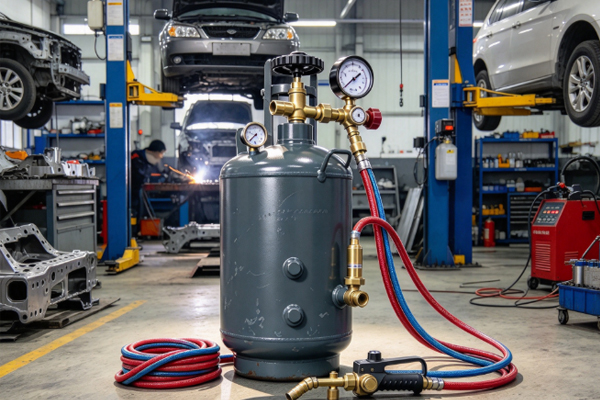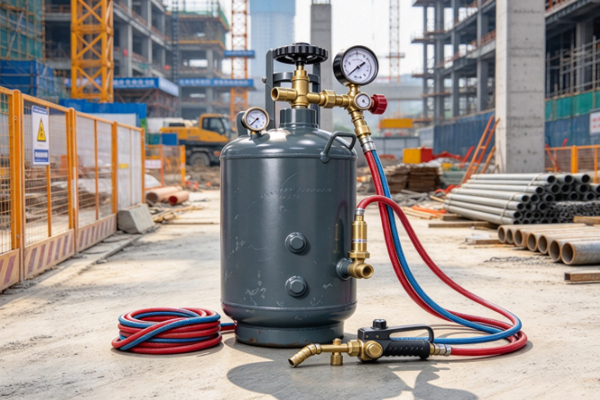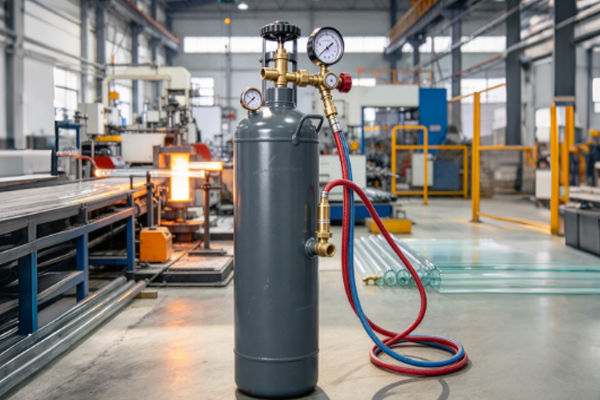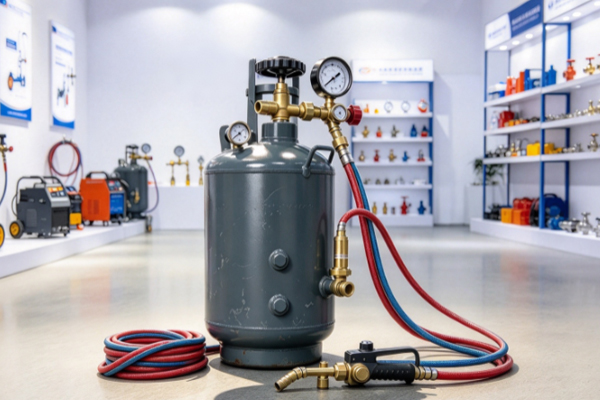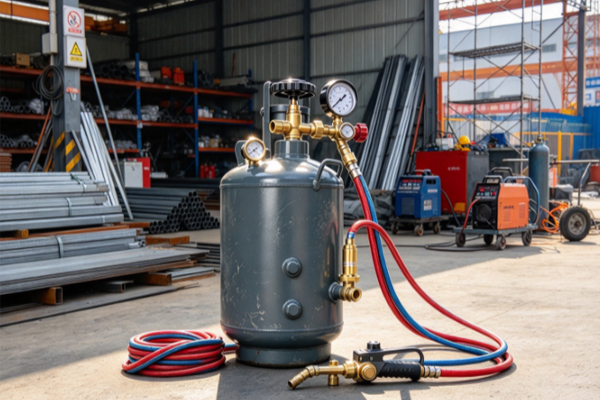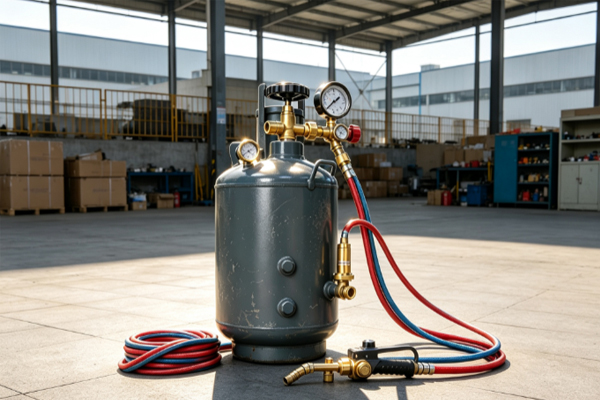
“How large should my acetylene tank be?” This is one of the most common questions during equipment purchasing. The problem is that the term “tank” can refer to very different setups. Some jobs use a single acetylene cylinder, while others need a cylinder group or a centralized gas supply system with manifolds, regulators, and piping. Naturally, their dimensions can be quite different. Instead of focusing on one fixed number, it makes more sense to look at the equipment type, daily gas consumption, and available site space. That makes it much easier to choose the right acetylene tank size without ending up with equipment that is either too small or simply does not fit.
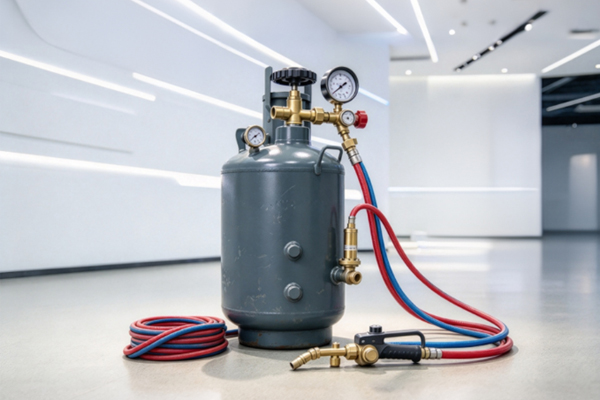
How Large Is a Small Acetylene Tank?
For maintenance work, occasional welding, or temporary construction jobs, a large gas storage setup is usually unnecessary. What users often want to know is simple: “Can it fit here, and is it practical to move around?”
For initial space planning, small equipment can generally be estimated at several dozen centimeters in footprint and around 1 meter in height, although the actual dimensions depend on the equipment design. Some units use a single cylinder, while others include a frame, valves, and additional components that make the overall size larger.
- Single-cylinder setup: Relatively compact and suitable for jobs with lower gas consumption or frequently changing work locations.
- Small gas supply equipment with a frame: The height may remain fairly similar, but the base usually takes up more space than the cylinder itself.
- Small mobile gas supply setup: If wheels or other supporting structures are included, the actual length and width should be confirmed separately.
When requesting a quotation, do not ask only, “How tall is it?” It is much better to request an equipment dimensional drawing showing the overall length, width, height, and connection locations.
How Do You Choose the Right Acetylene Tank Size? Gas Consumption Matters More Than Appearance
Some buyers assume that a larger tank is always more convenient. That is not necessarily true. Larger equipment takes up more space and may increase transportation and supporting equipment costs, while an undersized setup may require a gas change in the middle of a job. The more useful information is how the equipment will actually be used every day.
Before asking a supplier for a quotation, it helps to have these details ready:
- How many hours will the equipment normally operate each day?
- Is it mainly used for welding or cutting, and how long does each job last?
- Will one work station use the gas, or will several stations operate at the same time?
- Approximately how much acetylene is consumed each day?
- Is it easy or difficult to replenish the gas supply at the construction site?
If the equipment is only needed for occasional maintenance, there is little reason to install a large system just because gas consumption might increase in the future. On the other hand, if welding or cutting runs continuously for long periods, or several machines use acetylene at the same time, you should look beyond the capacity of a single tank and consider whether a cylinder group or centralized gas supply setup is more suitable.
How Much Space Does a Medium or Large Acetylene Tank Setup Need?
Once you move to cylinder groups and centralized gas supply systems, you cannot estimate the required space from the size of a single cylinder. Several cylinders arranged together require room for the support frame, manifold, regulators, and connecting lines. The overall footprint may reach around 1 square meter or more, while larger centralized systems may require a dedicated equipment area. The final dimensions depend on the number of cylinders, equipment configuration, and site layout.
One detail that is easy to overlook is operating space. Having enough room for the equipment itself does not necessarily mean workers have enough space to operate it properly.
- Leave operating space around the equipment. Valves and pressure gauges should not be blocked by walls or other equipment.
- Allow room for piping. This becomes particularly important when several gas-consuming points are supplied at the same time.
- Keep the surrounding area clear. Stacked materials can make inspection, cylinder replacement, and maintenance unnecessarily difficult.
- Check the delivery route in advance. Door widths, access routes, and turning space can sometimes be just as important as the final installation area.
For a large construction site, it is a good idea to take a photo of the proposed installation area and mark its available length, width, and height before placing an order. Suppliers can usually recommend a suitable configuration much more accurately with this information than with a simple request for “something larger.”
What Do Customers Often Ask Wrong When Choosing Acetylene Tank Size?
Many inquiries start with questions like, “Do you have a large model?” or “What is the biggest size available?” Those questions are not very useful on their own. The dimensions of acetylene equipment are affected by gas capacity, cylinder quantity, gas supply method, valve configuration, and installation design. You may need a compact single-cylinder unit, a cylinder group, or a complete centralized gas supply system. When purchasing, ask the supplier to provide the overall equipment dimensions, actual footprint, required installation clearance, and connection locations, then compare those measurements with the available space at your site. For cylinder groups in particular, do not look only at the equipment width. Allow additional room for operation, piping connections, and future maintenance. That is the easiest way to determine whether the equipment will actually fit and remain practical to use.
When choosing an acetylene tank size, do not focus on one fixed specification. For small equipment, you can initially plan for a footprint measured in several dozen centimeters and a height of around 1 meter. Cylinder groups and medium or large gas supply setups may require around 1 square meter or more, while larger centralized systems depend heavily on their configuration and site design. Before purchasing, give the supplier your daily gas consumption, number of gas-consuming devices, replenishment frequency, and available installation space. Then confirm the equipment’s overall and installation dimensions. This helps prevent two common problems: buying equipment that is too small for the job or bringing in a large system only to discover that the construction site has nowhere suitable to install it.