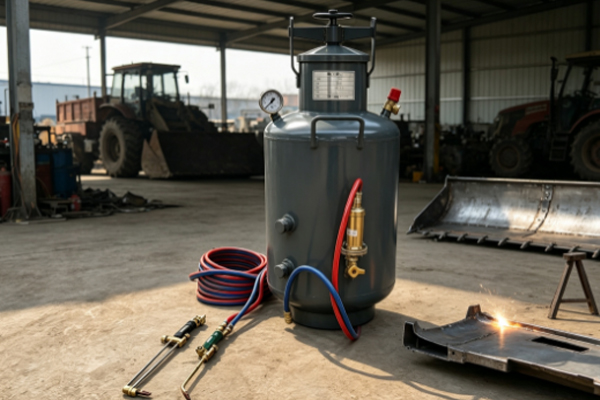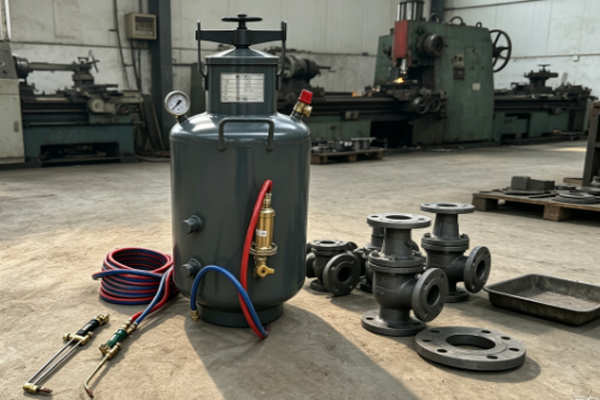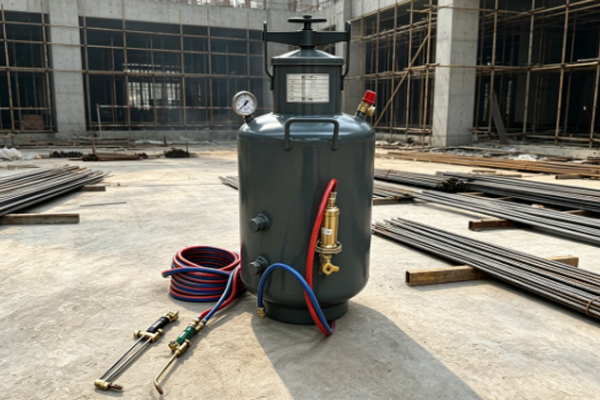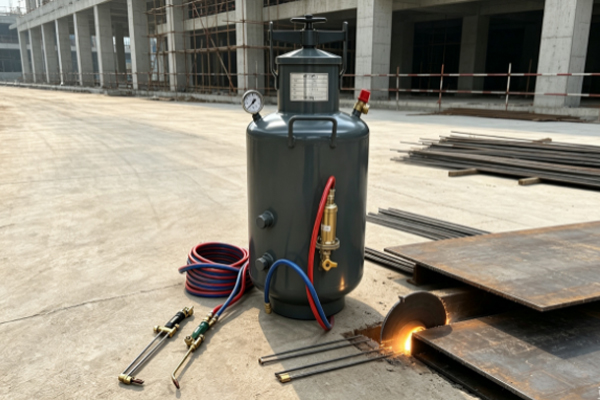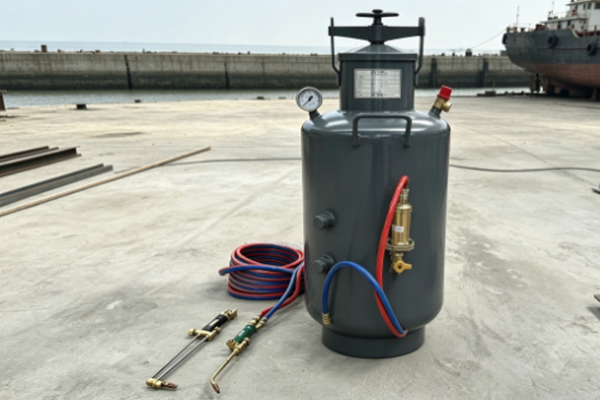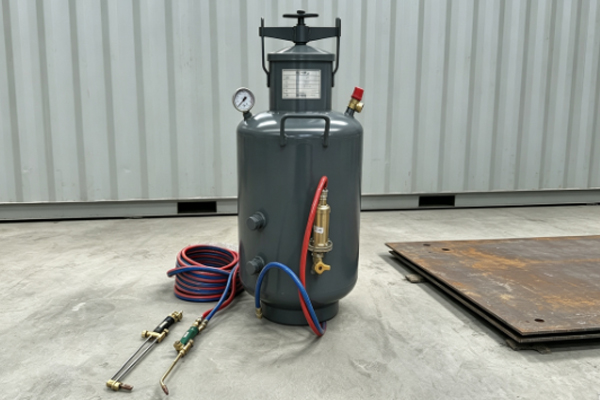
Mobile acetylene generators can replace traditional acetylene gas cylinders by providing on-site gas production for welding, cutting, and other operations. For projects with high gas consumption, long transportation distances, or limited access to local gas filling stations, on-site production can help reduce the costs associated with cylinder purchases, transportation, and handling. Compared with traditional cylinders, the two solutions differ in operating costs, initial investment, and maintenance requirements, making each suitable for different types of projects.
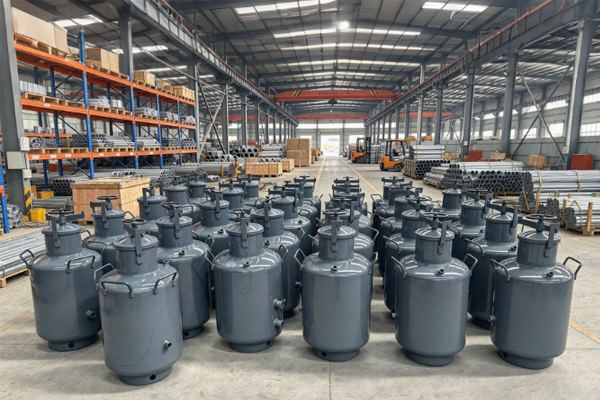
Working Principle and Advantages of Mobile Acetylene Generators
Working Principle: Automatic Water Displacement and Gas Supply
A mobile acetylene generator produces acetylene gas on-site through a chemical reaction between the internal particles and water. After the particles and clean water are added, the generated gas is delivered through hoses to a welding torch or cutting torch for various welding and cutting applications.
The equipment uses water displacement to regulate the gas production process:
- When pressure rises: Water inside the generator is forced into a separate storage tank, separating the water from the reaction medium and stopping the reaction.
- When pressure drops: Water flows back from the storage tank and comes into contact with the reaction medium again, allowing gas production to resume.
- Automatic regulation: The equipment adjusts gas production according to internal pressure changes, reducing the need for frequent manual operation.
Safety Protection and Operating Features
The equipment has a built-in safety protection system equipped with a safety relief valve, pressure gauge, and filter. When the pressure reaches the set threshold, the relief valve opens automatically to release excess pressure. The specific pressure settings and operating conditions should follow the manufacturer’s technical documentation.
The main features of a mobile acetylene generator include:
- On-site gas production: Produces acetylene as needed and reduces dependence on external gas filling stations.
- Reduced transportation requirements: Eliminates the need for repeated transportation of prefilled cylinders, potentially lowering some logistics costs.
- Convenient operation: Automatically regulates the gas production process and reduces manual intervention.
- Warranty and service life: Comes with a 2-year warranty and can achieve a service life of 6–8 years under standard operating conditions.
Standard Equipment and Accessories
The standard package includes:
- 1 welding torch
- 1 cutting torch
- 10 meters of dual-color hose
- 1 annealing fuse
- 1 filter
- 1 pressure gauge
- 1 safety relief valve
The specified automatic pressure relief setting is 1.5 MPa. Whether the equipment qualifies as a pressure vessel, which safety standards apply, and what the actual operating pressure should be must be confirmed through the equipment’s design documentation and applicable local regulations.
For an accurate quotation, please provide the destination country, destination port, and planned order quantity so that the equipment and related transportation costs can be calculated.
Operating Cost Analysis of Traditional Acetylene Gas Cylinders
When using externally filled steel cylinders, the total gas supply cost includes not only the price of acetylene but also ongoing expenses for cylinder purchases, filling, maintenance, and transportation.
Direct Gas Consumption Costs
The cost of using acetylene cylinders typically includes:
- Acetylene raw material and cylinder filling fees
- Acetone losses and related maintenance expenses
- Cylinder depreciation or replacement costs
- Return transportation for empty cylinders and delivery of full cylinders
Transportation costs are generally higher in remote areas, and long-distance delivery can significantly increase the overall cost of gas consumption.
Initial Equipment Investment
A certain number of acetylene steel cylinders must be prepared before a project begins. Initial investment depends on cylinder purchase costs, turnover requirements, and the number of spare cylinders needed.
Large construction sites may require dozens of cylinders for rotation. The greater the gas consumption and turnover demand, the more cylinders may be needed.
Long-Term Maintenance and Management Costs
Long-term cylinder use also involves ongoing management expenses:
- Periodic inspections: Cylinders must be inspected in accordance with local regulations and applicable standards. Once they reach their permitted service life or meet scrapping criteria, they must be handled or replaced as required.
- Acetone maintenance: Acetone inside cylinders may be depleted over time. Qualified personnel must inspect and maintain the cylinders according to applicable requirements.
- Damage and loss: Lost cylinders, physical damage, or faulty valves can increase repair and replacement costs.
Cylinder Transportation Costs
Traditional cylinder-based gas supply relies on filling stations for refills. Empty cylinders must be returned to the filling station and transported back to the job site after refilling, creating ongoing two-way transportation requirements.
For overseas infrastructure projects and remote construction sites with complicated transportation conditions, logistics expenses can account for a significant portion of total gas supply costs. The actual proportion depends on transportation distance, delivery frequency, and local service availability.
Which Projects Are Suitable for Acetylene Gas Cylinders?
Acetylene cylinders are generally more flexible for small projects, intermittent gas consumption, or locations with convenient access to nearby filling stations.
- Short-term projects that do not require long-term gas generation equipment.
- Occasional welding and cutting operations with irregular gas demand.
- Projects near urban areas where cylinder delivery and refilling services are readily available.
These projects can use cylinders as needed, avoiding the additional expense of purchasing a generator and the depreciation associated with idle equipment.
How to Choose Between a Mobile Acetylene Generator and Traditional Gas Cylinders?
Both gas supply methods have their own suitable applications. The main factors to consider are project duration, gas consumption, local filling station availability, and transportation costs.
Long-Term Projects and Overseas Infrastructure Construction
For long-term projects involving continuous operations and high gas consumption, especially in areas without local acetylene filling stations, a mobile acetylene generator is worth considering.
On-site gas production can reduce dependence on external gas deliveries, making it particularly suitable for remote construction sites and overseas projects. However, actual savings must account for equipment investment, operating materials, maintenance, and safety management expenses.
Short-Term Projects and Intermittent Operations
For projects with short timelines, low gas consumption, and convenient access to local filling services, traditional acetylene cylinders are often more suitable. Users can avoid purchasing a complete gas generation system and reduce equipment maintenance and management responsibilities.
Comparison of the Two Solutions
| Comparison Item | Mobile Acetylene Generator | Traditional Acetylene Gas Cylinders |
| Gas supply method | On-site gas production | Gas supplied from externally filled cylinders |
| Initial investment | Requires purchasing a generator | Requires purchasing or renting cylinders |
| Transportation requirements | Can reduce repeated cylinder transportation | Requires transportation of empty and full cylinders |
| Long-term, high gas consumption | Worth evaluating for lower overall long-term costs | Involves ongoing filling and delivery expenses |
| Short-term, low gas consumption | Equipment investment must be justified | Flexible use with lower initial investment |
| Suitable applications | Remote sites, long-term projects, and areas with limited filling services | Short-term projects, intermittent operations, and locations with convenient filling services |
There is no single gas supply solution that suits every project. For long-term operations with high gas consumption and difficult transportation conditions, it is worth comparing the total cost of on-site gas production. For short-term projects with occasional gas demand, cylinders are often more convenient.Calculating equipment investment, transportation, maintenance, and actual gas consumption in advance can help determine the most suitable solution for your project.