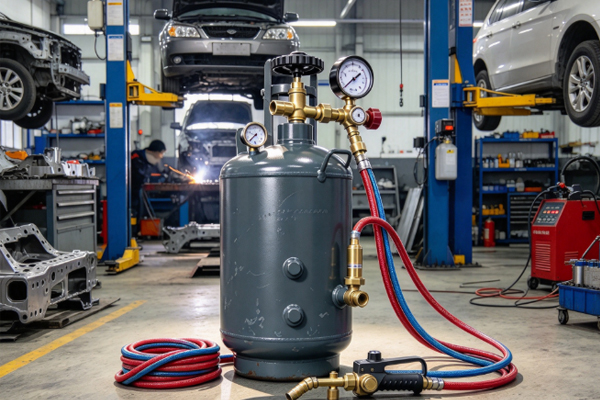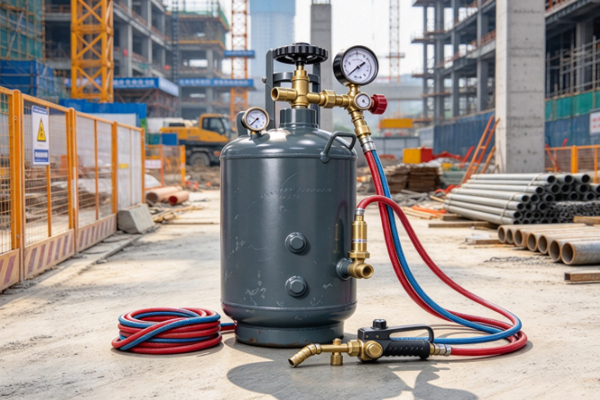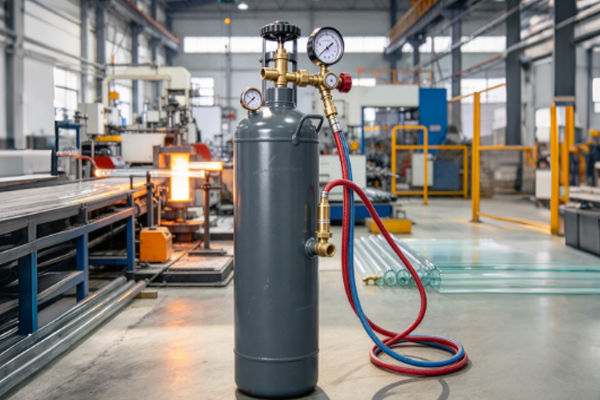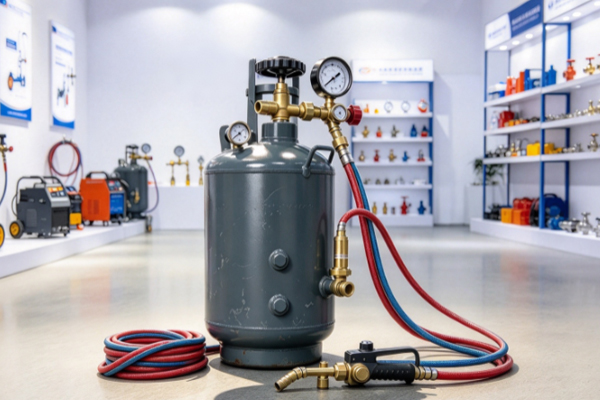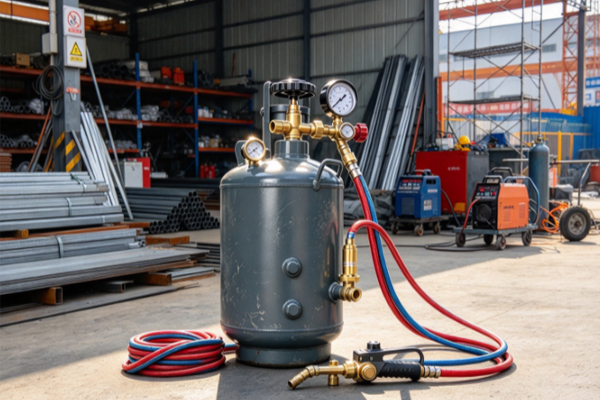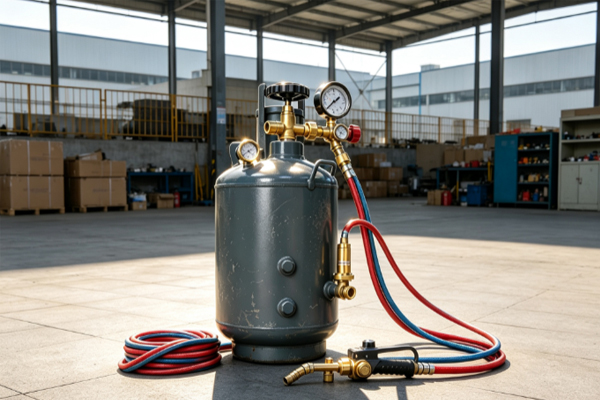
An acetylene tank installation site may look like nothing more than a routine task, but what truly creates the safety gap is often not the equipment itself, but whether protective measures are properly in place. Some people think there is little difference between wearing or not wearing goggles and gloves, yet once handling, connecting, and commissioning are carried out in sequence, it becomes clear that every detail on site tests both the workers’ condition and the management level. For enterprises, acetylene tank installation protection is not an optional add-on, but a basic requirement that must be implemented in industrial gas safety protection and acetylene equipment safety management.
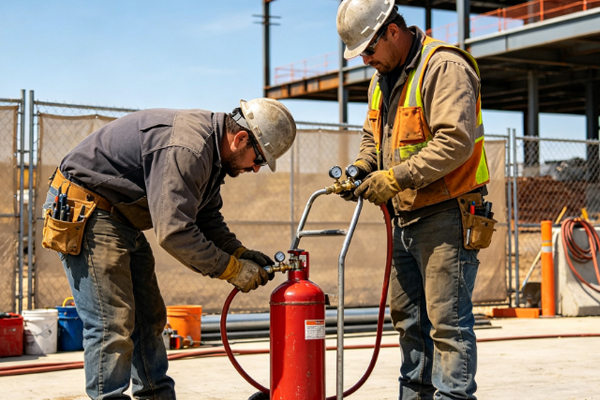
Not Wearing Protective Gear Can Amplify On-Site Risks
During acetylene tank installation, many hazards do not appear immediately. Once protective measures are missing, small controllable issues can quickly escalate.
Eyes, Skin, and Hands Are More Likely to Be Injured
When installing an acetylene tank, actions such as interface inspection, handling and securing, and valve adjustment involve contact with metal edges, dust, and oil stains. Without suitable protective equipment, workers can easily be injured in a short period of time.
- Without eye protection, splashes, dust, and metal shavings are more likely to enter the field of vision, not only affecting the observation of equipment status but also interfering with judgment.
- Without hand protection, workers are more likely to suffer cuts, burns, or abrasions when gripping equipment, adjusting components, or moving the tank. During continuous work, even minor wounds may worsen.
- When skin is directly exposed to the site environment, the risks increase significantly in the event of leakage, friction, or contact with hot components, causing discomfort at best and affecting subsequent work at worst.
Although protective gear is simple, it can provide direct protection at critical moments and make on-site operations more stable and controllable.
Operational Judgment Becomes Less Accurate
The impact of inadequate protection is not limited to a higher chance of injury. It also affects workers’ operational condition, causing many issues that could have been detected in time to be overlooked due to distraction.
- When vision is obstructed, interfaces, labels, and connection status are harder to see clearly, making it easier to make mistakes when confirming installation positions and connection directions.
- When hand stability is reduced, tightening force and installation angles become harder to control. Actions that could have been completed in one attempt may require repeated adjustments, increasing errors.
- Once workers become distracted, acetylene tank safety precautions are easily ignored. What appears to be only a lack of a few protective items may actually affect the accuracy of the entire installation process.
Maintaining proper protective conditions helps improve the accuracy of on-site judgment and the stability of operations, while also ensuring that the installation process meets enterprise safety management requirements.
Key Installation Stages Require Even More Protection
Acetylene tank installation is not a single action, but a process composed of multiple stages such as handling, inspection, connection, and commissioning. Each step requires corresponding protective measures. Any lapse in any stage may affect the overall safety level.
Handling, Securing, and Connection Stage
The stage most easily overlooked in acetylene tank installation protection is often when the equipment first enters the site. Although this stage appears simple, it involves many contact points, rapid changes, and more concentrated risks.
- During handling, tank collisions, slipping, or tilting may create hazards. This is especially true on uneven ground or in narrow passages, where protective measures and coordination arrangements must be prepared in advance.
- When securing the equipment, there are many contact points for the hands, making anti-slip and cut-resistant measures essential. Without suitable gloves and proper operating habits, workers can easily be injured during tightening.
- When connecting pipelines and valves, even small errors may affect later operation. If the site does not maintain proper positioning and stable operation, the difficulty of later inspection and commissioning will also increase.
Although this stage seems basic, it often determines whether the installation proceeds smoothly and also affects the stability of the equipment after it is put into use.
Inspection, Pressure Testing, and Commissioning Stage
This stage appears calmer on the surface, but in fact it tests workers’ safety awareness even more, because the equipment has already entered a critical confirmation phase and any negligence may affect the final result. When observing interfaces at close range, eye and face protection cannot be omitted, especially in environments with complex lighting or limited space, where protective gear is needed to reduce external interference. During pressure testing and commissioning, workers must maintain a safe distance and proper positioning to avoid increasing contact risks due to improper stance, while also making observation and recording clearer. When recording data and verifying conditions, protective gear can reduce on-site interference, allowing workers to stay safe while focusing more on equipment parameters and operating performance. The closer the equipment is to being put into use, the more important it is to fully implement protective requirements. This is not only a matter of responsibility to personnel, but also to the equipment’s future operation.
When the Surrounding Environment Is Complex
If the installation area is close to welding points, passageways, or temporary storage areas, protective requirements must be further strengthened, because environmental uncertainties increase significantly.
- Sparks, heat sources, and debris can compound on-site risks, making what was originally a single installation task more complicated due to changes in the surrounding environment.
- Frequent personnel movement increases the likelihood of collisions and accidental contact. Without clear site management and protective requirements, the installation process is more likely to be disturbed by external factors.
- The more complex the environment, the less industrial gas safety protection can be relaxed. Only by combining protection and management can the work process remain stable.
Installation work in complex environments requires dual protection through both protective measures and management to reduce risks, and it also tests the enterprise’s site organization capabilities.
Enterprises Must Truly Implement Protective Requirements On Site
For protective measures to truly work, they cannot remain only in policy documents. They must be implemented in positions, processes, and site management so that every link can be seen, checked, and carried out.
Standardize the Protective Checklist
Enterprises should incorporate protective requirements into the installation process rather than relying only on verbal reminders. This allows different positions and teams to follow the same standards.
- Goggles, gloves, flame-retardant workwear, and insulated shoes should be assigned according to job roles and checked in combination with actual work content to avoid incomplete or unsuitable protective equipment.
- Protective gear should be inspected before work to avoid operating while compromised. If wear, aging, or non-compliance is found, it should be replaced promptly. The attitude of “making do” should never be used to continue construction.
- Each installation stage should have corresponding protective standards, from handling to commissioning, so that on-site personnel know exactly what to do and what to pay attention to at each step.
A standardized checklist makes protective requirements clearer, easier to implement on site, and helps reduce management deviations caused by different interpretations.
Clarify On-Site Responsibilities
When responsibilities are clear, on-site execution becomes more stable, and protective measures are more likely to be truly implemented rather than remaining superficial. Who is responsible for inspection, who is responsible for verification, and who is responsible for correction should all be clearly assigned to avoid blame-shifting after problems arise and to ensure that each role understands its scope of responsibility. During shift handover, equipment status and abnormal conditions should be recorded so that the next shift can quickly understand the site situation and reduce repeated inspections and missed issues. The more standardized the site management, the easier it is to implement acetylene equipment safety management, and the more likely protective requirements are to become a long-term habit rather than a temporary response. Only by assigning responsibility to individuals can protective measures form a true closed loop and make enterprise management more orderly.
Choose a Professional Installation Solution
A professional solution is not only about the equipment itself, but also about installation and subsequent management. Only by considering both early planning and later maintenance can safety requirements be implemented more consistently.
- Reasonably plan the location to reduce personnel exposure and operational interference, so that the equipment is not only convenient to use after installation, but also easy to inspect and maintain.
- Optimize industrial gas system management according to the enterprise’s operating conditions, making the installation plan more compatible with the site environment, production rhythm, and management requirements.
- Form a closed loop for installation, maintenance, and inspection to reduce repeated corrections and make future use easier and more efficient for the enterprise.
A professional solution helps enterprises balance safety requirements and operational efficiency, while also reducing additional costs caused by unreasonable layout in the future.
Proper Protection Brings Greater Long-Term Value
When protective measures are truly implemented, what enterprises gain is not only improved safety, but also benefits in efficiency, management, and image. These changes often become more apparent over long-term operation.
Reduce the Probability of Accidents
When protection is sufficient, many small issues will not develop into major hazards, and on-site risks are easier to keep within an acceptable range.
- The risk of injury decreases, giving workers greater protection during operations and reducing downtime and handling pressure caused by accidents.
- The probability of operational errors decreases. Proper protection helps workers focus more on equipment status and operating steps, reducing mistakes caused by distraction.
- On-site abnormalities are easier to detect in time. With proper protection, workers’ observation and judgment become more stable, making it easier to identify problems at an early stage.
Proper protection is not only about protecting personnel, but also an important way to reduce overall enterprise risk and an indispensable part of safety management.
Improve Installation Efficiency
Standardized protection does not slow progress. On the contrary, it reduces rework and makes the installation process smoother and more orderly. When workers are in a more stable condition, they are less likely to be affected by discomfort or distraction, which improves the quality of their actions and makes coordination smoother. Construction actions become more unified, and when everyone follows the same standards, communication costs on site are lower and the installation rhythm is easier to control. Later inspection and maintenance also become easier. When protection and installation are done properly from the beginning, subsequent inspection, verification, and adjustment will also take less time. Safety and efficiency are not contradictory. Proper management often makes the installation process smoother and reduces time losses caused by rework.
Strengthen the Enterprise Image
When safety management is done well, the enterprise’s professionalism becomes more visible, and both external partners and internal employees can feel the difference from site management.
- Employees feel more secure. Standardized protection and management create a more stable site atmosphere and improve the team’s recognition of the enterprise’s management.
- Customers are more likely to build trust. A clean, orderly, and clearly standardized site environment often better reflects the enterprise’s management level and sense of responsibility.
- The production site better meets modern management requirements. Proper protection is not only a safety performance, but also an important reflection of standardized enterprise operations.
Good protective habits and management standards can continuously enhance the enterprise’s overall image and lay a more solid foundation for future cooperation and long-term development.
If acetylene tank installation ignores protective measures, the only thing saved is superficial time, while what remains may be higher management costs and more complex site hazards. By refining protective requirements into job responsibilities and linking inspection, training, recording, and correction together, enterprises can truly strengthen safety management. Zhongcheng Gas Tank provides professional acetylene tank and industrial gas equipment solutions to help enterprises build a more reliable safety system across installation, management, and operation.