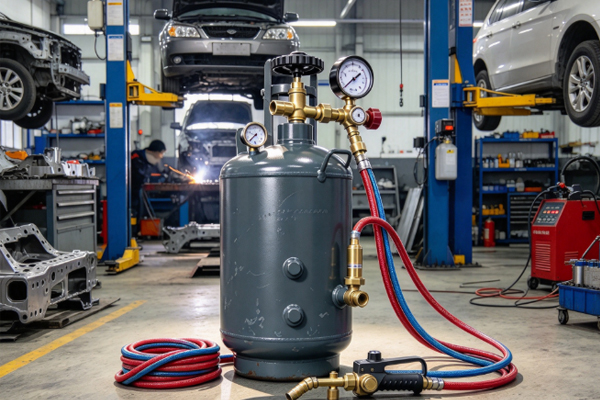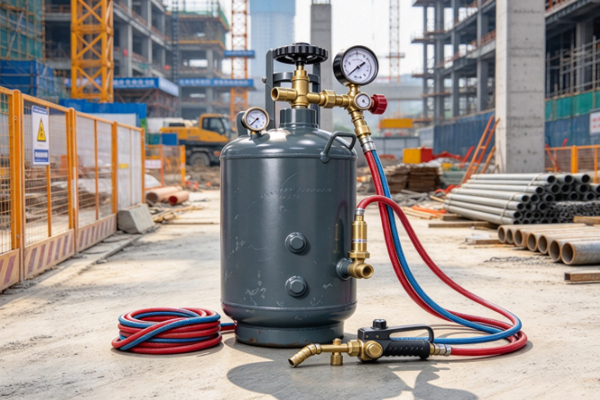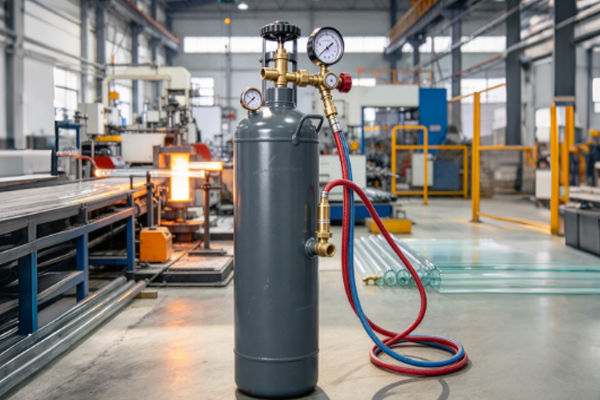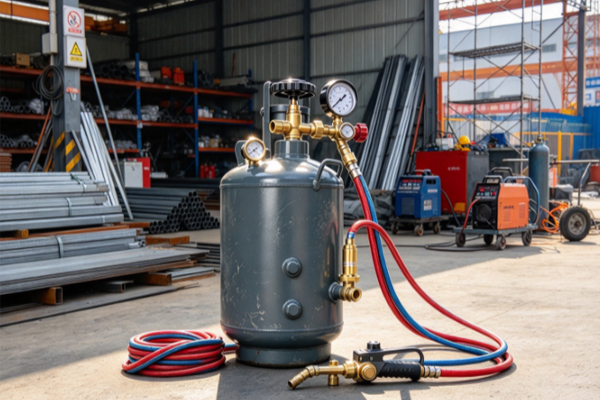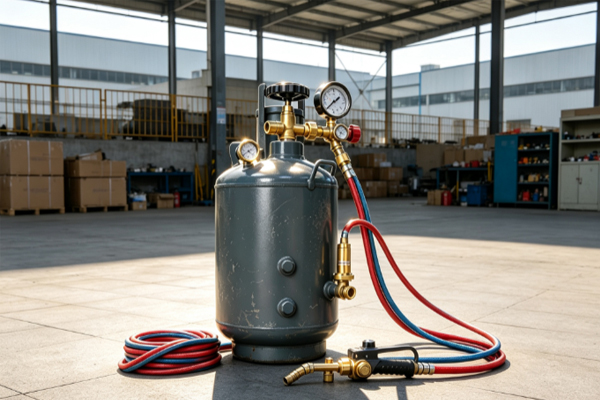
When arranging acetylene cylinder installation, enterprises often choose a location closer to the work area for convenience, shorter piping, and easier on-site operation. However, acetylene is a flammable gas. If the installation point is too close to open flames, welding sparks, or heat-generating equipment, the risk will increase significantly. A proper location helps the system operate more stably, while an unsuitable location is difficult to compensate for later, even with careful management. For enterprises aiming to improve traffic and conversion, fire-source distance is often one of the most important acetylene cylinder installation considerations.
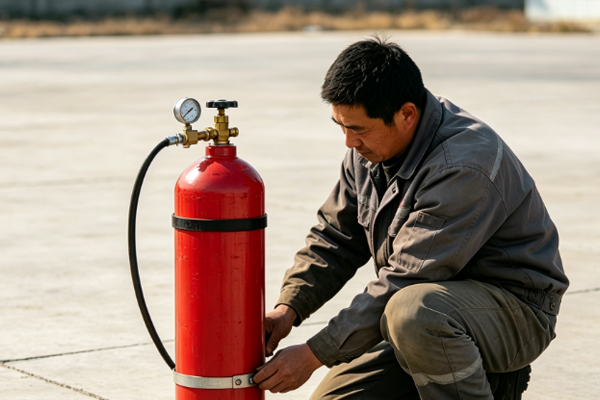
Installing an Acetylene Cylinder Near a Fire Source Brings Obvious Risks
Once the installation location is too close to a fire source, many originally controllable factors can become hidden dangers, and the risks will continue to accumulate during daily operations.
Sparks and Thermal Radiation Increase the Likelihood of Ignition
When the acetylene cylinder installation location is too close to a fire source, the most direct and easily overlooked risk is a significant increase in the likelihood of ignition.
- Sparks generated during welding, cutting, grinding, and similar operations may splash near valves, connections, or surrounding auxiliary components, increasing the possibility of accidental ignition.
- High-temperature equipment continuously releases heat during operation, and a persistently elevated ambient temperature will make the safety boundary around the acetylene cylinder more fragile.
- There may be no obvious abnormality on the surface of the site, but as long as fire-source conditions continue to exist, hidden dangers may be triggered in a short time and expand rapidly.
Sparks and thermal radiation may seem like common on-site factors, but in reality, they can become triggers for safety accidents.
Leakage Diffusion Space Becomes Harder to Control
If the acetylene cylinder installation location is unreasonable, the difficulty of controlling leakage will often increase significantly, and on-site response will become more passive. Once acetylene leaks, if the surrounding area is close to a fire source, dangerous conditions are more likely to form in a short time. The more confined the installation space is, the harder it is for the gas to disperse quickly, and the leaked concentration is more likely to accumulate locally. If the site ventilation conditions are not ideal, leakage risks will be compounded by heat sources, sparks, and other factors, further increasing safety hazards. Whether leakage can be controlled smoothly often depends on whether the installation location leaves enough space for gas dispersion.
Welding Areas, Heat Source Areas, and Passage Entrances Are Not Suitable for Installing Acetylene Cylinders Near Fire Sources
Different areas vary greatly in heat intensity, personnel flow, and operation frequency, so acetylene cylinder installation needs to avoid high-risk locations.
Welding Areas, Cutting Areas, and Hot-Work Areas
Placing acetylene cylinders near welding areas, cutting areas, and hot-work areas is usually not a wise choice, because these areas are already accompanied by a high density of sparks and heat exposure.
- These areas already involve a large amount of spark generation and high-temperature operations. If acetylene cylinders are placed directly nearby, the safety risk will continue to increase with operation frequency.
- Frequent operations will keep the site in a high-risk state for a long time. Although the equipment may still function, management pressure and the probability of accidents will rise significantly.
- If the acetylene gas supply system is mixed with the work area, it will not only increase inspection difficulty, but also make personnel operations and on-site coordination more complicated.
Welding areas and hot-work areas already carry relatively high risks, so the installation location should be kept as isolated from these areas as possible.
Near Furnaces, Boilers, and Power Distribution Equipment
The areas around high-temperature equipment are not suitable installation points for acetylene cylinders, especially in environments where equipment runs continuously and heat accumulates over time, which requires more cautious evaluation.
- High-temperature equipment continuously releases heat during operation, and the surrounding ambient temperature remains elevated for long periods, which is not conducive to maintaining stable operating conditions for acetylene cylinders.
- If electrical equipment has poor heat dissipation conditions or dense surrounding wiring, the on-site safety boundary will become more complicated, increasing management difficulty.
- When designing an acetylene cylinder installation plan, heat-concentrated areas should be actively avoided, and the safety distance and layout should be re-evaluated based on actual site conditions.
As long as surrounding heat persists for a long time, the installation plan needs to be re-evaluated for safety boundaries.
Passage Entrances, Corners, and Temporary Storage Areas
Locations with frequent personnel movement may seem convenient for access and management, but in reality, they are more likely to amplify risks due to collisions, obstructions, and cluttered stacking.
- Passage entrances and corners have high traffic frequency, making equipment more likely to be bumped, touched accidentally, or temporarily occupied, which increases safety management pressure.
- Temporary storage areas often contain many miscellaneous items, and both air circulation and inspection visibility will be affected, making it difficult to detect abnormalities in time.
- The more disordered the location is, the more difficult later maintenance becomes. Once a problem occurs on site, the efficiency of troubleshooting and handling will also decline significantly.
Passage entrances and temporary storage areas may seem convenient, but in practice, they make management and inspection more complicated.
Enterprises Can Judge Whether the Plan Is Compliant by Safety Distance, Ventilation Inspection, and Responsibility Boundaries
To determine whether an installation plan is compliant, it is not enough to look only at whether the equipment has been placed. It is also necessary to see whether the site conditions truly meet the requirements for long-term safe operation.
Check Whether Sufficient Safety Distance Has Been Reserved
When judging whether an acetylene cylinder installation plan is compliant, whether the safety distance is sufficient is often the most intuitive and critical standard.
- A clear separation must be maintained between the cylinder and any fire source. Safety boundaries cannot be casually reduced simply because site space is limited.
- The piping route should be designed to avoid high-temperature points and high-risk areas as much as possible, preventing external heat sources from affecting later operation.
- Site markings should be clear, prominent, and easy to identify so that personnel can quickly judge equipment location and risk range.
Safety distance is not only related to equipment placement, but also directly affects the effectiveness of risk control during later use.
Check Whether Ventilation and Inspection Are Smooth
Whether ventilation and inspection conditions are smooth often determines whether site management can truly be implemented and also directly affects later maintenance efficiency.
- When air circulation is good, abnormal odors and leakage signs are easier to detect in time, and local risk accumulation is also reduced.
- After inspection passages are kept spacious, staff can check, record, and handle problems more efficiently, and on-site response will be faster.
- With sufficient maintenance space reserved, later adjustments, repairs, and component replacements will be more convenient and will also reduce interference with normal production.
If ventilation and inspection are not smooth, even if the installation plan is completed, it will still be difficult to truly meet long-term usage requirements.
Check Whether Responsibility Boundaries Are Clear
Clear responsibility allocation helps installation management remain stable and makes on-site execution easier to standardize.
- Who is responsible for inspection, who is responsible for recording, and who is responsible for rectification all need to be clearly defined in systems and procedures to avoid blame-shifting after problems occur.
- During shift handover, equipment status and abnormal conditions should not rely only on verbal communication. Clear records and fixed procedures are better for supporting management.
- Standardized management can reduce many human errors and make on-site execution more consistent, preventing changes in personnel from affecting management results.
The clearer the responsibility boundaries are, the easier it is for on-site management to form a stable execution mechanism.
Enterprises Should Improve Installation Safety Through Site Survey, Standardized Construction, and Regular Inspection
The installation stage is only one part of safety management. The truly reliable approach is to include early planning, construction execution, and later inspection in the management process together.
Conduct a Site Survey Before Finalizing the Plan
Before formally determining the acetylene cylinder installation plan, understanding the site conditions is an important prerequisite for avoiding hidden dangers later.
- The installation plan should be designed based on space conditions, operating procedures, and fire-source distribution, rather than simply placing equipment based on experience.
- It is not enough to only check whether the equipment can fit. It is also necessary to determine whether later management, inspection, and maintenance will be convenient.
- The acetylene cylinder installation considerations should ideally be organized into a checklist before construction, which helps reduce omissions and gives each step a clearer basis for execution.
Only by fully understanding the site conditions can the installation plan be more likely to be implemented successfully.
Let a Professional Team Carry Out Construction According to Standards
Construction carried out by a professional team according to standard procedures can reduce many problems caused by insufficient detail and make the installed system more stable.
- Professional personnel are usually more familiar with safety distances, fixing methods, labeling requirements, and site layout principles, so they can better avoid common installation deviations.
- The more carefully construction details are handled, the fewer hidden dangers there will be later, and the better the stability of the equipment after commissioning.
- Standardized installation is not just about putting the equipment in place. More importantly, it ensures that the entire system is easier to manage and maintain during later operation.
Standard construction is not only about completing installation, but also about laying the foundation for safe operation later.
Establish a Regular Inspection Mechanism
Completion of installation does not mean management is over. Continuous inspection and dynamic adjustment are equally important for ensuring safety.
- Inspections should focus on interfaces, valves, labels, and the surrounding environment to ensure these key areas remain under control at all times.
- Once situations such as proximity to fire sources, blocked stacking, or obstructed passages are found, adjustments should be made promptly to prevent problems from accumulating over time.
- The longer the equipment operates, the more likely the site environment is to change, so order and continuous management must be maintained. Requirements should not be relaxed simply because the initial installation has been completed.
Regular inspections help enterprises detect changes in time and prevent small problems from turning into major hidden dangers.
When installing an acetylene cylinder, being close to a fire source is not safe. The truly reliable approach is to incorporate safety distance, ventilation conditions, inspection passages, and site markings into the acetylene cylinder installation plan together. If enterprises want to reduce hidden dangers and improve management efficiency, the more standardized the location planning is, the easier later operation will be. Zhongcheng Gas Tank provides professional acetylene cylinder and industrial gas supply system solutions to help enterprises make installation and safety management more reliable.