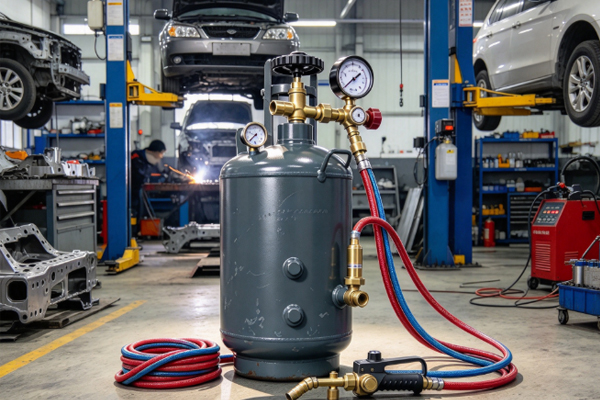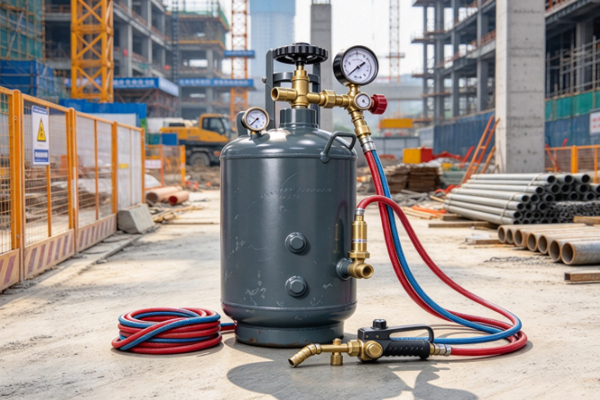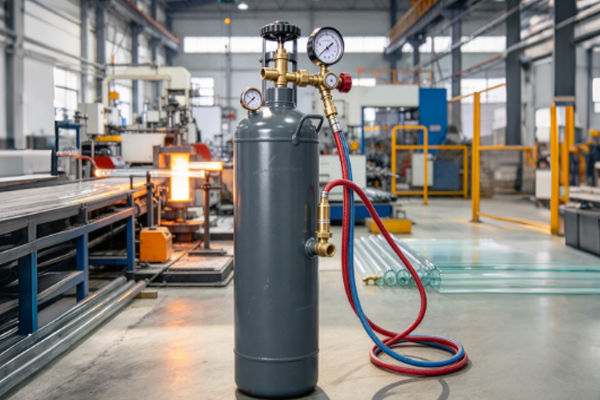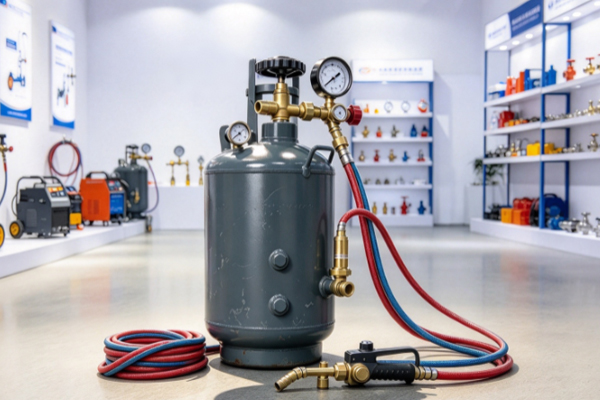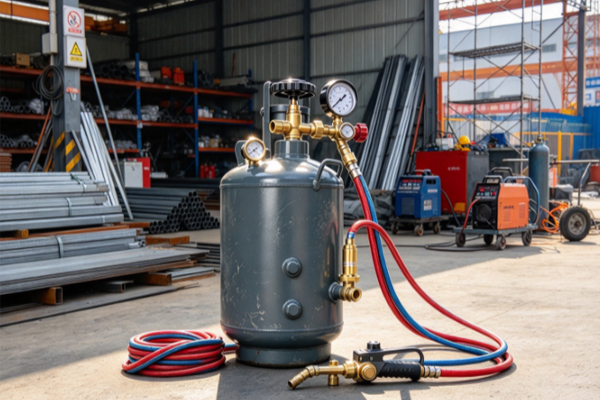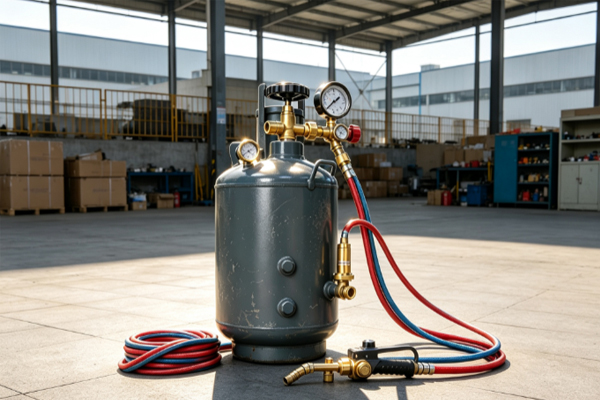
Industrial acetylene tanks are widely used in metal cutting, welding, equipment maintenance, and other production scenarios, making them a key component of industrial gas systems. Since acetylene is a highly sensitive flammable gas, its storage and use place strict demands on environmental conditions. The suitability of the installation environment not only affects gas supply stability, but also directly relates to on-site safety and equipment service life. In practical industrial applications, environmental planning often determines the upper limit of system performance. Establishing clear installation environment standards is of great significance for improving workplace safety and operational efficiency.
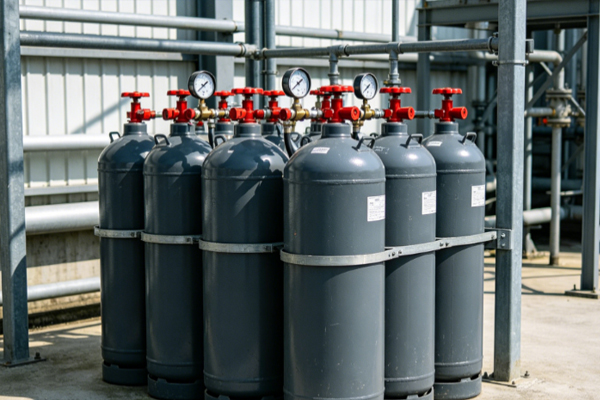
Space Layout Requirements for Acetylene Tank Installation
Proper planning of the installation space is a fundamental condition for ensuring safe system operation, involving ventilation, distance, and working space from multiple dimensions.
- The installation area must maintain good ventilation and smooth air circulation to avoid gas accumulation.
- Keep away from ignition sources, high-temperature equipment, and areas with concentrated welding sparks.
- Reserve sufficient space around the equipment for operation and maintenance to avoid overcrowding.
- The ground must be flat, stable, and load-bearing to prevent the equipment from tilting.
- It is not suitable to install in underground enclosed spaces or areas with poor air circulation.
A well-designed spatial layout reduces the risk of gas accumulation while enhancing on-site operational efficiency and facilitating smoother equipment inspection and maintenance.
Temperature and Humidity Requirements for Acetylene Tank Installation
Temperature and humidity conditions have a significant impact on the operating state of acetylene tanks, and stable environmental parameters help extend equipment service life. The installation environment temperature should be maintained within a reasonable industrial operating range, avoiding high-temperature exposure and prolonged direct sunlight. At the same time, high-humidity environments should be prevented from causing corrosion of metal components, and temperature fluctuations should be minimized to reduce stress changes in pipelines. In freezing environments, corresponding protective measures are also required to prevent performance degradation. A stable temperature and humidity environment can slow material aging and improve the stability of the sealing system, thereby ensuring overall gas supply safety.
Ventilation and Gas Dispersion Requirements for Acetylene Tank Installation
Ventilation conditions directly affect the dispersion and safety control of acetylene gas, making them one of the most critical factors in the installation environment.
- The installation site should have natural ventilation or forced ventilation conditions.
- Avoid operating equipment for long periods in enclosed spaces.
- Set up gas dispersion channels to maintain air circulation.
- Ventilation equipment must have stable operating capability.
- Gas detection devices may be installed in key areas.
A good ventilation system can quickly dilute the concentration of any leaked gas, effectively reduce safety hazards, and improve the overall working environment.
Fire Prevention and Safety Isolation Requirements for Acetylene Tank Installation
As acetylene is a flammable and explosive gas, fire prevention and isolation measures occupy a central position in the installation environment.
- Maintain a safe distance from open flame work areas.
- Avoid mixed layout with high-temperature equipment and electrical distribution facilities.
- Do not store flammable or explosive materials nearby.
- Install clear safety warning signs in the installation area.
- Firefighting equipment and emergency response facilities may be provided.
A scientifically designed safety isolation layout can effectively reduce sudden risks and improve the safety level of the overall production environment.
Site Management and Maintenance Requirements for Acetylene Tank Installation
Standardized site management helps maintain long-term stable operation while reducing later maintenance costs.
- Establish a regular inspection system to check equipment and environmental conditions.
- Keep the ground clean and avoid debris accumulation that may affect operation.
- Focus management on pipeline and valve areas.
- Assign dedicated personnel for daily safety inspections.
- Record equipment operation and environmental changes.
A continuous management mechanism can promptly identify potential problems and ensure the long-term safe operation of the system.
The environmental requirements for acetylene tank installation are not only the basic conditions for equipment operation, but also an important part of the industrial safety system. By reasonably planning the spatial layout, controlling temperature and humidity conditions, strengthening ventilation systems, and improving fire isolation measures, the stability and safety of the gas supply system can be significantly enhanced. In the context of continuous industrial upgrading, standardized environmental management has become an important means for enterprises to improve efficiency and reduce risks. Zhongcheng Gas Tanks provides reliable equipment support for industrial gas systems, helping enterprises build a safer and more efficient working environment.