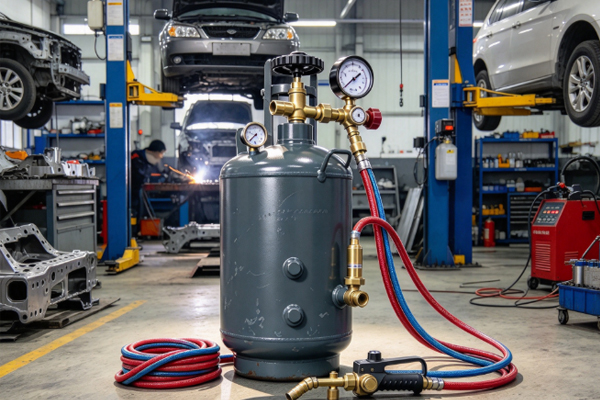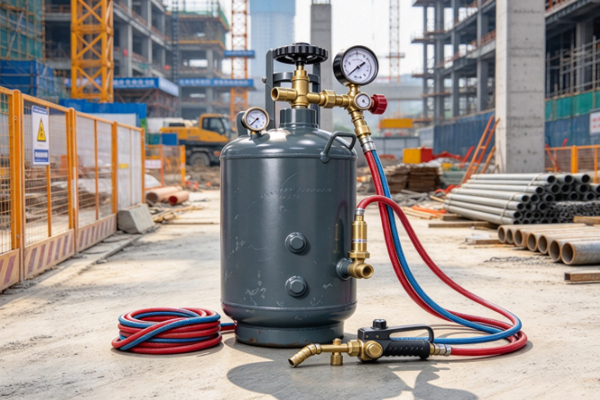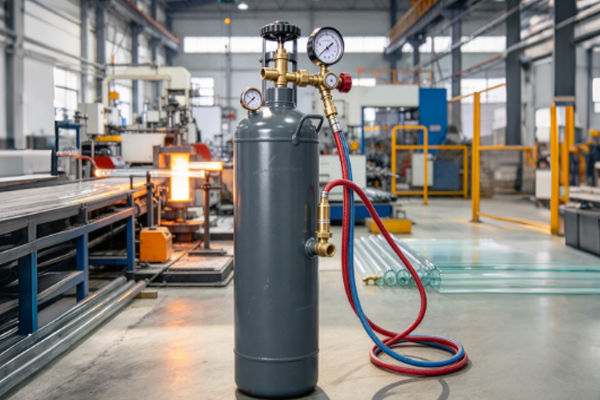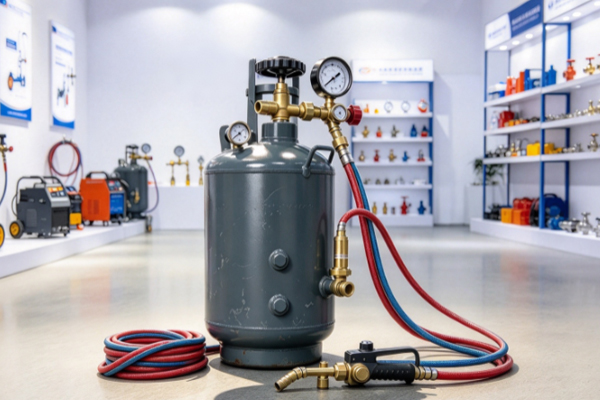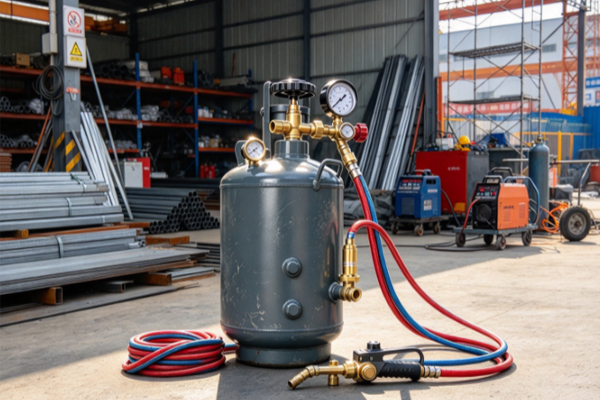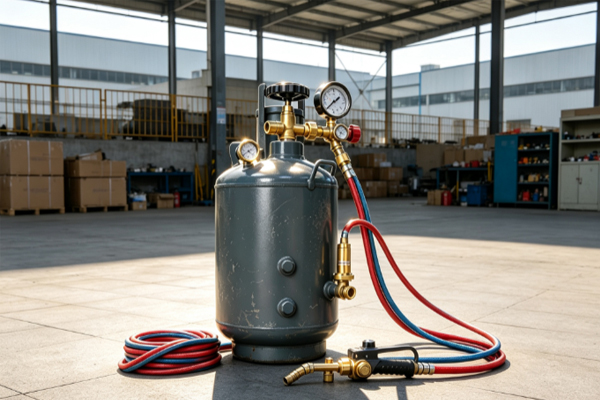
When purchasing an acetylene storage tank, many companies focus on capacity, price, and configuration, only to discover a practical problem when the equipment arrives—the tank does not fit the installation site or fits but is inconvenient to use. Some workshops have limited space, some transportation routes are too narrow, and in other cases, the foundation has already been prepared but does not match the tank dimensions. In reality, acetylene storage tank size and the installation location should always be considered together. The tank dimensions determine how much space is required, while the installation site determines whether the equipment can be installed safely and operated efficiently. Careful planning before purchase not only makes installation easier but also simplifies future maintenance and helps avoid costly rework.
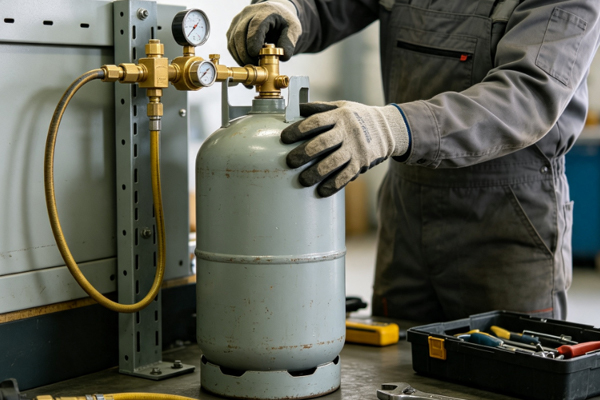
Why Should You Check the Acetylene Storage Tank Size Before Choosing the Installation Location?
Many people assume that as long as there is an open area available, the storage tank can be installed there. In practice, the installation site must accommodate not only the tank itself but also lifting operations, piping connections, routine inspections, and maintenance access. The larger the acetylene storage tank, the more demanding the installation conditions become. If these details are overlooked before purchasing, even a high-quality tank may not perform as expected simply because the site is not suitable. Measuring the available space and understanding the installation requirements beforehand is one of the most important steps in equipment selection.
Before installation, make sure to:
- Verify the acetylene storage tank dimensions, including length, diameter, and height, to ensure they match the available space.
- Leave enough clearance around the tank for inspection and maintenance.
- Confirm that the installed tank will not interfere with personnel access, vehicle movement, or nearby equipment.
After installation, it is also important to check that sufficient clearance remains around the equipment. A tank that simply fits into the space is not enough—easy maintenance and safe daily operation are just as important.
Which Installation Space Requirements Are Most Commonly Overlooked?
Many projects reserve space according to the equipment drawings, yet installation problems still occur. In most cases, the issue is not a lack of floor space but the failure to consider maintenance areas, accessory installation, and construction access around the tank. These seemingly small details often have the greatest impact on installation efficiency.
The most frequently overlooked areas include:
- Adequate space above the tank for valves, instruments, and future maintenance.
- Sufficient clearance on both sides for routine inspection and component replacement.
- Enough operating space for cranes or lifting equipment during installation.
- Proper room around pipeline connections to simplify installation and future servicing.
Leaving extra space may seem unnecessary at first, but it can save significant time, labor, and expense throughout the service life of the equipment.
How Does Acetylene Storage Tank Size Affect the Installation Process?
From factory delivery to transportation, lifting, installation, and final commissioning, the size of an acetylene storage tank influences nearly every stage of the project. Installation is far more than simply placing the tank in position. Larger tanks require more planning for transportation, lifting equipment, foundations, and site coordination.
Key points to consider include:
- Longer tanks require confirmation that transportation vehicles and factory roads can accommodate their length.
- Larger tank diameters require sufficient doorway clearance, lifting capacity, and installation space.
- Taller tanks require checking for roof structures, overhead pipelines, or other obstacles that may interfere with installation.
In addition to the equipment itself, the foundation dimensions, ground load capacity, and surrounding facilities should all match the selected tank size. Confirming these details before delivery is much easier than making adjustments after the equipment arrives.
How to Choose the Right Acetylene Storage Tank Size Based on Your Site Conditions?
Every factory has different production requirements, building layouts, and installation environments, so there is no single acetylene storage tank size that works for every project. The best solution is one that meets production needs while fitting comfortably within the available installation space and allowing convenient maintenance.
Before purchasing, it is recommended to:
- Measure the installation area’s length, width, and height before selecting a tank.
- Confirm transportation plans with the manufacturer if roads or entrances have height or width restrictions.
- Reserve additional space if future production expansion is expected.
- Ask about customized size options if the installation site has special limitations.
- Provide the manufacturer with your site dimensions, operating conditions, and project requirements to receive more accurate recommendations.
Many companies replace storage tanks later not because of equipment quality but because the original acetylene storage tank size was selected without fully considering the installation environment. Taking the time to evaluate site conditions before purchasing leads to smoother installation, easier maintenance, and greater long-term efficiency.
The size of an acetylene storage tank affects far more than its physical appearance. It directly impacts transportation, installation, maintenance, and future expansion. By considering installation conditions, available space, and operational requirements together, companies can select equipment that delivers the best long-term performance. Zhongcheng Gas Cylinde provides acetylene storage tanks in multiple specifications, along with professional selection support to help businesses find the most suitable installation solution.