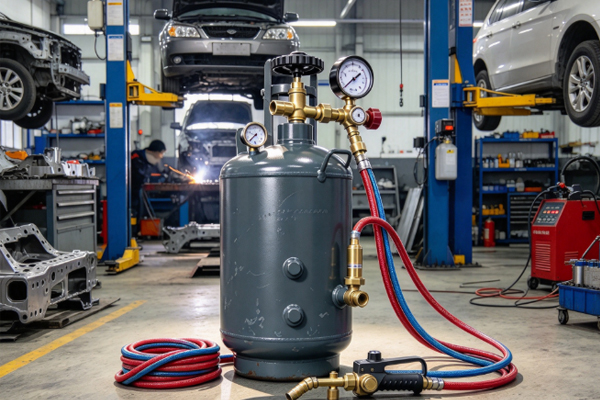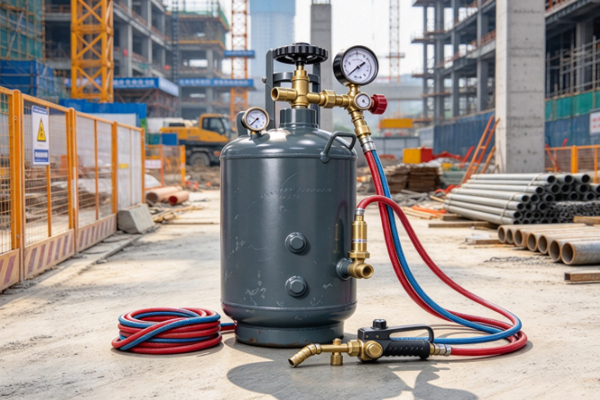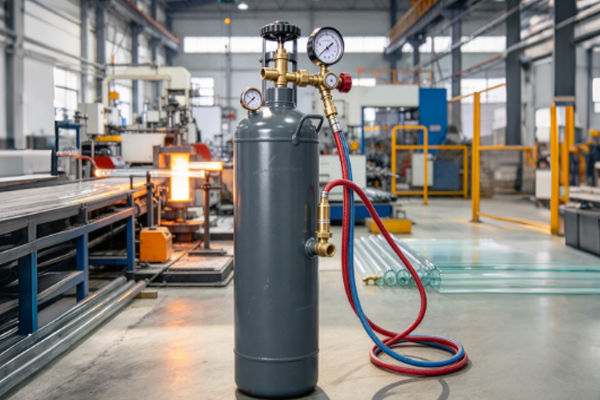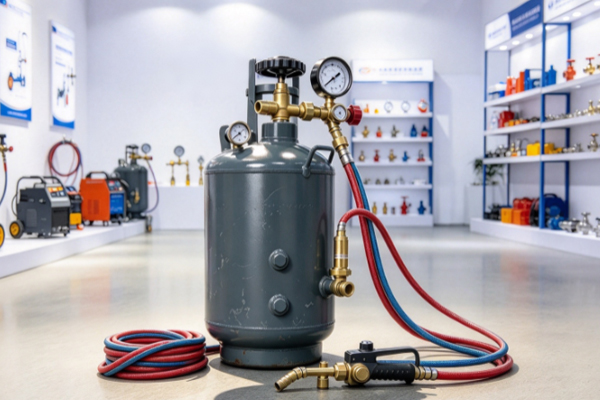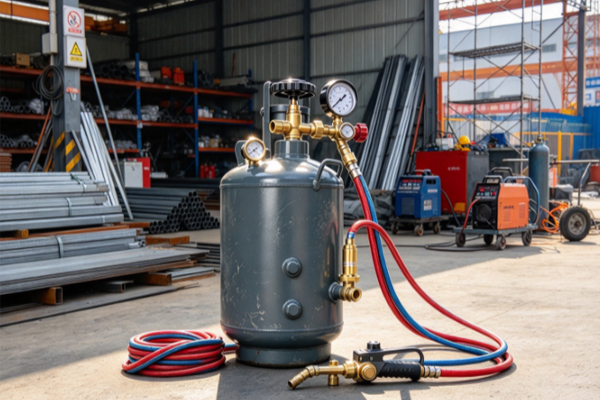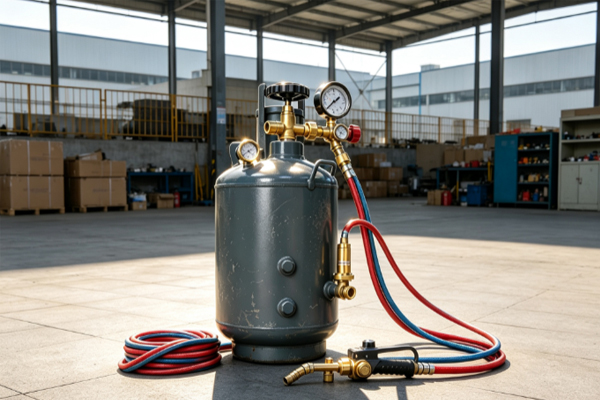
When purchasing an acetylene storage tank, many companies assume that “size” and “capacity” mean the same thing, believing that a larger capacity always means a larger tank. In reality, although the two are related, they are not identical. Tank size refers to the external dimensions and structural specifications of the tank, while capacity refers to the amount of acetylene the tank can store. During equipment selection, installation, and operation, failing to understand the difference between these two parameters can result in problems such as insufficient installation space, inadequate gas supply, or installation restrictions. Understanding the relationship between acetylene storage tank size and capacity helps companies interpret product specifications correctly, improve purchasing efficiency, and select equipment that truly meets their operational requirements.
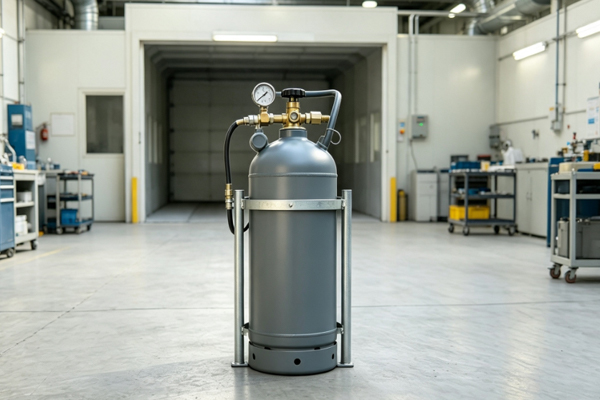
Acetylene Storage Tank Size and Capacity Are Not the Same
Many first-time buyers confuse tank size with capacity. However, these two parameters describe different aspects of the equipment. One focuses on the external dimensions, while the other reflects the internal storage capability. Although they are connected, they cannot replace each other.
The following concepts should be clearly understood:
- Acetylene storage tank size refers to the external dimensions of the tank, including its length, diameter, and height. These measurements determine how much installation space the equipment requires.
- Tank capacity refers to the amount of acetylene the tank can store and is a key indicator of its gas supply capability.
- Even when two tanks have the same capacity, their external dimensions may differ because of different structural designs or manufacturing methods.
Simply put, size answers the question, “Will it fit?” while capacity answers, “Will it meet my gas demand?” Both should be evaluated before making a purchase.
Why Do Many Companies Confuse Size with Capacity?
This misunderstanding is quite common because product brochures usually highlight storage capacity, while detailed dimensional specifications are often listed only in technical documents. Buyers who overlook these details may miss important information that affects installation and operation.
Common situations include:
- Some companies focus only on capacity and later discover that the tank cannot pass through the factory entrance or fit within the available installation space.
- Others assume that tanks with the same capacity must have identical dimensions, while in reality their lengths and diameters may differ significantly.
- Some companies choose a smaller tank to reduce costs, only to find that gas supply becomes insufficient during peak production periods.
- In some projects, enough installation space is available, but maintenance clearance is overlooked, making future servicing much more difficult.
These issues may appear to be dimension-related, but they are usually caused by evaluating size and capacity separately instead of considering them together.
What Is the Relationship Between Acetylene Storage Tank Size and Capacity?
Although size and capacity are different concepts, they are closely related. In most cases, a larger capacity requires a larger tank. However, there is no fixed formula that determines exactly how much the dimensions will increase.
Several factors influence this relationship:
- Internal tank design affects usable storage volume, so tanks with the same capacity may have different external dimensions.
- Different length-to-diameter ratios allow manufacturers to optimize tanks for various installation environments.
- Advances in manufacturing technology enable newer designs to provide the same capacity while reducing the overall size.
- Customized tanks can be designed to fit available installation space while maintaining the required storage capacity.
This is why buyers should never ask only about cubic meters or liters. The complete acetylene storage tank size specifications should always be reviewed together with the capacity.
How to Balance Acetylene Storage Tank Size and Capacity When Purchasing?
The best tank is not necessarily the one with the largest capacity or the smallest dimensions. Instead, it should provide the right balance between storage requirements and installation conditions. Careful planning before purchase can reduce costs and prevent unnecessary equipment replacement in the future.
Before purchasing, companies should:
- Calculate daily acetylene consumption and estimate peak demand instead of selecting capacity based solely on experience.
- Measure the installation area in advance, including length, width, and height, and confirm that transportation routes can accommodate the equipment.
- Request complete technical drawings from the supplier rather than relying only on the capacity listed in marketing materials.
- Consider future production expansion and discuss whether additional storage capacity should be planned in advance.
- When it is difficult to balance size and capacity, evaluate the decision based on actual operating conditions instead of focusing only on price.
Choosing an acetylene storage tank is ultimately about selecting a solution that matches your production environment. Both size and capacity are important, and considering them together helps achieve efficient operation without wasting resources.
Many people believe that acetylene storage tank size and capacity are the same, but they actually address two different aspects of equipment selection: installation and storage. Understanding the difference between them helps companies make better purchasing decisions and avoid unnecessary problems during long-term operation. Zhongcheng Gas Cylinde provides acetylene storage tank solutions in various specifications to help industrial users select equipment that best fits their applications.