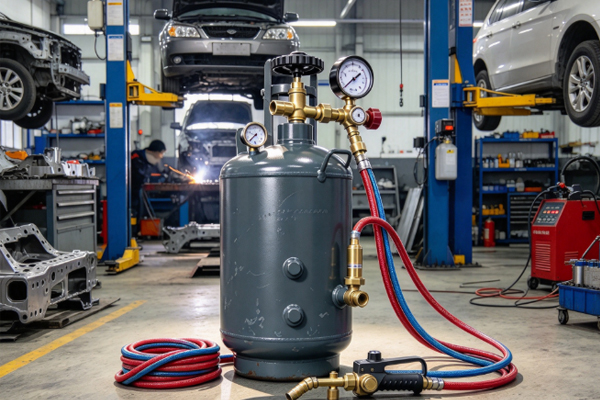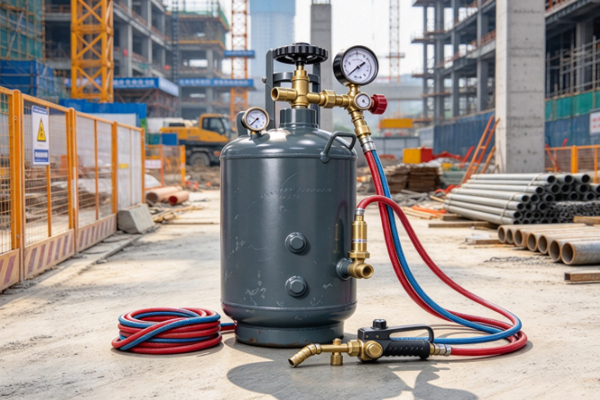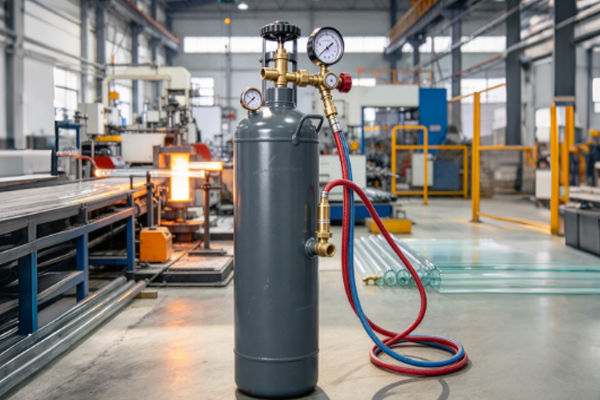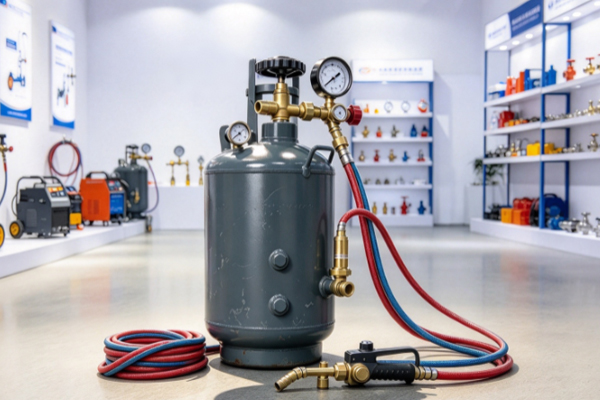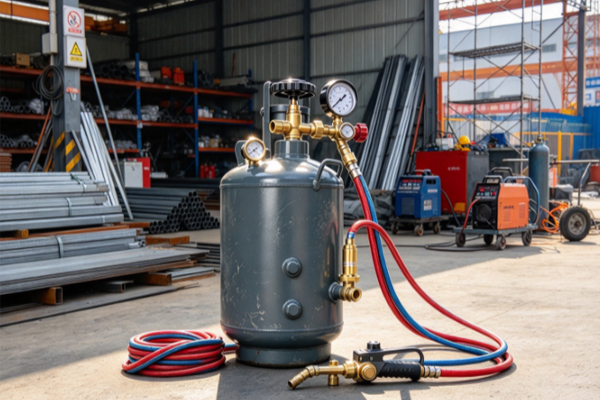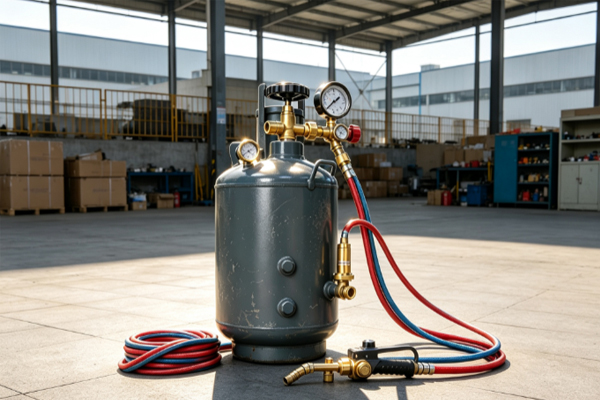
Acetylene tanks are commonly used in welding, cutting, repair, and metal processing sites. At first glance, installation may seem as simple as connecting the equipment and linking the pipes, yet it actually involves multiple critical aspects such as pressure control, sealing performance, accessory matching, and on-site safety. Acetylene is a high-risk gas, and once installation quality deviates from the standard, the result may be unstable gas supply at best, or leakage, flashback, or shutdown issues at worst. Many companies pay more attention to price and capacity when purchasing equipment, while easily overlooking the professionalism required during installation. Having professionals complete the installation is not only about “making it work after setup,” but also about ensuring the entire system starts in a controllable, stable, and compliant state.
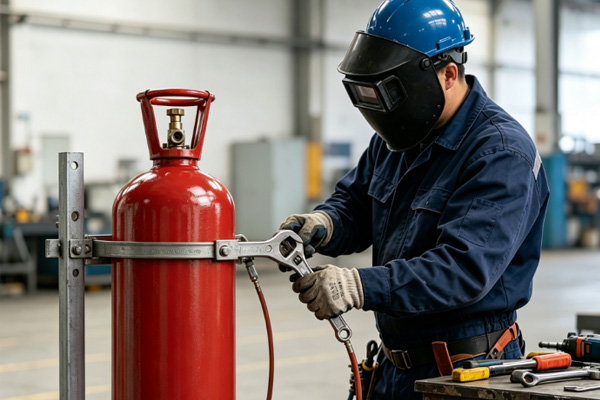
Professional Installation Makes Acetylene Tanks Safer from the Start
The risks in an acetylene system often do not appear suddenly during use; they are usually planted during the installation stage. Whether the early handling is standardized directly determines whether later operation will be reassuring.
Installation Procedures Are More Standardized
Professionals are familiar with the standard steps of an acetylene system and can configure the equipment, valves, piping, and safety accessories in the correct order, making every step connect more smoothly and making later commissioning easier.
- The equipment placement is more reasonable, which is convenient for operation and later inspection and maintenance, avoiding the inconvenience caused by cramped space.
- The piping route is clearer, reducing crossings, compression, and unnecessary bends, making gas transmission more stable and the site layout neater.
- The connection sequence follows the standard more closely, avoiding rework or hidden dangers caused by procedural mistakes, while also reducing repeated labor during later disassembly and reassembly.
Standardized installation not only reduces repeated construction, but also lowers the difficulty of later commissioning, allowing the system to enter a stable state more quickly.
Hidden Risks Are Identified More Promptly
Experienced installers are better at spotting detail-related issues. Many seemingly minor deviations can be recognized and handled in advance from a professional perspective, preventing small problems from growing during use.
- Whether the interface specifications match and whether the connection can remain stable without loosening over time. If such issues are found early, frequent adjustments later can be avoided.
- Whether the sealing parts are installed properly and whether there is any offset, aging, or uneven compression. These details often directly affect system airtightness.
- Whether any accessories are missing or damaged and whether they will affect overall performance. Professionals usually complete a step-by-step check before installation.
If these issues are discovered during installation, the cost of handling them is far lower than repairing them after the system has been put into use, and downtime losses can also be reduced.
Safety Boundaries Are Clearer
An acetylene tank is not an ordinary gas storage device. Installation must take ventilation, distance, and protective conditions into account. Whether the site layout is reasonable directly affects the operator’s sense of safety and the stability of the equipment.
- Keep it away from fire sources and heat sources to avoid additional risks from the surrounding environment and reduce the possibility of accidental ignition.
- Reserve maintenance space to facilitate later inspections, maintenance, and emergency handling, so the equipment can respond quickly when abnormalities occur.
- Avoid excessive crowding with other equipment to reduce collision, wear, and misoperation risks, while also making the work area more orderly.
Professional installation makes the site layout more reasonable, the safety boundaries clearer, and the setup more in line with industrial site management requirements.
Professionals Can Effectively Reduce Operating Risks
Installation completion is only the beginning. Real risk control depends on whether later operation remains stable. Whether the system can maintain reliability over time often depends on whether the installation stage was professional enough.
Leakage Risks Are Reduced
The biggest concern in an acetylene system is poor sealing. Even a slight leak may create dangerous accumulation during operation, especially in environments with average ventilation or frequent work, where the risk can be amplified further.
- Check the sealing condition of valves to ensure no leakage occurs during opening and closing, allowing the equipment to maintain a higher safety margin in daily use.
- Test the tightness of pipe connections to ensure each interface remains stable under pressure changes and does not loosen due to vibration or temperature fluctuations.
- Observe whether pressure changes are abnormal and determine in time whether the system has hidden problems, keeping risks under control before the system is put into use.
Professionals use testing methods to identify problems in advance rather than waiting for failures to appear. This proactive control approach is more suitable for high-risk gas systems.
Safety Accessories Are Less Likely to Be Installed Incorrectly
Flashback arrestors, pressure regulators, and safety valves are not components that can simply be “installed and forgotten.” Their model, direction, and position must all be accurate. Any mistake in one detail may affect the protective capability of the entire system.
- A flashback arrestor installed in the correct direction can truly block abnormal flame return and prevent greater risks.
- A pressure regulator matched to the equipment’s pressure rating can ensure stable output without overload, keeping gas supply within a controllable range.
- A safety valve set according to usage requirements can release pressure risks in time when abnormalities occur, reducing equipment damage and accident probability.
Incorrect accessory installation directly affects protection performance and may even cause the system to lose its protective function. Such issues are often not fully judged by sight alone.
Gas Supply Stability Is Improved
Installation quality directly affects flame output and work continuity. The more stable the system is, the easier it is to maintain consistent cutting and welding results, and the easier it is to control the production rhythm.
- Pressure output is more stable, reducing fluctuations that affect operation and making it easier for workers to control the flame condition.
- Flame fluctuation is smaller, improving cutting edge quality and welding uniformity while reducing rework and material waste.
- Cutting and welding results are more consistent, helping companies maintain stable production capacity and making processing quality easier to standardize.
Stable gas supply not only improves efficiency, but also reduces material waste and repeated processing, bringing tangible benefits to the company.
Which Parts of Acetylene Tank Installation Require the Most Professional Handling
From placement to commissioning, every step affects whether the system can operate stably over the long term. Many problems are not caused by the equipment itself, but by incomplete installation handling.
Position Planning and Fixing
An acetylene tank cannot be placed casually. The location directly affects safety, operating efficiency, and later maintenance. Professionals usually evaluate the site space and reserve enough room for operation and inspection, making daily checks, replacement, and emergency handling easier while avoiding interference with other processes and keeping the gas supply system more coordinated with the production flow. The fixing method must also be standardized to prevent the equipment from shifting during handling or vibration, which could affect pipe stress and connection stability.
Pressure Testing and Trial Operation
After installation, the system must be tested to confirm its condition. It should not be put into high-intensity use directly. Pressure testing and trial operation are important steps for verifying installation quality.
- Check whether the system leaks and confirm that all connection points remain airtight under working conditions, preventing hidden dangers from expanding during operation.
- Test whether the pressure is stable and observe whether fluctuations or abnormalities occur during gas supply, making system performance easier to understand.
- Observe ignition and combustion conditions to determine whether the flame is uniform, continuous, and controllable, providing a basis for formal production.
Trial operation helps identify installation deviations, prevents defective equipment from entering production, and allows operators to become familiar with the equipment condition earlier.
Accessory Adjustment and Parameter Confirmation
Different working conditions require different pressure and flow settings. Accessory adjustment must be completed according to the actual application scenario and cannot rely on simple experience-based settings.
- Adjust the pressure regulator output so that the gas supply pressure better matches actual work requirements and avoids performance issues caused by excessive or insufficient pressure.
- Verify flashback protection to ensure effective blocking capability in abnormal situations and make safety protection truly effective.
- Confirm that valve opening and closing are smooth, avoiding sticking, delay, or misoperation problems and improving ease of use on site.
These tasks may seem minor, yet they directly determine whether the equipment can operate stably over the long term and whether on-site operation feels smooth.
Why Companies Are Better Off Choosing Professional Installation Services
Professional installation is not only a technical choice, but also a management approach better suited to enterprise operations, especially for production sites that require both safety and efficiency.
It Saves the Cost of Repeated Trial and Error
Self-installation often requires multiple adjustments, consuming both time and materials. If the site lacks experience, repeated disassembly and reassembly may even create new problems.
- Reduce rework frequency so the equipment can enter usable condition faster, helping the company resume or advance production sooner.
- Shorten the commissioning cycle and help production plans proceed more smoothly, reducing time loss caused by waiting for installation.
- Lower maintenance expenses by avoiding extra costs caused by incorrect installation, making budget use more controllable.
Professional teams are more likely to get it right in one go, and overall efficiency is better. Companies save more time and resources.
It Is More Conducive to Long-Term Management
Professional installation not only solves the problem of “getting it installed,” but also lays the foundation for later management. It allows the equipment to start with a clearer maintenance logic, form a unified operating method, facilitate daily inspections and status tracking, and make problem tracing and later optimization easier. For companies that need long-term stable production, this management value is very obvious and better aligned with modern factory operations.
It Is Better Suited to High-Risk Scenarios
Acetylene tanks are often used in high-temperature, high-pressure, and continuous-operation environments. Any negligence may magnify the risk. Professional installation helps the system adapt better to such demanding scenarios.
- Higher on-site safety requirements naturally call for stricter installation standards, and ordinary equipment thinking should not be used to handle them.
- More frequent continuous operation places greater emphasis on stability, making installation quality especially critical.
- Stricter reliability requirements mean temporary fixes are not enough; a stable foundation must be established from the source.
Professional installation helps companies achieve a better balance among safety, efficiency, and maintenance, while also reducing later management pressure.
Acetylene tank installation may look simple, but in reality it is a task that demands experience, standards, and attention to detail. Professionals do more than install the equipment—they also consider safety, stability, and later maintenance together, helping companies avoid detours, reduce failures, and lower risks. For factories and work sites that rely on acetylene systems for long-term use, professional installation is not an extra cost, but a more reliable investment. Zhongcheng Gas Tank provides professional acetylene tank and industrial gas supply solutions, creating a safer and more efficient gas-use environment for enterprises.