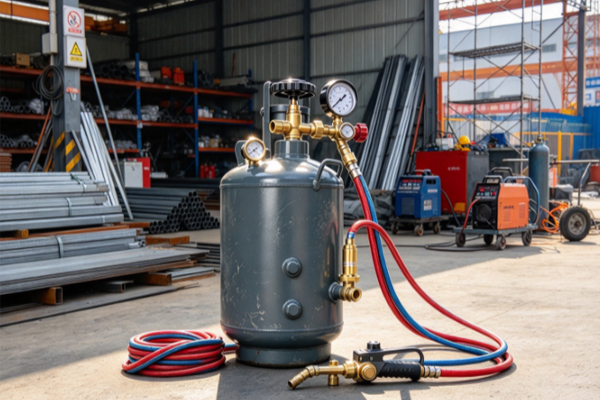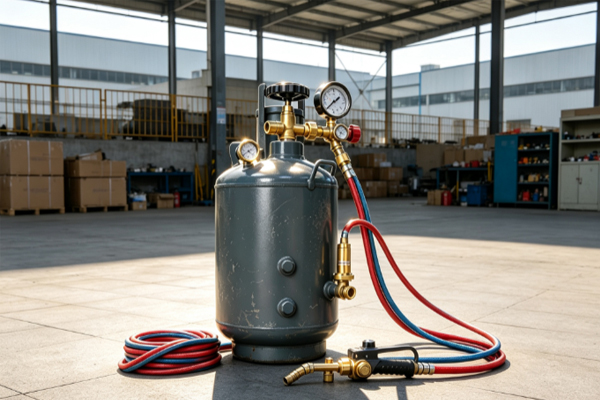
Industrial acetylene tanks are widely used in welding, cutting, metal processing, and equipment maintenance, making them a key part of industrial gas supply systems. Acetylene is a highly flammable gas, and any oversight during installation may affect supply stability at best or create safety hazards at worst. On-site conditions usually involve pressure control, pipeline connection, leak prevention, and space planning, and improper handling of any step may affect subsequent operation. Establishing standardized installation awareness for industrial acetylene tanks is not only about meeting operational requirements, but also about improving production safety and on-site work efficiency.
Precautions for Installation Environment and Site Selection
Acetylene tanks have high requirements for the installation environment, and site selection is the starting point of the entire installation process as well as a core factor affecting safety.
- The installation area should maintain good ventilation to prevent gas accumulation.
- Keep away from open flames, high-temperature equipment, and welding spark zones.
- Avoid storage areas for flammable materials and high-risk work zones.
- The floor should be flat, stable, and capable of bearing sufficient load.
- The location should allow convenient daily inspection, maintenance, and emergency handling.
A reasonable spatial layout not only reduces operational interference, but also improves inspection efficiency and lowers the risk of misuse and accidents. For long-term use scenarios, scientific planning of the installation location is often more important than simply pursuing convenience.
Equipment Inspection and Pre-Installation Preparation
Before an acetylene tank enters the installation stage, equipment condition confirmation and supporting inspections must be completed, as this step directly affects whether later operation will remain stable.
- Check whether the tank surface has deformation, rust, or mechanical damage.
- Verify whether components such as valves, pressure gauges, and interfaces are intact.
- Confirm that safety components such as flashback arrestors and safety valves are complete.
- Check whether the connecting hoses meet pressure resistance and wear resistance requirements.
- Verify whether the equipment specifications match the actual gas consumption demand.
Pre-installation inspection should not be treated as a formality. Any abnormality should be resolved before entering the installation process. A standardized preparation process can reduce rework later and lay the foundation for stable gas supply.
System Structure and Installation Connection Precautions
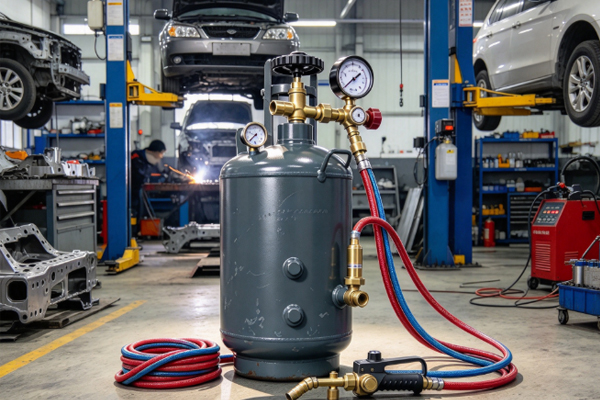
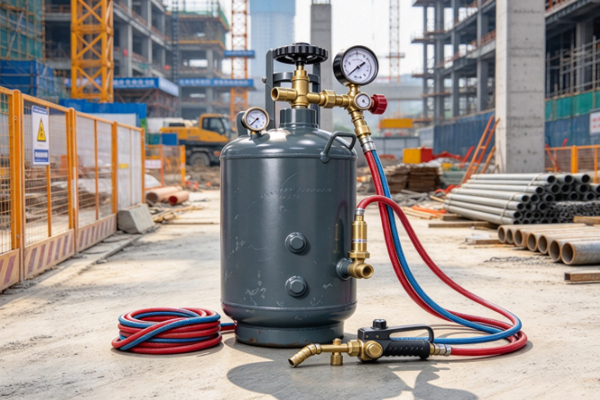
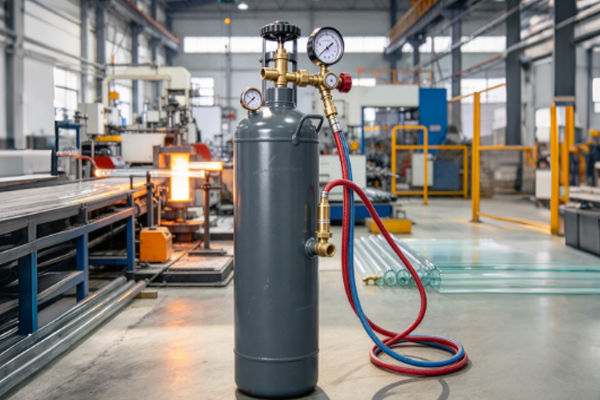
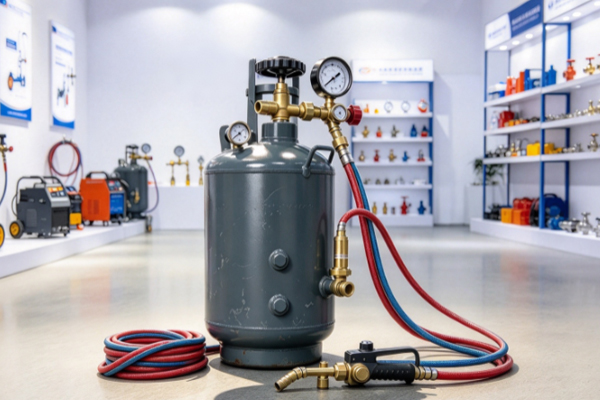
An industrial acetylene tank system is a combined gas supply structure, and the connection quality between each module directly affects overall performance and safety. The acetylene tank body is responsible for gas storage, the pressure-reducing device handles pressure regulation, the flashback arrestor blocks flashback risks, the delivery pipeline transports the gas, and the control valve group is used for flow regulation. Only when all parts work together can a stable and reliable gas supply system be formed.
The pipeline connection stage requires special attention to the following points:
- Use standard pressure-resistant hoses.
- Interface positions must be tightened and properly sealed.
- Avoid excessive bending, stretching, or compression of pipelines.
- Minimize unnecessary joints.
- Keep the pipeline routing clear for future maintenance and troubleshooting.
The higher the connection quality, the more stable the system operation, and the lower the probability of leakage, blockage, or pressure fluctuation later on.
Key Control Points During the Installation Process
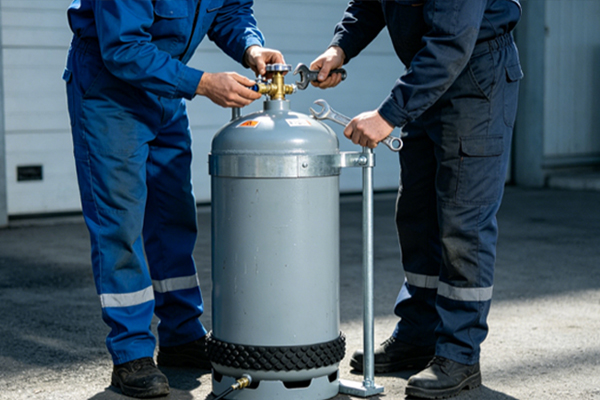
The installation of an acetylene tank involves multiple steps, and each stage must be carried out according to standardized requirements without arbitrary simplification. During the equipment positioning stage, the tank must remain vertical and be secured with a fixed bracket to prevent tipping, while sufficient operating and maintenance space should be reserved. The installation location should also avoid areas with frequent pedestrian traffic to reduce the risk of accidental contact. During the connection stage, the focus is on sequence and sealing control. The pressure-reducing device, flashback arrestor, and delivery pipeline should be installed in the proper order, and after completion, each interface should be checked for tightness to confirm there are no looseness, displacement, or leakage hazards. During the commissioning stage, the system must undergo comprehensive testing, including pressure stability testing, leak inspection, and output status observation. Only after all indicators are confirmed normal can the equipment be officially put into use.
Safety Management and Operation Maintenance Precautions
Acetylene is a highly hazardous gas, and safety management runs through the entire installation, commissioning, and usage process, making it the core guarantee for long-term stable operation of the system.
- Keep the work area continuously ventilated.
- Open flames and high-temperature sources are strictly prohibited near the equipment.
- Set up clear safety warning signs.
- Operators must receive professional training before taking the job.
- Use dedicated tools during installation and maintenance.
- Establish a regular inspection and record-keeping system.
Only by implementing these details can the installation and use of industrial acetylene tanks be safer and more stable.
During operation, the equipment status should also be monitored continuously:
- Regularly check pressure changes.
- Monitor the sealing and connection status of pipelines.
- Replace aged or damaged parts in time.
- Stop the machine immediately when abnormalities are found.
- Improve equipment operation records for traceable management.
Continuous safety management can effectively reduce sudden risks and improve overall equipment reliability and service life.
Precautions for industrial acetylene tank installation are not just a set of operating rules, but also an important foundation for the safe operation of industrial gas supply systems. By reasonably planning the installation environment, strictly carrying out equipment inspections, standardizing connection procedures, and strengthening daily maintenance, the stability and safety level of the gas supply system can be significantly improved. In industrial welding and metal processing, this kind of standardized management helps reduce operational risks and improve work efficiency. Zhongcheng Gas Tank provides stable and reliable equipment support for industrial gas systems, helping enterprises build a safer and more efficient production environment.