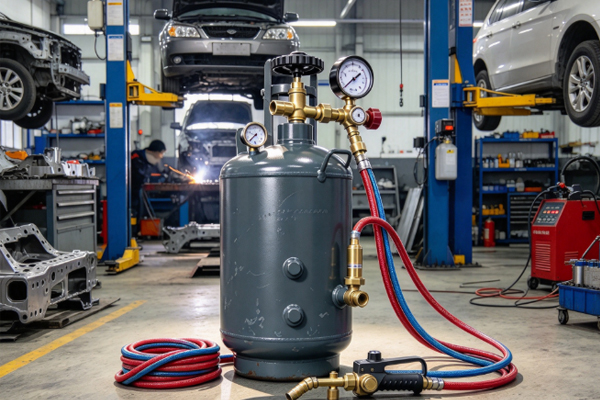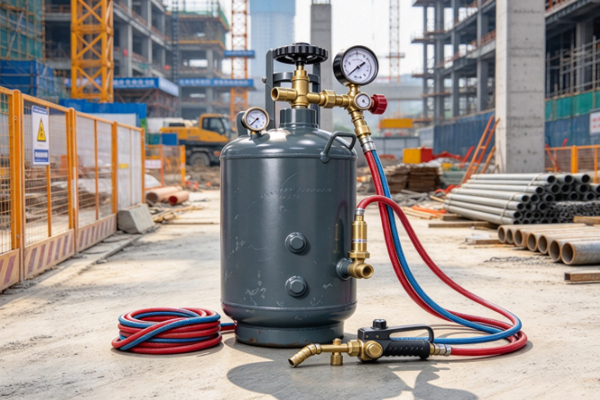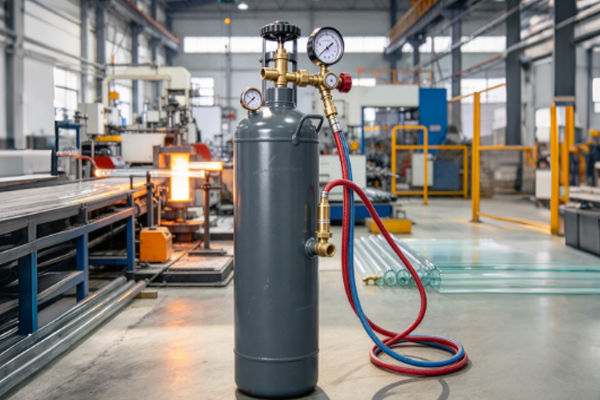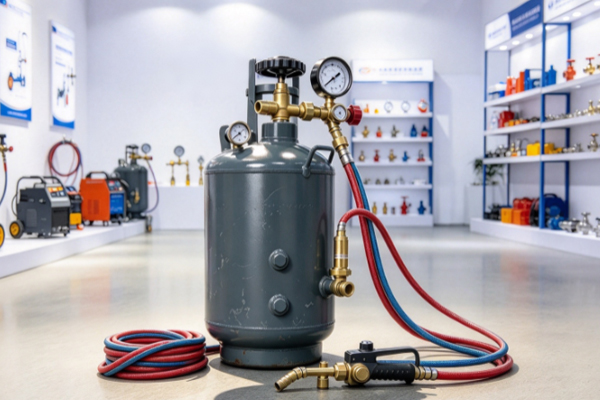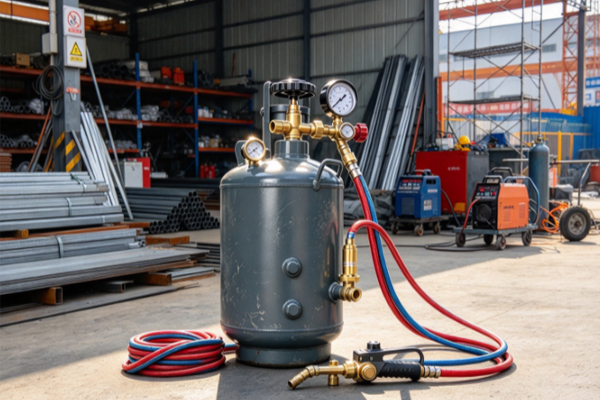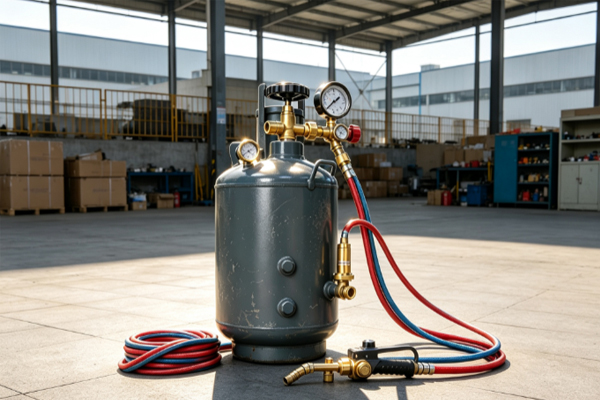
Acetylene gas supply systems are commonly used in industrial settings such as hardware processing, metal cutting, welding repair, and scrap metal dismantling, serving as an important gas supply configuration for continuous operations. In actual use, companies sometimes make adjustments to pipelines and layouts based on site changes, equipment additions, or process modifications. What may seem like a simple position adjustment actually involves critical factors such as pressure balance, flashback protection, and gas transmission stability. Acetylene is a highly sensitive flammable gas. Once the system structure is altered arbitrarily, the safety boundary is broken and operational risks rise accordingly.
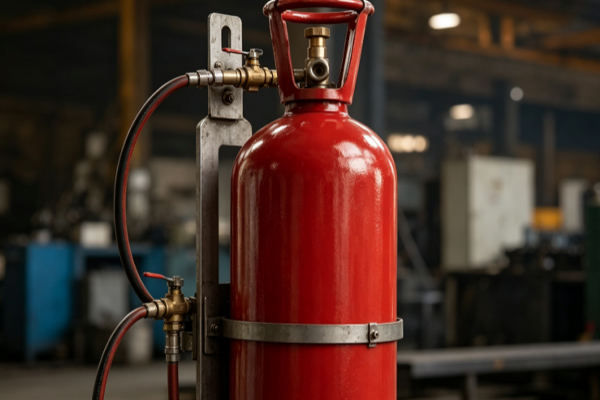
Why Can’t the Acetylene Gas Supply System Be Modified at Will?
A gas supply system is not an ordinary pipeline. Its structural design already contains a clear safety logic. During acetylene transmission, pressure reduction, distribution, and use, there are high requirements for pressure changes, pipeline length, interface sealing, and protective devices. If any link is disrupted, the operating state of the entire system may be affected.
It Will Disrupt Pressure Balance
The acetylene system relies on stable pressure to maintain normal gas supply. Structural changes directly affect gas flow efficiency and end-use output performance.
- Changes in pipeline length increase pressure loss, making end equipment more likely to experience insufficient gas supply, especially when multiple workstations operate simultaneously, where pressure attenuation becomes more obvious.
- Adjusting the position of interfaces may cause uneven gas supply, amplifying pressure differences between workstations and affecting the consistency of different devices.
- When the pressure-reducing device does not match the actual working condition, output pressure is prone to fluctuation, and flame conditions become unstable as well.
In continuous operation scenarios, unstable pressure not only affects flame quality, but also reduces cutting speed, welding performance, and equipment response. The greater the structural change, the harder it is to ensure gas supply stability, and the more difficult it becomes to maintain consistency on site.
It Will Weaken Safety Protection
The original system is usually equipped with multiple protective measures, and these devices have a clear linkage relationship. Once the structure is disrupted, the protection chain may develop gaps.
- The layout of flashback arrestors may be damaged, reducing the ability to block flame backflow, and risks that could originally be intercepted in time become harder to control.
- The response path of safety valves may change, making abnormal pressure release less timely, allowing local overpressure problems to expand in a short time.
- Pressure relief and isolation mechanisms may fail, causing local faults to spread through the entire pipeline and turning a controllable minor issue into a systemic hazard.
Convenient-looking modifications may significantly reduce protective capability. Especially under high temperature, sparks, and frequent start-stop conditions, once the protective structure loses its original logic, risks accumulate rapidly.
The Core Role of Structural Design in the System
Reasonable structural design is not only about delivering gas to the destination, but also about ensuring long-term controllable operation of the system. The structure of an acetylene gas supply system actually承担s multiple functions such as transmission, distribution, buffering, and protection. Whether the layout is reasonable directly determines whether the equipment can operate stably.
Ensuring Stable Gas Transmission
Structure determines the gas flow path and also determines the user experience. Pipeline routing, branch quantity, and equipment placement all affect the final gas supply performance, especially in high-frequency usage scenarios.
- Reduce pressure fluctuations so that end equipment maintains stable output, making cutting and welding processes easier to keep consistent.
- Improve gas transmission efficiency, reduce unnecessary energy loss, and allow the system to maintain good gas supply performance during long-term operation.
- Keep flame output stable, improve cutting and welding quality, and reduce rework and material waste.
A stable structure is the foundation of continuous operation. For multi-station production lines, the clearer the structure, the more balanced the gas supply, and the higher the coordination efficiency between devices.
Reducing Operational Risks
Scientific layout allows risks to be exposed earlier and controlled more easily. The danger of an acetylene system does not come only from the gas itself, but also from hidden points and management blind spots in the transmission path.
- Control the spread range of leaks, reduce the accumulation of flammable gas, and make local abnormalities easier to detect and handle.
- Improve abnormal response speed, making it easier to quickly shut down and isolate, so fault handling becomes more timely and targeted.
- Reduce the probability of fire source interference, lowering the chance of accidents caused by external factors and making the safety boundary on site clearer.
The system structure itself is a safety barrier. When the layout is reasonable, risks are more likely to be confined to local areas; when the layout is chaotic, even small problems may escalate into major faults.
Facilitating Future Maintenance
A standardized structure is not only beneficial for operation, but also for inspection and repair. Many companies focus only on whether the system “can be used” during modifications, while ignoring the convenience of later maintenance, which often leads to higher management costs in the future. Fault points are easier to locate, troubleshooting takes less time, and maintenance personnel can find the source of the problem more quickly; maintenance procedures are clearer, reducing repeated disassembly and making daily servicing and inspection smoother; component replacement is more efficient, lowering downtime losses and preventing minor faults from affecting the rhythm of the entire production line. A system with a clear structure has lower long-term management costs. For industrial sites that require long-term operation, this maintainability is often more important than short-term convenience.
Common Improper Modification Methods and Hidden Risks
In actual use, some seemingly “convenient” practices often create hidden dangers. Many problems do not appear at the moment of modification, but gradually emerge during later operation. By the time they are discovered, production is often already affected.
Arbitrarily Extending the Pipeline
To adapt to site layout, some people directly increase the pipeline length, believing that as long as it is connected, it can continue to be used. This may seem convenient in the short term, but it brings obvious problems in the long run.
- Pressure loss increases significantly, reducing end gas supply capacity, and equipment is more likely to experience insufficient gas supply under high load.
- Gas response speed decreases, start-stop processes become slower, and operators can clearly feel that flame response is not sensitive enough.
- Flame stability worsens, affecting cutting edges and weld quality, and the probability of rework rises accordingly.
This practice may seem convenient, but in reality it continuously increases the operational risk of the acetylene gas supply system. Especially in long-distance transmission, pressure attenuation and insufficient flow become more obvious.
Mixing Different Specifications of Components
Mixing components of different standards can easily cause interface mismatch problems. Some sites temporarily splice parts from different brands or specifications to save costs. Although it may work in the short term, it often leads to loosening, reduced sealing, and leakage risks in the long run. Inconsistent interface sizes reduce stability after installation, and minor leaks are not easy to detect in time. By the time odor or pressure abnormalities appear, the problem has often existed for some time. In addition, inconsistent components weaken the overall reliability of the system, increase maintenance difficulty, and may even amplify safety risks in high-temperature or spark-prone environments.
Removing Safety Devices
Some sites remove the original protective components to save trouble, believing this reduces resistance or simplifies operation, but such practices often cause the system to lose its most critical protective capability.
- Flashback risk increases, and flames may travel back along the pipeline. Once this happens, the entire system is seriously threatened.
- System protection fails, abnormal conditions cannot be blocked in time, and minor faults that could have been controlled quickly expand.
- Fault consequences become more severe, and small-scale problems may spread, even affecting surrounding equipment and worker safety.
These practices may seem convenient in the short term, but they magnify risks in the long run. Safety devices are not redundant accessories; they are the baseline guarantee for system operation. Once removed, the protective capability of the entire system declines.
The Correct Approach to Standardized Optimization of the Acetylene Gas Supply System
Structural optimization is not impossible, but it must be done according to standards. Truly effective modification is not simply moving equipment around, but conducting an overall assessment and redesign of the system based on process, space, and safety requirements.
Carry Out Systematic Design Adjustments
Before making changes, the system should be re-planned according to process requirements, avoiding a focus on local details while ignoring the whole, so that the modification truly serves production rather than creating new problems.
- Reorganize the pipeline routing to reduce unnecessary bends and detours, making the gas transmission path smoother.
- Keep core safety devices in place to ensure the protection chain remains intact, so the system still has basic protection under abnormal conditions.
- Maintain consistent pressure control logic so that system output remains stable and operational balance is not disrupted by structural changes.
Only under professional assessment and standardized construction can structural optimization truly improve system safety and operating efficiency. For multi-station or complex workshops, the overall layout must be considered rather than making isolated fixes.
Use Standardized Components
Uniform-specification components are more conducive to system stability and easier future maintenance and replacement. The higher the degree of standardization, the easier it is to keep the system operating consistently.
- Use standard interfaces to reduce installation errors, making the connection process smoother and sealing easier to ensure.
- Choose certified products to improve quality consistency and avoid additional risks caused by material or process differences.
- Avoid mixing non-standard parts to reduce compatibility issues and minimize repeated adjustments and repairs later.
Standardized component selection further improves the safety and operational reliability of the acetylene gas supply system. The higher the standardization, the easier the system is to manage and the more efficient fault diagnosis becomes.
Conduct Regular System Assessments
After structural adjustments, inspections cannot be skipped. Many hidden dangers do not appear on the day of installation, but gradually emerge after a period of operation, so continuous assessment is crucial.
- Test pressure stability and observe output changes under different working conditions to confirm whether the system remains stable in actual use.
- Check sealing conditions to identify leaks at interfaces and valves and prevent minor issues from accumulating over time.
- Evaluate the effectiveness of safety devices to confirm that protective functions are normal and that the system can still play its role under abnormal conditions.
Only a verified structure is suitable for long-term operation. Regular assessments not only help identify problems, but also provide a basis for future optimization.
The acetylene gas supply system is not a device that can be modified at will. Any adjustment should be based on professional assessment and standardized design. Structural changes may seem like a local action, but in reality they affect pressure stability, safety protection, and overall operating efficiency. For industrial enterprises, a standardized gas supply system is not only related to production continuity, but also to site safety and long-term cost control. Zhongcheng Gas Tanks provides professional acetylene gas supply systems and industrial gas solutions to help enterprises build safer and more stable production environments.