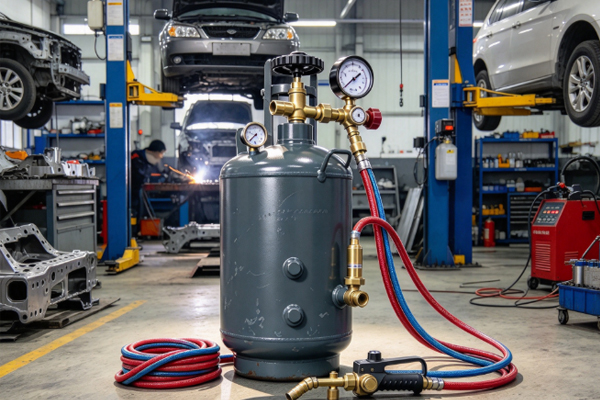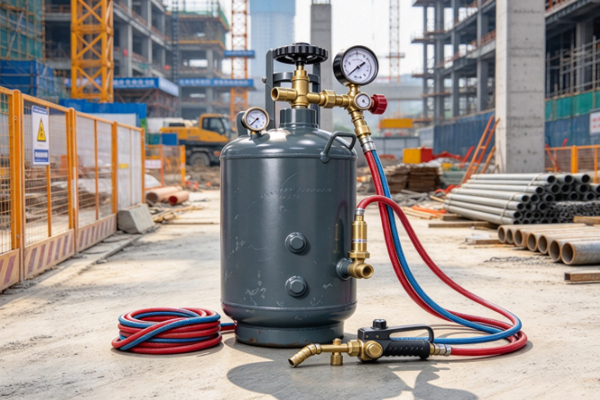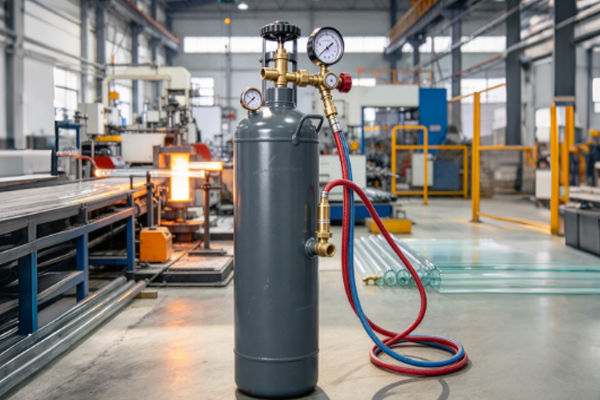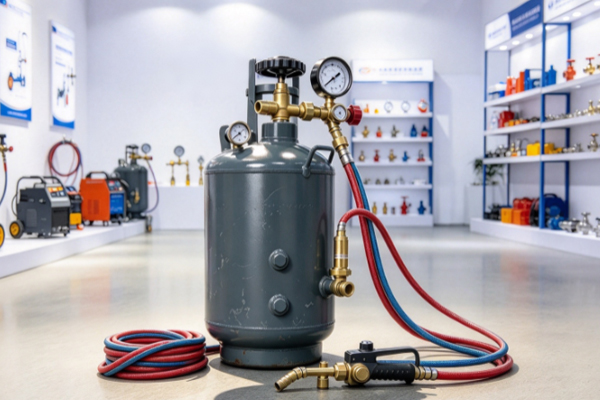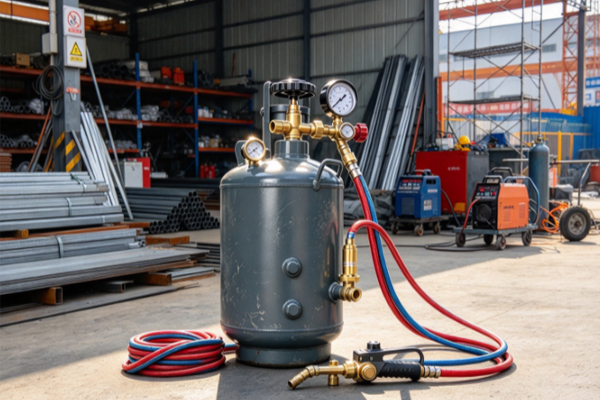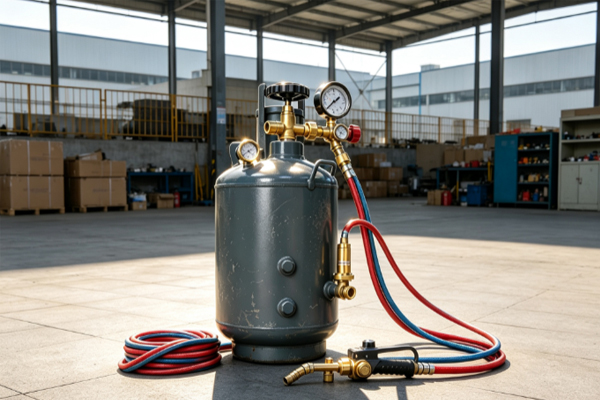
Acetylene cylinders are commonly used in industrial settings such as hardware processing, metal cutting, welding repair, and scrap steel dismantling, and they are gas supply devices that require strict installation standards. A complete acetylene system is not just a cylinder; it is an integrated setup made up of a pressure regulator, flashback arrestor, piping, connectors, safety valve, and other components working together. In real-world operations, some sites install the main unit first to save time while leaving accessories incomplete. This may seem convenient, but it actually leaves hidden risks for the operating stage. Once the acetylene system is structurally incomplete, its safety, stability, and efficiency are all affected, and repeated maintenance and downtime may follow.
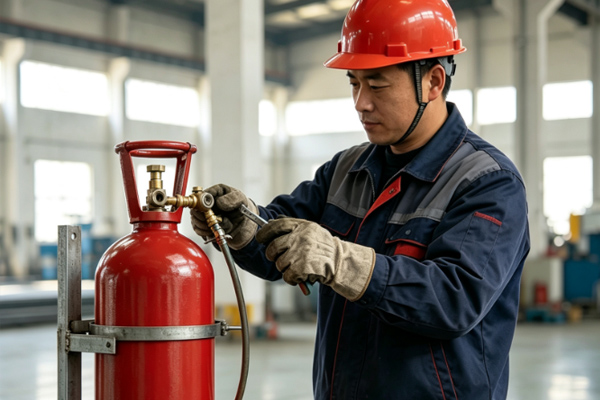
What Direct Risks Come from Installing the System Without All Accessories?
Missing accessories may look like a minor installation issue, but in practice it directly affects system performance and can make an otherwise normal workflow unstable.
The Risk of Gas Leakage Rises Significantly
Acetylene is a highly sensitive flammable gas and requires extremely strict sealing. When key connectors are missing, loose joints, seepage, or poor sealing are more likely to occur. Even a tiny gap may gradually expand during continuous use.
- Joints cannot form a complete seal, making it easier for gas to escape slightly at the connection points, and on-site personnel may not notice it immediately.
- The stability of the piping connection decreases, and when the equipment vibrates or is moved frequently, loosening becomes more likely, increasing leakage risks.
- Small leaks are difficult to detect in time, especially in areas with poor ventilation, where the danger can accumulate unnoticed.
These problems may not be obvious at the beginning, but in high-frequency use environments they continue to amplify risk, and by the time they are discovered, normal production is often already affected.
Pressure Control Becomes Unstable
Acetylene systems rely on pressure reduction and stabilization components to maintain normal output. When accessories are incomplete, pressure fluctuations become more frequent, and the system struggles to maintain a stable operating state.
- Output pressure becomes unstable, and the equipment may fluctuate between high and low levels during startup and operation, affecting the overall gas supply rhythm.
- Flame conditions become uneven, and heat distribution during cutting or welding becomes inconsistent, directly affecting processing quality.
- Equipment efficiency is reduced, and operators must constantly adjust parameters, increasing on-site management difficulty.
Pressure instability not only affects work quality but also increases equipment load. Over time, it may shorten the service life of the system and significantly raise maintenance costs.
What Role Do Core Accessories Play in an Acetylene System?
Every accessory is not an optional add-on, but a critical part of the system’s safety chain. Only when all components work together can the acetylene system remain stable and controllable.
Safety Protection Components Are the First Line of Defense
The safety accessories in an acetylene system are mainly responsible for protection and are extremely important. The flashback arrestor can stop flame backflow and prevent fire from traveling back into the cylinder; the safety valve can release pressure in time when it rises abnormally; and protective components help reduce fault spread so that a single issue does not affect the entire system. Together, these parts form the safety boundary of the system. If any one of them is missing, risk becomes much harder to control.
Gas Delivery and Control Components Determine Operating Conditions
Control accessories are responsible for making gas delivery smoother and more stable, and they directly affect the gas supply quality and user experience of the acetylene system.
- The pressure regulator stabilizes output pressure by reducing the high pressure inside the cylinder to a usable range for the equipment, ensuring normal downstream operation.
- The piping guides gas flow so that acetylene is delivered to the point of use along a defined path, reducing uncontrolled flow and pressure loss.
- The connectors ensure reliable joints. Only when the interfaces match and are properly tightened can the entire gas delivery chain remain continuous and safe.
These components must work together for the acetylene system to maintain continuous gas supply, meet industrial operating needs, and make on-site operation easier.
Comparison of Performance Between Complete and Incomplete Systems
A comparison makes it easier to see how much system performance changes depending on whether the accessories are complete. Many sites feel that “one missing part can still be used for now” during installation, but once the system is put into operation, the differences quickly become obvious.
A Complete System Performs More Stably
A fully configured acetylene system is more likely to remain controllable during operation and is better suited for long-term, high-frequency, continuous industrial use.
- Pressure output is smoother, allowing the equipment to maintain a stable gas supply rhythm under different working conditions and reducing frequent adjustments.
- Flame quality is more consistent, making heat more concentrated during welding and cutting and helping maintain uniform work results.
- The work process is more continuous, reducing interruptions and the time spent handling temporary issues, which improves overall efficiency.
- Maintenance frequency is lower later on, since a complete structure means fewer fault points and more targeted inspection and servicing.
For high-frequency industrial scenarios, a complete system is better suited for long-term use and easier to manage on site, allowing the equipment to deliver more stable value.
An Incomplete System Becomes More Passive
When key accessories are missing, the system often shifts from “controllable” to “hard to control.” Many problems do not appear immediately, but gradually emerge during continuous operation.
- Gas supply conditions become unstable, and the equipment performs differently at different times, making it harder for operators to judge conditions.
- Safety protection capability declines, and risks that could have been intercepted lose their buffer layer, increasing the chance of accidents.
- Fault diagnosis becomes more difficult, and when the source of the problem is unclear, maintenance personnel need more time to inspect each section.
- Operating risks continue to accumulate, and small hidden issues may eventually lead to shutdowns, rework, or even safety incidents.
In this state, the equipment may still appear to be running, but it has already lost its stable foundation. The longer the issue is delayed, the higher the eventual cost.
Key Recommendations for Proper Accessory Installation
If you want an acetylene system to run stably over the long term, accessory completeness must be prioritized during installation. Rather than repeatedly fixing problems later, it is better to build a solid foundation from the start.
Use Standard Matching Components
When installing an acetylene cylinder, accessories should never be replaced casually. Standardized matching not only affects compatibility but also determines whether future maintenance will remain smooth.
- Prefer original or certified accessories, as these components are more likely to match the system in size, pressure resistance, and sealing performance.
- Avoid mixing components from different standards. Even if different specifications can be forced to connect, hidden risks may still remain.
- Keep the system interfaces consistent. Once the specifications are unified, installation, disassembly, and replacement all become easier.
Standardized matching makes compatibility easier to ensure and also supports future maintenance, helping the system run more stably.
Inspect Before and After Installation
Whether accessories are complete cannot be judged by experience alone. Careful inspection is needed both before and after installation. First, confirm that the checklist is complete so that no necessary parts are missed. Then check whether the interfaces match to prevent incorrect or forced connections among connectors, valves, and piping. Also confirm that critical safety devices such as the flashback arrestor and safety valve are in place. After installation, perform sealing and pressure tests to ensure the system truly meets usable standards. One more inspection can reduce rework and lower the risk of later accidents, making the installation more reliable.
Keep Performing Regular Checks During Operation
An acetylene system is not finished once it is installed; ongoing maintenance is equally important. Many problems do not appear on installation day but gradually emerge during long-term use.
- Check sealing conditions and observe whether there are signs of leakage at joints, valves, and connection points, then address abnormalities promptly.
- Monitor pressure changes and pay attention to whether output remains stable under different working conditions to avoid long-term pressure anomalies.
- Inspect potential leak points, especially in areas that are frequently disassembled or moved, which require closer attention.
- Observe aging in valves and piping, and replace them promptly if wear, cracks, or deformation are found to prevent small issues from becoming major failures.
Continuous inspection helps hidden risks surface early, prevents small issues from turning into major failures, and allows the equipment to remain stable for a longer period.
Installing an acetylene cylinder without all the accessories may seem to save time in the short term, but in the long run it can lead to multiple problems such as leakage, pressure loss, flashback, and shutdowns. An acetylene system is fundamentally a coordinated safety system, and the absence of any key accessory affects overall performance. For industrial users, complete configuration is not an extra requirement but a basic standard. Zhongcheng Gas Tank provides professional acetylene cylinders and supporting industrial gas solutions to help enterprises build safer and more stable operating systems.