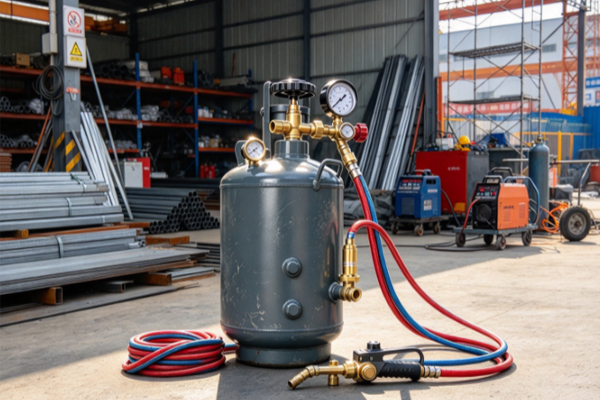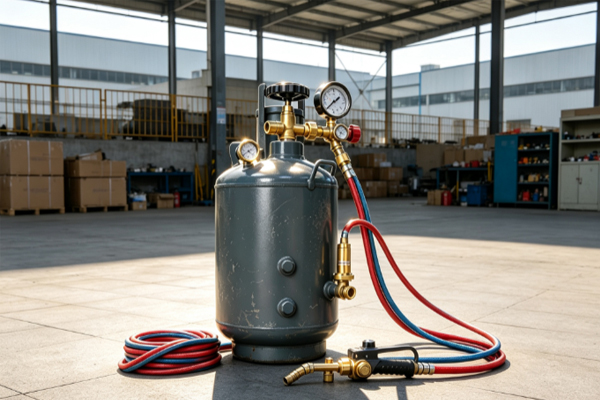
Acetylene cylinders are widely used in welding, flame cutting, and metal fabrication processes. Their safe operation directly affects gas supply stability and overall working safety. A common question in practical use is whether the cylinder needs to be purged before use. Because acetylene is stored in a dissolved state inside acetone and a porous filler material, and because small amounts of air or residual gases may remain in the valve outlet or connected hose, improper handling can lead to unstable flame behavior or safety risks. Understanding whether purging is necessary and how to handle the initial gas flow is an important part of correct acetylene cylinder operation.
Internal Gas Condition and Working Principle of Acetylene Cylinders
An acetylene cylinder is not a simple compressed gas container. Instead, acetylene is dissolved in acetone and stored within a porous filler structure to ensure safe storage. When the valve is opened, gas is gradually released under pressure control and regulated by a pressure reducer before entering the welding system. After long storage or after connecting new equipment, small amounts of air or unstable gas may exist near the outlet or within the hose. These residual gases can affect flame stability during initial ignition. Although cylinders are properly processed before leaving the factory, controlled initial gas release helps stabilize the system and ensures more consistent combustion during operation.
Practical Meaning of Purging Before Use
In standard operating procedures, a short purging action is often performed before connecting the regulator and torch or before ignition. This step is used to remove residual air and low-quality gas from the valve outlet and connected pipeline, allowing the system to reach a stable gas flow condition more quickly. This is not the same as emptying the cylinder; it only replaces the gas inside the connection line. If this step is ignored, the initial flame may become unstable, and the risk of flashback or irregular combustion may increase. In industrial environments, this process improves ignition reliability and reduces abnormal flame behavior during startup.
Impact of Purging on Safety and Efficiency
Proper purging improves gas flow conditions, but it must be performed correctly to avoid introducing new risks. In industrial applications, this step influences both safety and operational efficiency.
Key effects include:
- Improved ignition stability:Removing residual gas from the outlet helps achieve a stable oxygen-acetylene mixture at startup, making ignition smoother.
- Reduced flashback risk:Eliminating mixed gases in the hose and valve area lowers the chance of reverse flame propagation.
- Better gas flow continuity:Stable gas flow reduces fluctuations in flame behavior during operation.
- Reduced impact of impurities on weld quality:Removing trapped air minimizes oxidation effects that may affect welding quality.
After proper handling, the system reaches a more stable operating condition, improving overall efficiency.
Operating Requirements in Different Application Scenarios
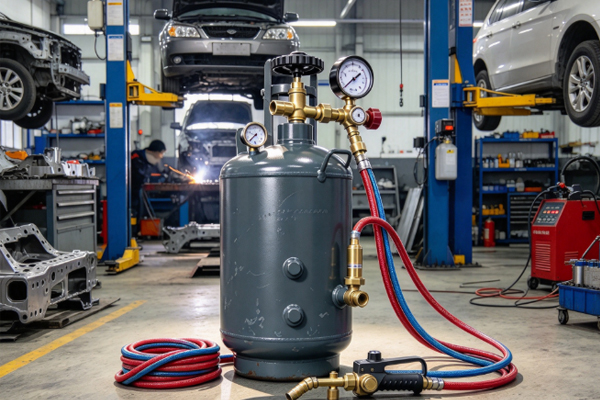
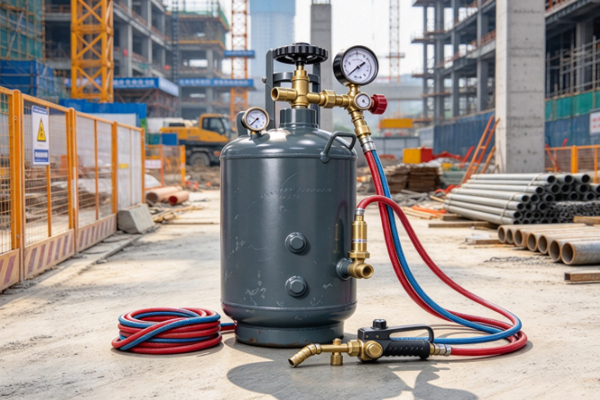
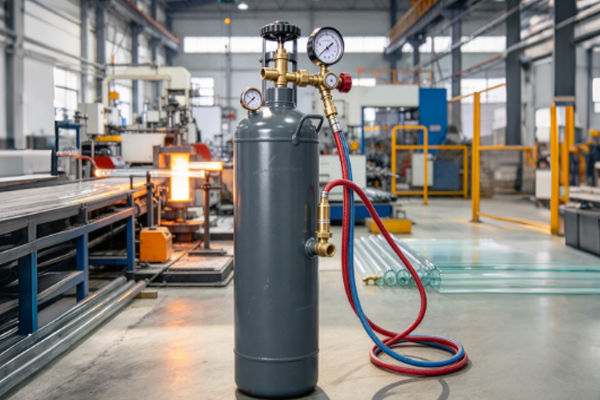
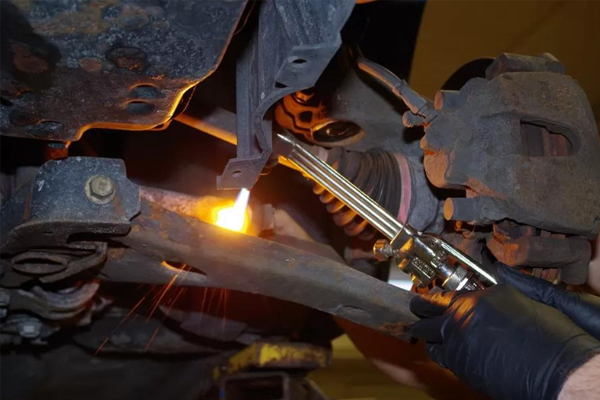
Acetylene cylinders are used in automotive repair, steel fabrication, shipbuilding, pipeline construction, and machinery maintenance. In automotive repair environments, space is limited and frequent ignition requires faster stabilization, making controlled purging more important. In steel fabrication workshops, continuous operation requires higher gas stability and strict startup procedures. In outdoor construction environments, temperature changes may affect gas behavior, requiring additional attention to initial gas stabilization. Although working conditions vary, stable initial gas flow is essential across all applications.
Standard Operating Procedure Before Using an Acetylene Cylinder
To ensure safe and stable operation, users must follow standardized preparation steps before using an acetylene cylinder. Proper procedures improve ignition performance and overall safety.
Recommended steps include:
- Check cylinder and connection condition:Ensure that the regulator, hose, and torch are securely connected without damage or looseness.
- Open the cylinder valve slowly:Allow gas to enter the system gradually to avoid sudden pressure shocks.
- Briefly release outlet gas:Allow residual air and unstable gas in the line to be discharged, creating a stable gas flow environment.
- Perform leak detection:Use a soap solution to check all connection points and ensure no bubbles appear before ignition.
- Monitor pressure stability:Confirm that the working pressure is stable before starting welding or cutting operations.
Following these steps ensures the acetylene supply system reaches a stable operating state, providing reliable support for welding and cutting tasks.