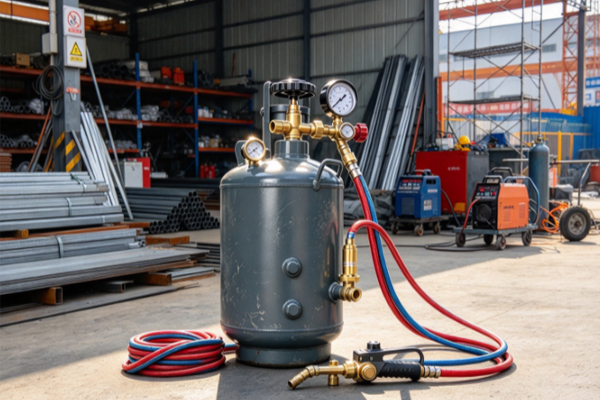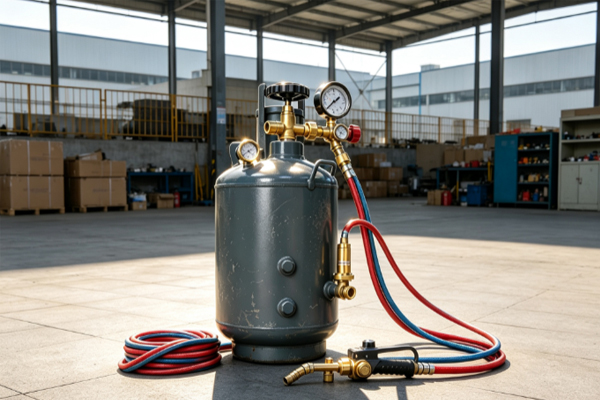
An acetylene gas supply system handles a wide range of industrial tasks, including welding, metal cutting, equipment repair, and hardware processing. Whether the system runs stably is directly tied to production efficiency and processing quality. When issues such as fluctuating flame size, unstable gas pressure, difficult ignition, or declining welding quality appear, many users immediately suspect an installation problem. In reality, installation quality is only one of the factors affecting acetylene system stability. Equipment configuration, accessory condition, daily maintenance, and operating methods can all have an impact. Only by checking each link one by one can the real cause be found more quickly and the gas supply system return to smooth operation.
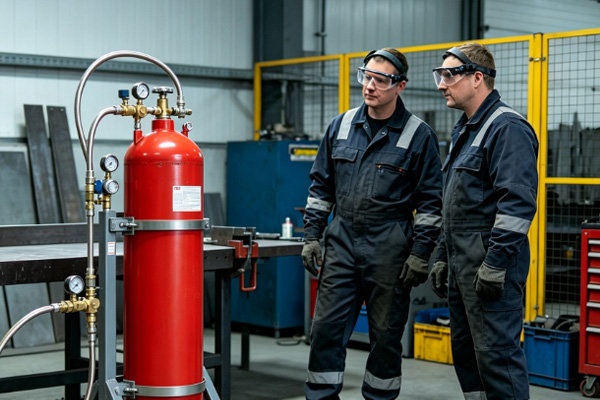
Can the installation stage directly affect acetylene system stability?
Installation quality has a major impact on how an acetylene system performs, and many later problems can be traced back to installation details. If the installation stage is not handled properly, the system is likely to show unstable pressure and interrupted gas supply after being put into use.
Poor pipeline connections
The gas supply system relies on each connection point to maintain sealing and smooth flow. Once the connection process is not handled carefully, operating conditions are likely to fluctuate. Pipeline connections may seem simple, but in practice they place very high demands on sealing and gas flow efficiency. Even the smallest deviation can affect overall performance.
- If the interface is not fully tightened, minor leakage may occur. The leakage volume may not be large, but it will continuously affect pressure output.
- Improperly installed sealing parts can make pressure output less stable, and long-term operation may also increase wear.
- Excessive hose bending reduces gas flow efficiency and, in severe cases, affects ignition and flame stability.
When pipeline connections are standardized, the system is more likely to remain stable, and the pressure of later adjustments and repairs will be significantly reduced.
Improper safety accessory configuration
Safety accessories not only provide protection, but also affect gas supply performance. Whether the configuration matches the system directly influences overall operation. Many users pay more attention to the main equipment and overlook the compatibility between accessories and the entire system.
- If the flame arrestor is installed in the wrong direction, one-way gas flow may be affected and the protective effect may be weakened.
- If the pressure regulator model does not match the equipment, output pressure may become too high or too low, affecting operating conditions.
- If the valve connection sequence does not meet requirements, the system adjustment process becomes less smooth and operating difficulty increases.
When accessories are configured correctly, the system runs more reliably, and the equipment is more likely to maintain stable output under different working conditions.
No complete inspection after installation
Many abnormalities are not caused by the equipment itself, but by the lack of verification after installation, allowing problems to carry into formal use. The post-installation inspection is like an early health check, exposing hidden risks in advance.
- If pressure gauge readings are not rechecked, the initial parameter settings may be inaccurate.
- If interface sealing is not tested, small leak points may gradually expand during operation.
- If the trial-run stage is skipped, problems may only appear after formal commissioning, making them harder to handle.
Inspection after installation can reveal many hidden risks in advance and also help operators become familiar with the equipment status more quickly.
Besides installation, what else can make an acetylene system unstable?
The operating condition of an acetylene system is affected by multiple factors. Installation is only one part of the picture, and the later usage process is equally important. Many systems perform normally at installation but begin to fluctuate after running for a period of time. Such cases are often related to the operating environment and maintenance habits.
Aging accessories cause fluctuations
After long-term use, some components gradually lose their original performance, and system stability declines accordingly. Accessory aging usually does not happen suddenly; it accumulates slowly over time and shows up as pressure changes, reduced sealing, or sluggish response.
- If sealing rings harden or crack, sealing performance weakens noticeably and abnormalities are more likely to appear at the joints.
- If the gas hose surface wears down, the internal structure may also be affected, reducing gas delivery efficiency.
- If valve sealing performance declines, opening and closing become less smooth, and gas supply may fluctuate.
When accessory condition deteriorates, gas supply stability also declines. Timely replacement of wear parts can effectively reduce such problems.
Poor maintenance affects operation
A system that lacks maintenance is more likely to develop abnormalities, and many small issues will continue to grow during operation. If equipment is used frequently for long periods without regular inspection, hidden risks will gradually accumulate.
- Debris inside the pipeline can affect gas flow and, in severe cases, cause partial blockage.
- If the pressure regulator is not checked for a long time, adjustment accuracy may decline and output pressure may become unstable.
- If safety accessories are not maintained, they may fail to function properly when needed, increasing operational risk.
Regular maintenance helps equipment stay in better working condition and allows the system to maintain high reliability during long-term operation.
Improper operating methods
Operating habits also affect system performance. Incorrect use can cause an otherwise stable system to fluctuate. Many on-site problems are not equipment failures, but are caused by opening valves too quickly or setting parameters improperly.
- Opening the valve too quickly can cause the system to experience a sudden pressure change, affecting gas supply stability.
- Improper pressure adjustment can make the flame unstable and affect welding and cutting results.
- Long-term overload operation accelerates equipment wear and shortens the overall service life of the system.
Standardized operation reduces system fluctuations and extends equipment life, making the gas supply system more suitable for long-term continuous work.
How can you tell whether an unstable acetylene system is caused by installation?
When abnormalities occur, you can quickly judge the source of the problem from several angles, helping the company identify the fault point more efficiently. The clearer the diagnostic approach, the higher the troubleshooting efficiency, and the easier it is to avoid repeated shutdowns.
Observe when the abnormality appears
If problems occur shortly after installation, the installation stage should be the main focus of inspection. Such cases are easier to trace back to the source. If the equipment shows abnormalities as soon as it is put into use, it usually means that some installation detail was not handled properly. For example, unstable flame after ignition often suggests a problem with gas continuity; obvious pressure gauge fluctuations usually indicate that internal pressure control is not balanced enough; an unusual smell near the interface requires immediate sealing inspection. The earlier such problems are found, the lower the handling cost.
Check the condition of connection points
Connection points are the places where problems are most likely to show up, and many hidden risks appear there first. Once a connection point becomes loose, misaligned, or poorly sealed, the system’s operating condition is directly affected.
- Check whether the threads are secure and confirm that each interface is properly tightened.
- Confirm whether the sealing parts are intact to avoid leakage caused by aging or installation deviation.
- Inspect whether the hose connections are correct to prevent reversed installation, twisting, or excessive pressure.
When connections are reliable, the system usually runs more smoothly, and later maintenance becomes easier.
Verify the operation of safety accessories
Abnormal accessory status can also make the system unstable, so the working condition of safety accessories cannot be ignored. In many cases, system fluctuations are not caused by the main equipment, but by improper accessory adjustment.
- Whether the flame arrestor is functioning properly affects gas flow direction and safety protection.
- Whether the pressure regulator adjusts smoothly directly affects whether output pressure remains stable.
- Whether the safety valve remains sensitive determines whether the system can respond in time under abnormal conditions.
When accessories operate normally, the gas supply system is more likely to remain stable and is better suited for long-term safe use.
How can acetylene system stability be improved?
To keep an acetylene system running stably over the long term, it is not enough to focus only on installation. Management must also be detailed, and every link must be brought under control. Stable operation is not achieved by a single action, but by the combined effect of installation, maintenance, inspection, and operation.
Standardize the installation process
A solid foundation during installation makes later operation easier and more worry-free. Standard construction is the prerequisite for stable gas supply. The more standardized the installation, the lower the probability of problems later on.
- Complete the equipment installation according to standards and avoid arbitrary splicing or simplified steps.
- Use matching connection accessories to reduce risks caused by incompatible specifications.
- Carry out a full inspection after installation to ensure the system is in good condition before commissioning.
Only by handling installation details properly can the acetylene system maintain more stable and safer performance during later use.
Establish a maintenance system
The more carefully maintenance is carried out, the more stable the system runs, and many faults can be detected early. Maintenance is not a temporary fix, but part of ongoing management.
- Regularly check sealing conditions to identify aging, loosening, or wear in time.
- Clean pipelines and accessories to reduce the impact of debris buildup on gas supply.
- Replace aging parts promptly to prevent small issues from turning into major failures.
Only by putting maintenance ahead of problems can the acetylene system remain stable, safe, and efficient over the long term.
Strengthen daily inspections
Daily inspections help control problems at an early stage and reduce sudden shutdowns and production interruptions. The inspection frequency does not need to be very high, but it must be continuous, detailed, and traceable.
- Observe whether pressure changes are normal and detect output abnormalities in time.
- Check whether gas supply is continuous to avoid intermittent fluctuations affecting work.
- Record equipment operating conditions to support later analysis and problem tracing.
When inspections are done thoroughly, both the stability and safety of the acetylene system are better protected.
Improve operating discipline
The habits of operators directly affect system performance, and standardized operation helps equipment last longer. Many equipment losses are not caused by natural aging, but by extra stress from improper operation. Training operators to master correct usage methods can reduce the risks caused by mistakes; during daily operation, avoid frequent large pressure adjustments so the system always works within a relatively stable range; at the same time, keep the equipment operating under reasonable working conditions and reduce wear caused by overload. This not only improves system stability, but also extends equipment service life.
When an acetylene system becomes unstable, do not focus only on installation. Accessory condition, maintenance frequency, and operating habits should all be checked at the same time. Regularly testing the pressure gauge, valves, and pipeline condition can also help identify the source of the problem more quickly. By combining installation acceptance, daily inspections, and standardized use, gas supply can be made smoother and production more efficient. Zhongcheng Gas Tank provides professional acetylene tank and industrial gas supply solutions, creating a safe, stable, and efficient industrial gas experience for businesses.