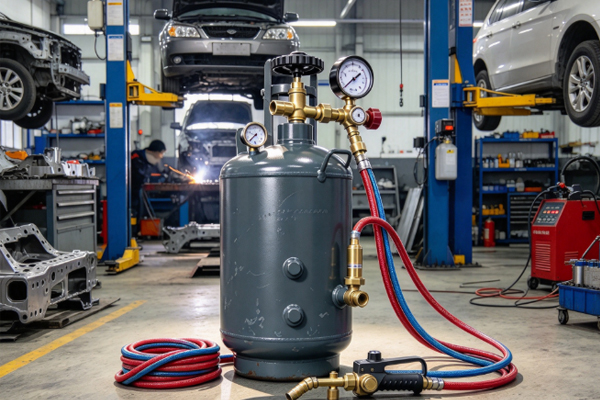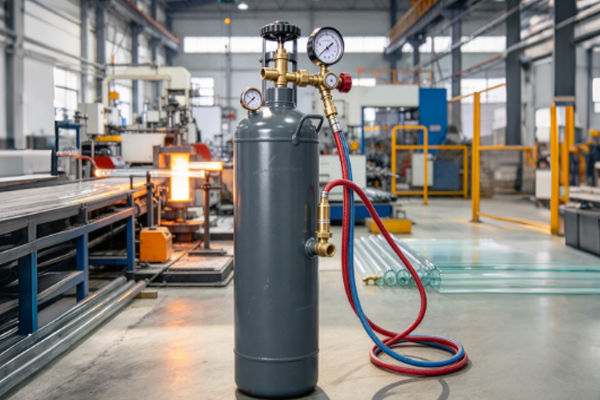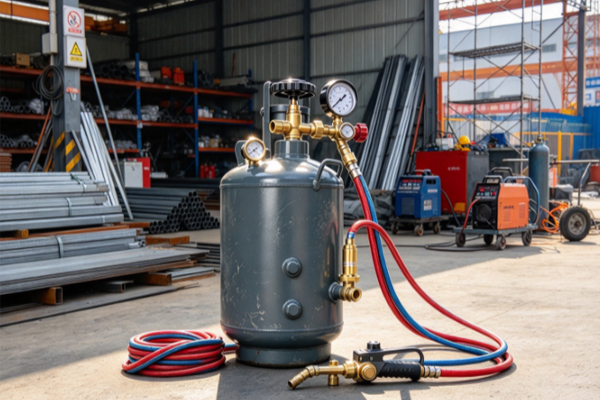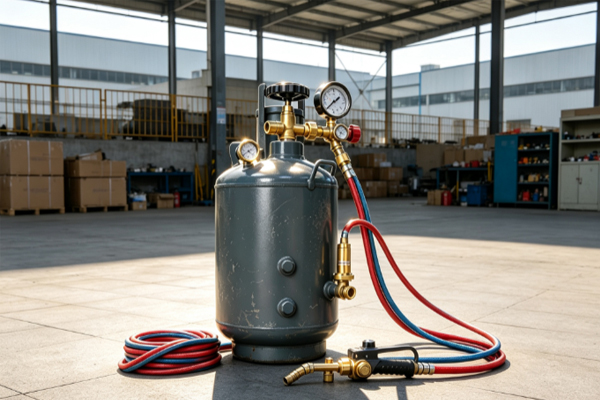
In small workshops, stable gas supply is essential for welding, maintenance, and metal processing operations. Since small workshops usually have limited production scale and fewer pieces of equipment, they should not simply choose the largest capacity storage equipment. Instead, the selection should be based on actual gas consumption, working frequency, and available space. Choosing the right acetylene storage tank size not only affects daily operation convenience but also influences equipment investment costs and safety performance. Understanding suitable tank sizes for small workshops helps improve work efficiency while avoiding unnecessary resource waste.
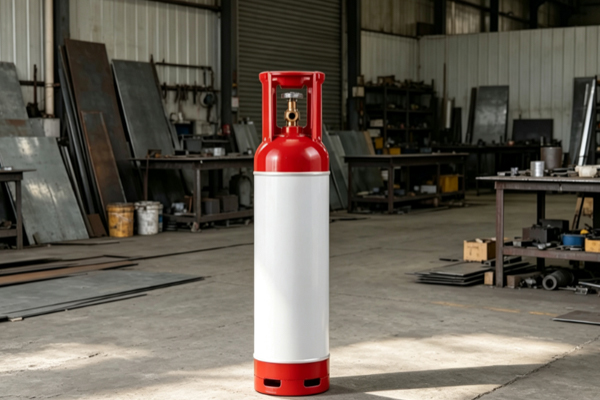
Common Acetylene Storage Tank Sizes for Small Workshops
Small workshops mainly handle maintenance work, small-batch fabrication, and limited welding operations. Compared with large factories, they usually have lower gas consumption and place greater emphasis on flexibility and convenience. Common suitable tank sizes include:
- Small-capacity acetylene storage tanks (40L–80L): suitable for individual workshops, small repair shops, and occasional welding tasks, offering easy mobility and requiring less space
- Medium-small tanks (around 100L): suitable for small processing workshops with higher work frequency and longer continuous operation requirements
- Multi-tank combined supply systems: suitable for workshops with fluctuating gas demand, improving supply stability
Selecting the right capacity based on actual workshop requirements helps reduce frequent gas replacement while controlling equipment investment costs.
Factors to Consider When Choosing Acetylene Tank Size for Small Workshops
Although small workshops generally have lower gas consumption, different types of operations still vary significantly. When selecting acetylene storage tank size, companies should consider multiple practical factors instead of focusing only on price or capacity:
- Welding frequency: Workshops with short daily operating hours can usually meet their needs with smaller tanks
- Number of operating devices: Multiple welding machines working simultaneously require stronger gas supply capacity
- Processing type: Cutting operations generally consume more acetylene than standard welding tasks
- Working environment: Limited workshop space requires consideration of installation and operation convenience
- Future business growth: Expansion plans should be considered to allow room for future upgrades
Comprehensive evaluation helps workshops select the most suitable tank specification for their operations.
Problems with Using Oversized Acetylene Tanks in Small Workshops
Some workshops believe that larger acetylene storage tanks can reduce replacement frequency and improve efficiency. However, oversized equipment is not always suitable for small-scale operations. Excessive capacity may create several practical issues:
- Occupies more workspace and affects workshop layout
- Increases initial purchase costs and maintenance expenses
- Storage capacity may not be fully utilized, causing resource waste
- Requires higher installation and management standards
For small workshops with limited gas demand, proper size matching is more important than simply increasing capacity.
Effects of Using Undersized Acetylene Tanks in Small Workshops
Besides choosing oversized tanks, selecting tanks that are too small can also reduce production efficiency. Although smaller equipment may have lower initial costs, it can create inconvenience during long-term operation:
- Requires frequent refilling or replacement, affecting workflow continuity
- Increases operational frequency and management difficulty
- May cause insufficient gas supply during peak workloads
- Limits future business expansion possibilities
Therefore, small workshops should select tank sizes based on actual gas consumption intensity rather than simply choosing the smallest option available.
How to Choose the Right Acetylene Storage Tank Size for Small Workshops?
For small workshops, the key goal when selecting an acetylene storage tank size is to achieve a balance between production needs, safety, cost, and convenience. Companies can evaluate their requirements through the following aspects:
- Determine basic capacity based on actual daily acetylene consumption
- Reserve additional storage capacity according to peak workload requirements
- Select a size that is easy to install and operate according to workshop space
- Evaluate equipment quantity to determine whether additional supply capacity is needed
- Choose reliable tank products that meet safety requirements
Scientific selection allows small workshops to maintain stable gas supply while reducing long-term operating costs.
For small workshops, acetylene storage tank size is not about choosing the largest capacity but finding the right match for actual working conditions. A properly selected tank specification can improve welding and processing efficiency, reduce equipment waste, and ensure safer daily operations. Zhongcheng Gas Cylinde provides acetylene storage tank solutions in various specifications to help small workshops achieve stable and efficient gas supply.