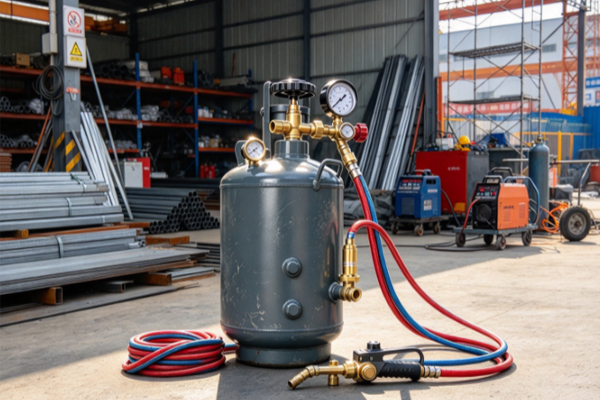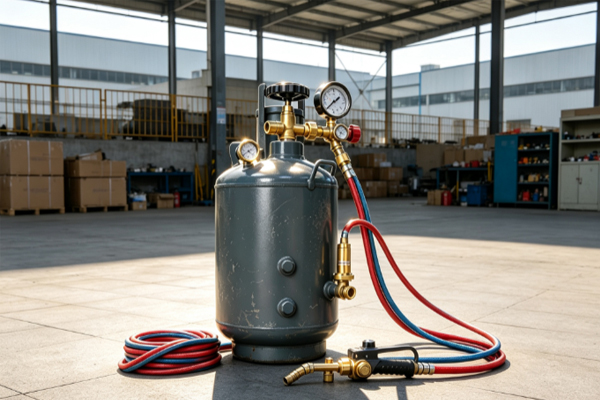
Acetylene tanks are widely used in welding, cutting, and maintenance scenarios. Many enterprises only discover after installation that the system performance falls short of expectations, and some even need to make adjustments, dismantle parts, or carry out rework. Acetylene tanks are gas supply equipment with high requirements for safety and stability. Once any part is not fully considered, hidden risks are likely to appear during later use. To reduce rework, the key is not only to install the equipment, but also to make the entire system design, construction, and management thorough and reliable. Only then can enterprises avoid detours after putting the system into use and reduce the time loss and cost pressure caused by repeated construction.
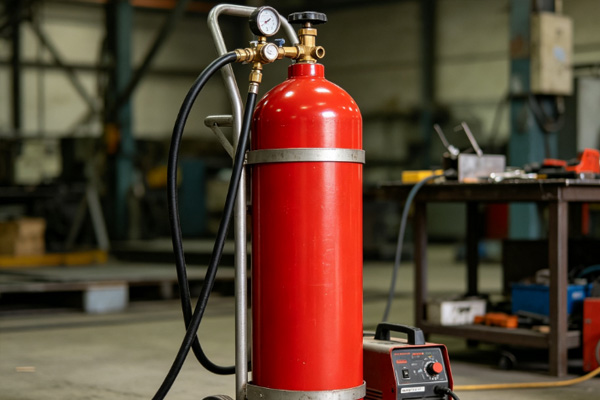
Inadequate Early Planning Creates Rework Risks in Advance
Many cases of rework do not appear on the day of installation. The hidden problems are often planted at the project initiation stage. If an enterprise only focuses on how quickly the equipment can be brought in, while ignoring site conditions, usage rhythm, and future management needs, it is very easy for later adjustments to become necessary.
Insufficient Assessment of Usage Needs
Different enterprises have very different production rhythms, gas consumption intensity, and site conditions. If decisions are made only based on experience, configuration deviations are likely to occur.
- If the equipment capacity does not match actual demand, the system may face gas supply shortages, pressure fluctuations, or low utilization during operation, and later correction can only be made through reconfiguration.
- If the reserved space on site is insufficient, equipment placement, pipeline routing, and operating passages will all be restricted. After installation, the layout may turn out to be inconvenient, making rework very common.
- If future expansion is not considered in advance, once the enterprise’s production scale changes, the original plan may no longer be suitable and dismantling and rebuilding will be required, increasing the amount of additional construction work.
These problems may not be obvious at the beginning of installation. Once the system is put into operation, adjustment costs rise significantly, and the enterprise will also spend more effort on shutdowns, coordination, and rectification.
Unreasonable Installation Location and Space Arrangement
The layout of an acetylene tank affects not only the user experience, but also later maintenance efficiency. If the location is not chosen properly, many problems will not appear immediately, but they will continue to grow during daily operation.
- If inspection passages are not smooth enough, routine checks, maintenance, and emergency handling all become inconvenient. Staff may need to detour or move equipment every time they operate, and over time this often pushes the enterprise to reorganize the layout.
- If the surrounding environment is not suitable for management, such as being close to clutter storage areas, having poor ventilation, or being too close to other equipment, site management becomes more difficult and the likelihood of later rectification increases.
- If the space for repair and replacement is limited, once parts age, interfaces need adjustment, or accessories need replacement, construction personnel will have difficulty working smoothly, and the enterprise often has no choice but to rely on rework to restore a reasonable layout.
Poor location arrangement often forces enterprises to replan during the usage stage, and rework becomes difficult to avoid. This kind of rework is usually not a minor repair, but a full adjustment of the overall layout.
Mismatch Between Equipment Configuration and System Design
If the system design is not aligned with actual working conditions, the probability of later modification increases significantly. Many enterprises focus more on whether each individual piece of equipment has been installed, while ignoring the coordination of the entire gas supply system. The result is that everything looks installed, but it does not work well in practice.
Inconsistent Accessory Specifications and Working Conditions
An acetylene gas supply system is composed of multiple components working together. Any mismatch in one link may affect the overall performance. In particular, when accessory specifications do not match site requirements or supporting parts do not connect smoothly, pressure control, connection methods, and usage results may all deviate. Enterprises then have to keep adjusting during operation, and in serious cases even replace the entire set of components. Even after replacement, re-debugging is still required, which also shows that the initial selection was not completed in one step. This not only increases material and labor costs, but also disrupts the production rhythm. What was originally intended to save time ends up creating more construction steps.
The Overall Plan Lacks Long-Term Consideration
Many cases of rework are not caused by a single point of failure, but by the failure to consider long-term operation during system design. If an enterprise only looks at the present and not the future during construction, it is very easy to face reconstruction later due to expansion, maintenance, or site changes.
- If maintenance space is not reserved, later inspection, servicing, and component replacement all become difficult. Once the equipment develops an abnormality, handling it becomes very passive.
- If future expansion is not taken into account, once the enterprise expands production scale, the original system may no longer be usable and will need to be dismantled and reinstalled, increasing repeated investment.
- If dynamic planning is not made according to site changes, the original plan may lose applicability once the surrounding environment, process flow, or management method changes after the equipment is put into use.
The more complete the plan is, the lower the probability of later adjustments will be, and the more stable the enterprise’s operation will be. Naturally, rework will also be reduced significantly.
Construction Details and On-Site Management Are Not in Place
The construction stage may seem like simple execution of the plan, but in reality every detail affects later performance. Many enterprise rework cases are not caused by a completely wrong plan, but by inadequate execution during construction, leaving avoidable problems for later.
Lack of Standardized Control During Installation
Construction quality directly determines how the equipment performs after being put into use. If details are not handled properly, hidden risks are easily left behind. Even a connection point, a fixing position, or a labeling step handled carelessly may later turn into a rectification issue.
- If connection points are not checked carefully, some hidden problems may not be discovered in the early stage. Once the equipment has been running for a period of time, they will surface and the enterprise will have to stop and handle them again.
- If installation records are incomplete, later troubleshooting lacks a basis. When problems occur, it becomes difficult to quickly locate the cause, and the rework cycle will be extended.
- If on-site supervision is not in place, construction deviations are likely to be ignored during the process. By the time they are discovered after completion, dismantling and rebuilding are often already necessary.
These seemingly minor issues often surface collectively after a period of operation and eventually turn into rework. The longer they are delayed, the harder they become to handle.
Incomplete Completion Inspection and Trial Operation
Installation completion does not mean the project is finished. Inspection and trial operation are equally important. Many enterprises rush to put equipment into use as soon as it is installed, ignoring the verification stage and bringing problems into formal production. Some abnormalities are not discovered in time, and issues that could have been solved during trial operation are delayed until formal use. The operating status is not fully confirmed, and whether the system is stable, coordinated, and suitable for the site conditions is never truly verified, so the risk of later rework naturally increases. Once small problems enter formal production, they often grow under production pressure. In order to restore normal operation, the enterprise has to arrange construction again. If this step is missing, the enterprise often has to spend more time handling issues later. What should have been completed in one round ends up becoming multiple rounds of rectification.
Inadequate Acceptance and Post-Installation Management
Acceptance and maintenance after installation determine whether the system can remain stable over the long term. Many enterprises focus on “getting it installed” but not on “keeping it stable,” which is also an important reason why rework happens frequently.
Problems Are Discovered Too Late During Acceptance
Acceptance is a key checkpoint. Many cases of rework can be avoided at this stage. The more detailed the acceptance process is, the lower the probability of later rework will be, and the easier it is for the enterprise to keep costs within a reasonable range.
- Whether the configuration meets the requirements must be checked item by item during acceptance. It is not enough to see whether the equipment has arrived; it must also be confirmed whether it is truly suitable for on-site use.
- Whether the system operates stably must be verified through actual inspection. It cannot be judged only by the appearance after installation.
- Whether the site layout is convenient for management should also be included in acceptance. Only when the layout is reasonable will later inspections and maintenance be smoother.
The more detailed the acceptance process is, the lower the probability of later rework will be, and it also helps the enterprise control costs and reduce the management pressure caused by repeated construction.
Insufficient Ongoing Maintenance Amplifies Hidden Risks
After an acetylene tank is installed, management does not end there. Ongoing maintenance also affects system condition. Many enterprises do not establish a continuous management mechanism after the initial installation, and as a result small problems accumulate gradually until the installation plan has to be adjusted again.
- If daily inspections are not carried out in time, some minor abnormalities may persist for a long time. Once the problem grows, both the difficulty of handling it and the scope of rework will increase significantly.
- If abnormal situations are handled too slowly, local problems may affect the operation of the entire system. To restore stability, the enterprise may have to reconstruct or replace components.
- If aging parts are not replaced in time, the equipment condition will continue to decline, eventually turning a problem that could have been handled locally into an overall rework issue.
Poor maintenance allows small problems to accumulate gradually, eventually forcing the enterprise to readjust the installation plan. This kind of rework is often more time-consuming than early-stage rectification and has a greater impact on production arrangements.
Rework after acetylene tank installation is usually not caused by a single reason, but by the combined effect of planning, selection, construction, and management. If enterprises want to reduce repeated construction, they need to refine the early-stage plan, strictly control the installation process, and make acceptance and maintenance practical. Only then can the gas supply system remain more stable and production arrangements become more worry-free. Zhongcheng Gas Tank provides professional acetylene tank and industrial gas supply solutions to help enterprises reduce rework and improve efficiency.