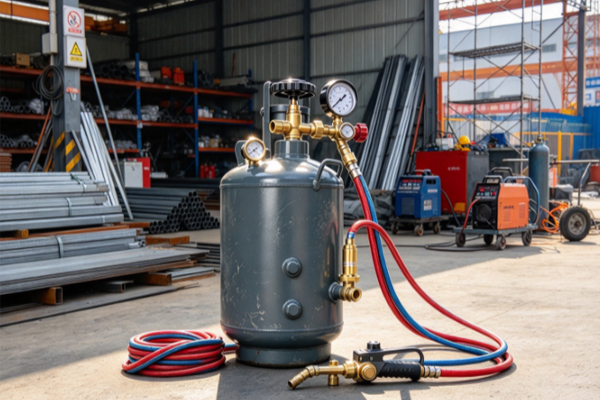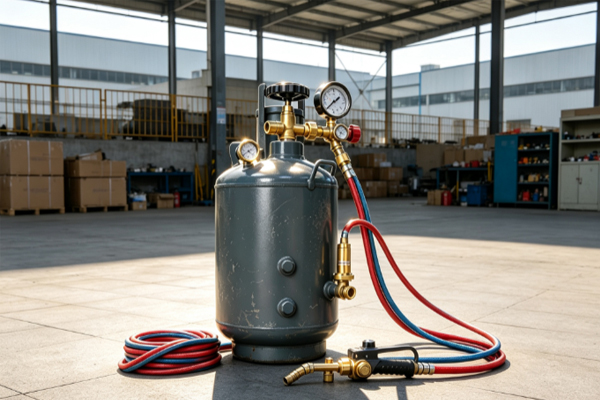
When purchasing an acetylene storage tank, many buyers focus only on the storage capacity and pay little attention to the tank’s dimensions and weight. However, when the equipment is ready for delivery, they may discover that it cannot fit on the transport vehicle, the crane cannot handle the load, or there is not enough space in the workshop for installation. At that point, making changes can be both time-consuming and expensive. In fact, the size and weight of an acetylene storage tank are not random numbers—they are determined through engineering calculations. While most users do not need to perform these calculations themselves, understanding how these values are determined and what factors influence them can make selecting the right equipment much easier.
What Determines the Size and Weight of an Acetylene Storage Tank?
Many people assume that tanks with the same capacity should have the same size and weight. In reality, this is not always true. Different manufacturers may use different design approaches, resulting in variations even for tanks with identical capacities.
The main factors include:
- Larger storage capacity usually means a longer tank, a larger diameter, and bigger overall dimensions.
- Thicker steel plates increase the overall weight of the equipment.
- Additional components such as supports, platforms, and ladders also add to the total weight.
For this reason, it is always better to review the complete specification sheet instead of looking only at the storage capacity.
How Is Acetylene Storage Tank Size Calculated?
Manufacturers do not simply design the tank shape first and then decide its capacity. Instead, they begin with the required storage volume and calculate the dimensions accordingly. In other words, the tank size is designed to meet both storage requirements and engineering standards.
The design process generally follows these steps:
- Determine the required storage capacity.
- Calculate the tank length and diameter using an appropriate length-to-diameter ratio.
- Include the heads, supports, and other structural components to determine the overall length, height, and external dimensions.
- If installation space is limited, the structural proportions can often be optimized to better fit the available area.
As a result, acetylene storage tank dimensions may vary between different models and manufacturers, even when the storage capacity is similar.
Why Can Tanks with the Same Capacity Have Different Weights?
Some buyers notice that two tanks with the same capacity can differ in weight by hundreds of kilograms. This is completely normal because weight depends on more than just the external dimensions.
Common factors include:
- Different steel plate thicknesses directly affect the tank weight.
- More accessories and structural components increase the total equipment weight.
- Different manufacturing methods and structural designs also influence the final weight.
- Some manufacturers list the net tank weight, while others include certain accessories, so the specifications should always be confirmed.
Before transportation or lifting, always verify the official weight data provided by the manufacturer rather than relying on estimates.
Why Should You Consider Both Size and Weight Before Purchasing?
Many companies focus on price first, capacity second, and dimensions last. In practice, the opposite approach often works better. Whether the equipment can be delivered, moved into the facility, and installed successfully depends largely on its size and weight.
Before placing an order, it is recommended to:
- Measure the installation area to ensure the acetylene storage tank dimensions are suitable.
- Check transportation routes for height and width restrictions before delivery.
- Confirm that the available lifting equipment can safely handle the tank weight.
- If production may expand in the future, discuss suitable specifications with the manufacturer instead of replacing the equipment later.
- When unsure, provide the manufacturer with your site conditions so their engineers can recommend the most appropriate tank size.
Many installation problems are not caused by poor equipment quality but by insufficient planning before purchase. Spending a little extra time confirming the dimensions and weight can help avoid unnecessary delays and additional costs later.
Although acetylene storage tank size and weight may seem like simple numbers on a specification sheet, they directly affect transportation, installation, operation, and maintenance. Considering capacity, dimensions, and weight together is the best way to choose equipment that fits your application. Zhongcheng Gas Cylinde offers acetylene storage tanks in a wide range of specifications and can recommend the most suitable solution for different industrial requirements.