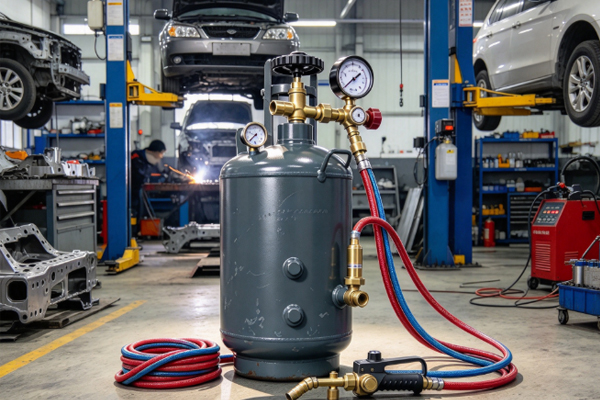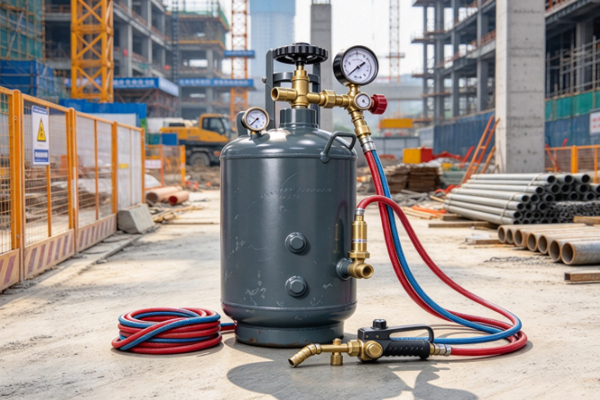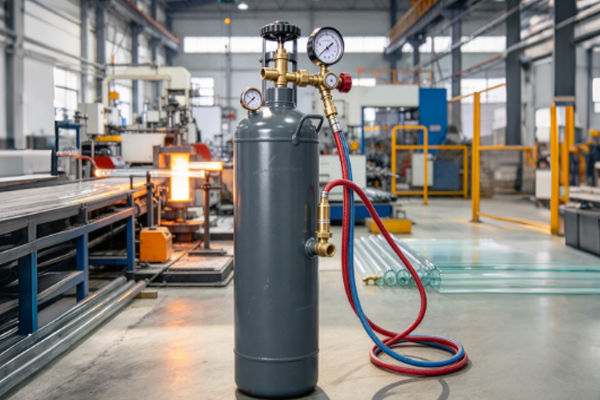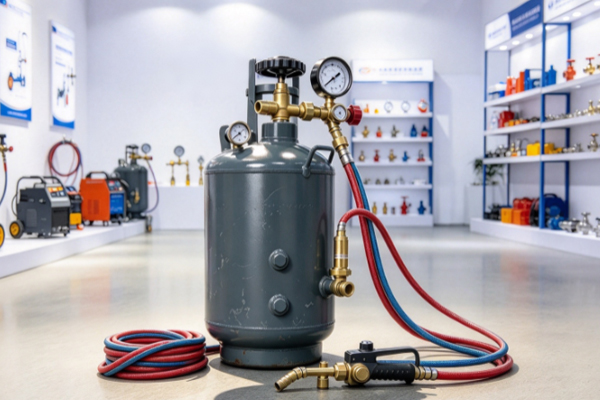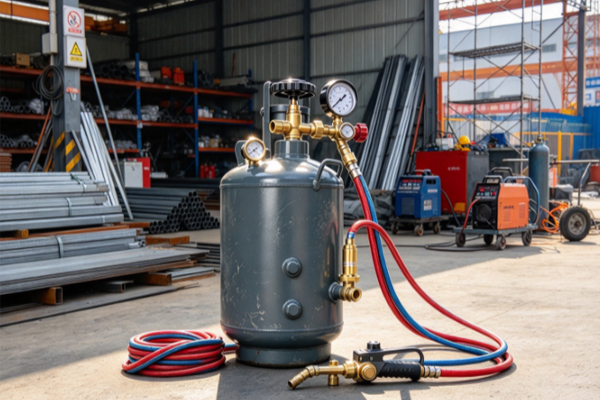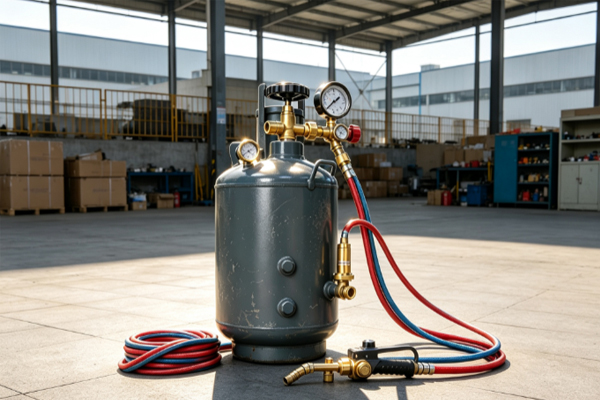
Many enterprises, when installing acetylene cylinders, tend to focus more on whether the equipment can arrive quickly and whether the project can be put into production on schedule, while paying insufficient attention to piping routes, connection positions, and labeling arrangements. In an acetylene gas supply system, however, piping is not something that can simply be “connected and left alone.” Once the layout becomes disorganized, operations, inspections, maintenance, and on-site management will all be affected in a chain reaction. For enterprises that want stable production and controlled risk, whether the piping is properly arranged is often more important than the installation results seen on the surface.
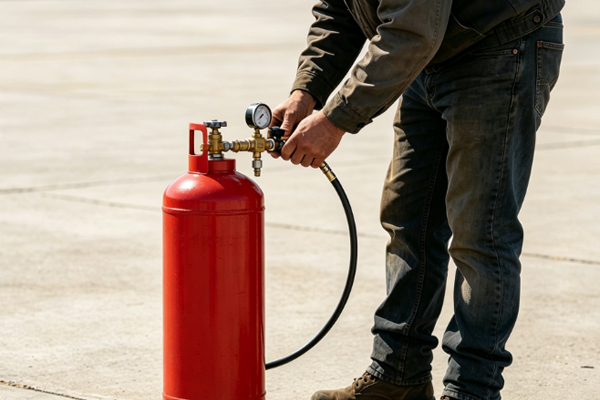
Where Do Problems Usually Start When Acetylene Cylinder Piping Is Improperly Connected?
Piping hazards are often not exposed after long-term use; they are already planted during the installation stage.
A Confused Connection Sequence Can Lead to Unstable Operating Conditions
If acetylene cylinder piping is connected arbitrarily, the gas delivery path becomes unclear, and pressure fluctuations, poor gas supply, and uneven local loads may occur during on-site use.
- When the connection logic is unclear, the gas flow direction can deviate from the design intent, and the system operating condition will also become unstable.
- On the surface, the equipment may appear to work normally, but in actual use, intermittent gas supply and uneven pressure may still occur.
- Once an abnormality appears later, the scope of troubleshooting will expand, and the handling time will also be significantly prolonged.
The connection sequence may seem like only a construction detail, but in fact it directly affects the performance of the acetylene gas supply system. The earlier it is standardized, the fewer problems there will be later.
Messy Connection Positions Make Inspection and Maintenance More Difficult
After piping is improperly connected, the positions of valves, joints, and branch lines often lack a unified logic, making it difficult for inspection personnel to quickly determine the function of each section of piping.
- During routine inspections, staff need to repeatedly confirm the lines, which significantly reduces inspection efficiency.
- During maintenance, technicians must constantly verify the routing, increasing both time costs and communication costs.
- Unclear connection positions also make shift handovers more complicated and can easily lead to missing information.
Whether the piping layout is clear directly determines whether later management is convenient. Proper installation can often prevent many problems in advance.
What Direct Impacts Can Improper Piping Connections Bring?
Once the piping layout loses order, the impact will not remain on the surface. It will gradually spread to every aspect of operation, maintenance, and management.
Improper Piping Connections Increase the Risk of Leakage and Misoperation
If acetylene cylinder piping is not laid out according to standards, problems such as loose joints, misaligned connections, and unclear labeling are more likely to occur.
- When connection positions are confusing, operators are more likely to misread locations during switching, maintenance, and startup/shutdown procedures.
- When labeling is incomplete, staff may follow the wrong process, and the probability of misoperation will increase accordingly.
- Once a local leakage occurs, the problem may not remain isolated to a single point; it may also disrupt the operating order of the entire system.
For industrial sites, the risks brought by improper piping connections are not just “one wrong connection,” but also a chain reaction that affects the accuracy and safety of subsequent operations.
Improper Piping Connections Affect Equipment Lifespan and Long-Term Costs
Improper piping connections can cause uneven local stress, making wear, loosening, and accelerated aging more likely during long-term operation. When connection points are under uneven stress, fatigue damage is more likely to occur, and these problems will gradually become apparent after the equipment has been running for some time. Although the enterprise may seem to save installation time in the early stage, it may later need to invest more effort in rectification, rework, and maintenance. Once the acetylene gas supply system requires repeated adjustments, the overall cost of use will rise, and whether the installation stage is standardized will directly affect later investment.
Improper Piping Connections Disrupt On-Site Order
When the piping layout is chaotic, on-site labeling, inspection routes, and responsibility zones all become blurred.
- When the piping route is unclear, managers find it difficult to quickly identify the problem area.
- During shift handovers, if there is no unified line and labeling information, information gaps are likely to occur.
- Once on-site order is disrupted, later management pressure will continue to increase, and production efficiency will also be affected.
For enterprises that need long-term stable production, whether the piping layout is orderly often directly affects the overall level of on-site management.
What Problems Can Proper Piping Layout Help Prevent in Advance?
A standardized layout not only improves the current user experience, but also leaves a clearer space for later management and maintenance.
A Standardized Layout Makes the System Easier to Identify and Manage
A proper acetylene cylinder installation plan will clearly separate the main line, branch lines, valves, and inspection points, allowing on-site personnel to understand the equipment status at a glance.
- Once the main line and branch lines are clearly divided, inspection personnel can more easily locate problems quickly.
- Once valves and inspection points are clearly labeled, recording and handover work will also become smoother.
- Abnormal points can be discovered more promptly, making management work clearer.
The easier the system is to identify, the easier it is to implement management. The value of a standardized layout will continue to show in daily operation.
A Standardized Layout Saves Time in Later Maintenance
Once the piping layout is clear, maintenance personnel can find the corresponding location more quickly, making disassembly, inspection, and replacement more efficient. Maintenance staff also do not need to coordinate space temporarily each time, the maintenance rhythm becomes more stable, and it becomes much easier for enterprises to confirm line positions and manage equipment. Whether maintenance saves time often depends on whether the initial layout is reasonable. Standardized installation can significantly reduce later management difficulty.
A Standardized Layout Helps Maintain Stable Operating Conditions More Easily
A standardized layout is not only about neatness, but also about making the system run more smoothly. When the piping route is reasonable, gas delivery becomes more stable. When connection positions are clear and labeling is complete, operations become more orderly. Once the gas supply process becomes more stable, fluctuations and abnormalities caused by layout issues will also be reduced. For enterprises, operational stability is not an abstract concept; it directly affects production continuity and on-site management efficiency.
How Can Enterprises Avoid Improper Piping Connections During Acetylene Cylinder Installation?
To avoid improper piping connections, the key is not post-event remediation, but solid planning, construction, and acceptance before installation begins.
On-Site Planning Is an Essential Step in Acetylene Cylinder Installation
Among the precautions for acetylene cylinder installation, on-site planning cannot be omitted.
- The available space must be confirmed in advance to avoid later restrictions on piping layout.
- Equipment location, ventilation conditions, and maintenance access routes should all be considered comprehensively based on actual conditions.
- How the piping should run, where the connections should be reserved, and how the labels should be arranged should all be determined in the plan in advance.
The more detailed the planning, the more stable the construction, and the more worry-free the later use. Spending a little more time in the early stage often reduces much more trouble later.
Professional Teams Following Standards During Installation Can Better Ensure System Stability
An acetylene gas supply system is not a project that can run stably for the long term simply by connecting things casually. Professional teams pay more attention to connection methods, fixing methods, and inspection paths, and many hidden risks can also be identified during the installation stage. For enterprises, this kind of investment is more like moving risk management forward, reducing problems later and making the overall result more cost-effective. Following standards is not only to meet construction requirements, but also to ensure that the system remains stable and controllable during later use.
Complete Acceptance and Documentation Are Necessary to Truly Control Problems
After installation is completed, it is not enough to check only whether the equipment can supply gas. It is also necessary to see whether the piping is clear, whether the labeling is complete, and whether maintenance is convenient.
- During acceptance, the piping layout should be checked carefully to ensure it matches the plan.
- Rectification records and handover records should be retained for future traceability.
- Only by making these steps solid can the installation quality truly be implemented.
Acceptance and documentation are not formalities; they are important references for later enterprise management. Only when they are completed properly can problems truly be controlled.
Improper acetylene cylinder piping connections may seem like only a construction detail, but in reality they affect operational stability, maintenance efficiency, and on-site safety management. If an enterprise wants to make acetylene cylinder installation truly solid, it must consider piping layout, connection standards, labeling management, and later maintenance together. Zhongcheng Gas Tank provides acetylene cylinder and industrial gas supply system solutions to help enterprises standardize installation and simplify management.