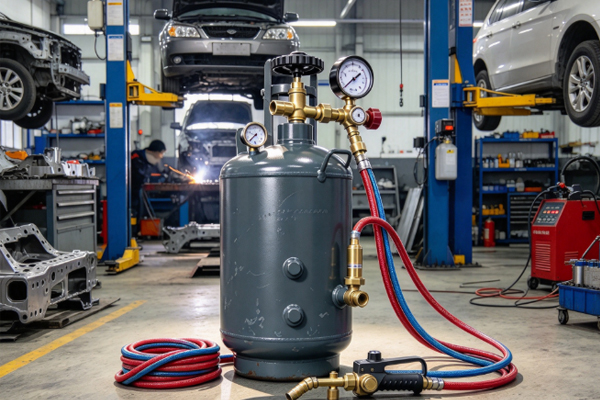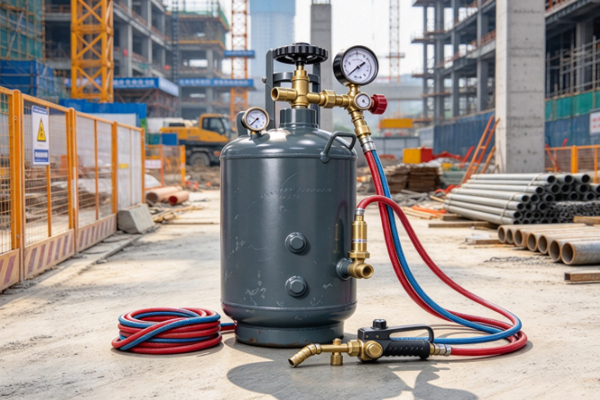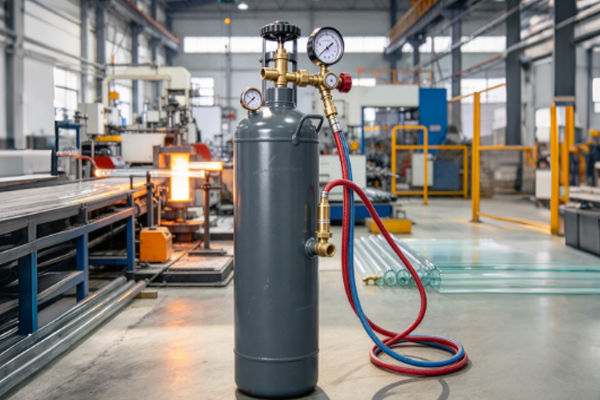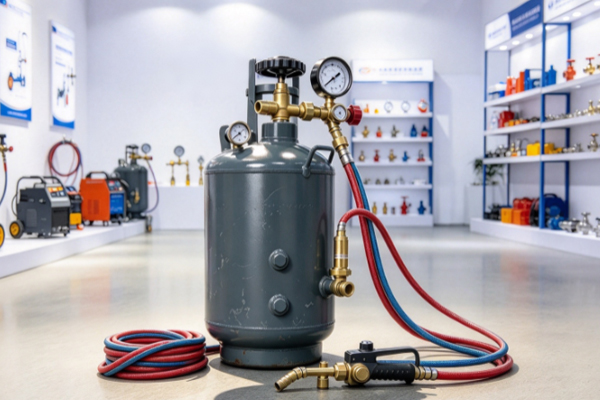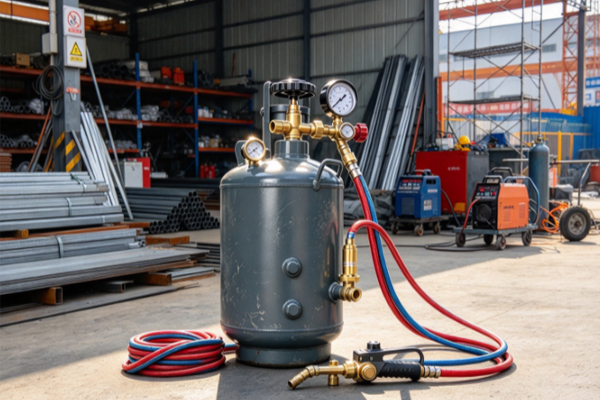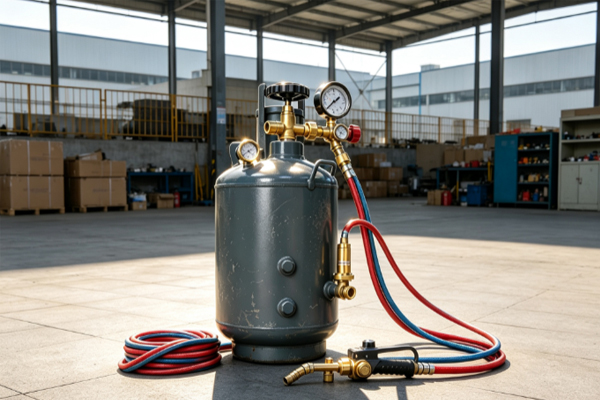
Acetylene tanks may not be very noticeable at many enterprise sites, but they play an important role in ensuring stable gas supply. Long-term storage, frequent handling, aging interfaces, and environmental changes can all gradually accumulate risks. Regular acetylene tank inspections may seem like just an extra step in the process, but in fact they help enterprises identify hidden hazards early and reduce downtime, rework, and management confusion. For companies that value industrial acetylene equipment management and industrial gas equipment maintenance, this step is not only necessary, but also helps make site records clearer, responsibilities more defined, and subsequent management smoother.
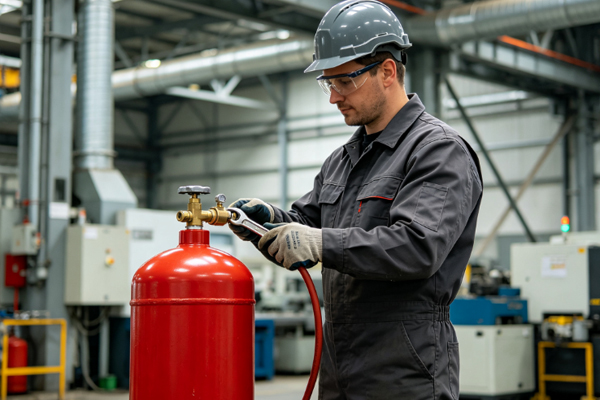
The significance of regular acetylene tank inspections lies in continuously understanding equipment status
The core of regular inspections is not only to find problems, but also to help enterprises continuously understand the true condition of the equipment, shifting management from experience-based judgment to evidence-based decision-making.
Equipment condition changes gradually with use
An acetylene tank is not a static object. The tank body, valves, interfaces, labels, and other parts can all be affected during handling, storage, and use.
- After long-term use, looseness, wear, and corrosion are more likely to occur. In many cases, the appearance may still look normal, while the detailed parts have already changed.
- Different storage locations, temperature and humidity conditions, and handling frequencies all affect equipment condition, so stability cannot be judged solely by experience.
- Through regular inspections and continuous records, enterprises can more easily determine whether the equipment needs maintenance, adjustment, or further handling.
Changes in equipment condition are usually gradual and not immediately obvious. Only through continuous attention can enterprises understand the real situation earlier.
Early abnormalities are not easy to detect
Many problems are not obvious at the beginning. By the time they affect the site, the difficulty of handling them often increases significantly.
- Minor leakage, aging seals, and shifted accessories may not be immediately visible to the naked eye, especially when tasks are busy and they are more likely to be overlooked.
- When the production site is busy, many details are easily missed, and inspections can make up for this by identifying overlooked issues in advance.
- Regular acetylene tank inspections can keep problems at an early, manageable stage and reduce the pressure of later emergency responses.
Handling abnormalities early is usually more time-saving and cost-effective than fixing them afterward, and it also reduces disruption to site operations.
Ignoring inspections can bring multiple impacts to enterprises
If enterprises ignore inspections, equipment management can easily shift from proactive to reactive, and problems that could have been addressed in advance may later surface all at once.
Production arrangements become more passive
When equipment status is unclear, enterprises have less certainty when arranging production plans and site scheduling.
- The probability of temporary shutdowns increases, gas supply rhythm becomes more easily disrupted, and the originally planned production sequence may be affected.
- Process coordination is disturbed, site adjustments increase, and managers need to spend more time handling temporary changes.
- Small problems that could have been addressed in advance may become emergency issues at critical moments if they are not inspected in time.
The more production depends on stable gas supply, the more inspections need to be moved into daily management so that enterprises can arrange production with greater confidence.
Maintenance costs continue to rise
When inspections are not in place, many small problems are delayed. The result of delay is often not that the problem disappears, but that it becomes more complicated and harder to handle. If minor abnormalities are not addressed for a long time, maintenance difficulty usually increases significantly later. What was once a simple fix may become more complex, and costs such as rework, replacement, and labor input will also rise. Enterprises not only spend more money, but also need to invest more time to restore normal operation. The later acetylene tank maintenance management is carried out, the higher the overall cost borne by the enterprise, and it may even affect the normal operation of other equipment and processes. Regular inspections are not about increasing expenses, but about reducing unnecessary losses and allowing enterprises to spend money where it is more valuable.
Safety management is difficult to form a closed loop
Without inspection records, management tends to remain at the level of verbal reminders and experience-based judgment, and the truly implemented parts will be reduced.
- When equipment status is unclear, responsibility tracing is not sufficiently defined, and it becomes difficult to quickly identify the cause when problems occur.
- If there is a lack of evidence during handover, problems are likely to recur, and incomplete information may affect subsequent handling.
- If industrial gas equipment maintenance does not form a closed loop, site management will be difficult to keep stable over the long term.
Only by connecting inspection, recording, feedback, and corrective actions into a complete process can safety management truly be implemented.
Key links that should be focused on during acetylene tank inspections
Clarifying the inspection focus makes the acetylene equipment inspection plan more targeted and easier to implement effectively.
Check the appearance and connection points
Inspection is not just about whether the tank surface is clean; it is also necessary to pay attention to key parts that are easy to overlook but directly affect usage condition.
- Whether the tank body has deformation, corrosion, dents, or other issues. These details are often early signs of later problems.
- Whether valves, interfaces, hoses, and other connection points are secure. Signs of looseness, displacement, or aging require special attention.
- Whether labels are clear and complete, which helps with identification and management, and also supports later tracking and recording.
Although appearance inspection is basic, it is often the most direct first step in identifying problems.
Check usage records and storage environment
Equipment condition and the usage environment are often closely linked. Looking at the equipment alone is often not enough to fully judge the real situation.
- Information such as operating time, handling frequency, and storage location should ideally be recorded in a ledger, so that enterprises have a basis for reviewing equipment status.
- Conditions such as ventilation, isolation, and shielding should also be included in the inspection scope, because the environment directly affects equipment stability and management effectiveness.
- The more stable the environment, the easier it is to implement the acetylene equipment inspection plan, and the smoother it will be for enterprises to carry it out.
The more complete the records, the easier it is for enterprises to determine whether the equipment is under control and to make timely adjustments when changes occur.
Check whether supporting management is synchronized
Inspections should not focus only on a single piece of equipment. If supporting management does not keep up, the inspection results will also be weakened and may even fail to play a real role. Patrol inspections, records, handovers, and corrective actions must be promoted simultaneously and form a unified management rhythm to avoid information gaps and unclear responsibilities. If regular acetylene tank inspections are carried out independently without being combined with site systems, job responsibilities, and ledger management, the inspection results will be difficult to truly integrate into the management process and will ultimately remain superficial. Only by implementing industrial acetylene equipment management together with site supporting systems can inspections become more valuable, and enterprises will have greater response capability when facing unexpected situations.
Enterprises can turn inspections into a habit through institutionalized management
Only by making inspections a daily action can enterprises truly strengthen equipment management instead of relying on temporary fixes after problems occur.
Establish a fixed process
When the process is clear, inspections will not become a formality, nor will execution deviations occur due to personnel changes.
- Define inspection frequency and responsible persons so that every step has someone accountable, preventing gaps in inspection work.
- Set up a unified inspection checklist to reduce omissions and repeated confirmations, making it more efficient for site personnel to follow the same standard.
- Ensure that every inspection has a record for reference, making later tracking, review, and corrective actions more convenient and helping form a closed loop.
Once the process is fixed, inspections will shift from a temporary action to a daily habit, making enterprise management more stable and less burdensome.
Provide training and handover properly
When employees know what to look for, how to judge, and how to report problems, inspections become more effective.
- Let personnel in each position master the inspection focus and know which areas must be checked and which situations must be reported in time.
- Synchronize equipment status and abnormal conditions during handover to avoid information loss during job rotation.
- The more familiar site personnel are with the process, the smoother execution becomes, and the easier it is to maintain consistency in inspections.
When training and handover are handled carefully, inspection results become more reliable and easier to sustain.
Adjust according to actual scenarios
Different enterprises have different usage rhythms, so inspection methods cannot simply copy a unified template.
- Different industries and production lines have different usage intensities, so inspection frequency can be adjusted accordingly.
- During peak seasons, frequent handling, or complex environments, patrol inspections can be increased appropriately.
- Making acetylene tank maintenance management fit actual scenarios makes implementation more natural and easier for site personnel to accept.
Only by optimizing the plan according to actual scenarios can the inspection system avoid remaining only on paper.
Regular acetylene tank inspections are not an extra burden, but a management approach that moves equipment risks forward. When inspections are done carefully, enterprises can more easily understand equipment status, reduce temporary shutdowns and repeated handling, and make acetylene tank maintenance management more organized. Zhongcheng Gas Tank provides professional acetylene tank and industrial gas equipment solutions, helping enterprises carry out industrial gas equipment maintenance in a more stable and worry-free way.