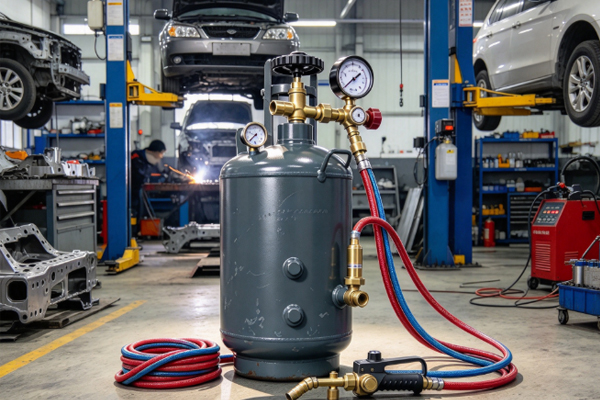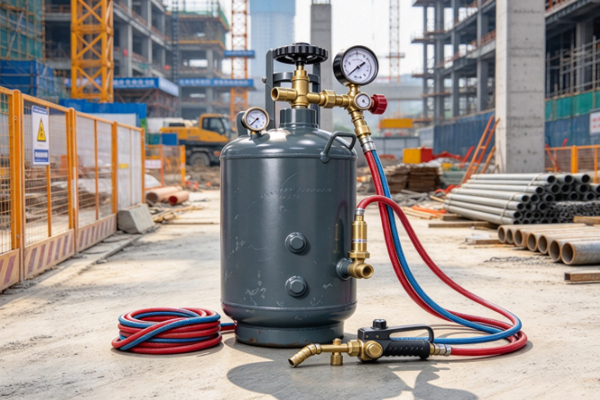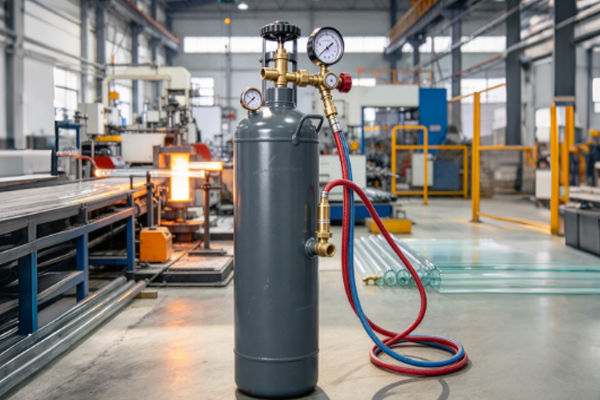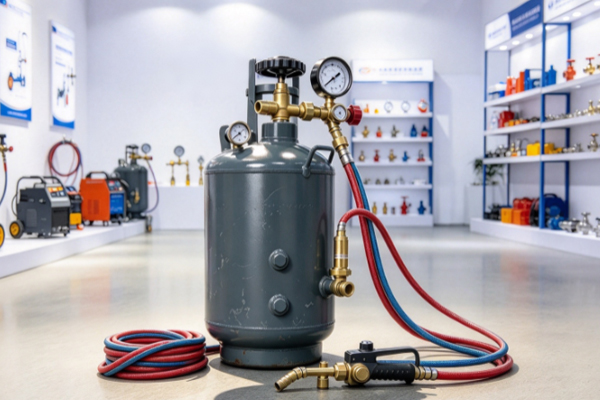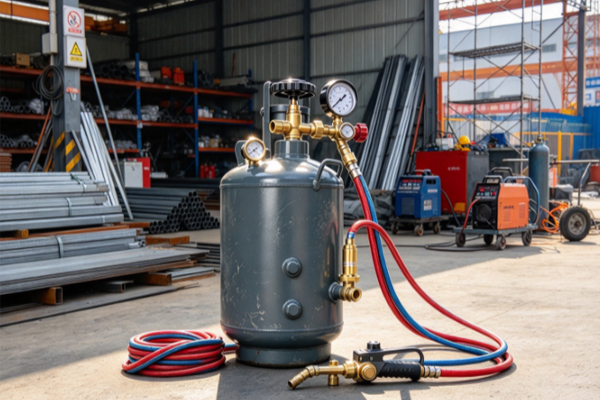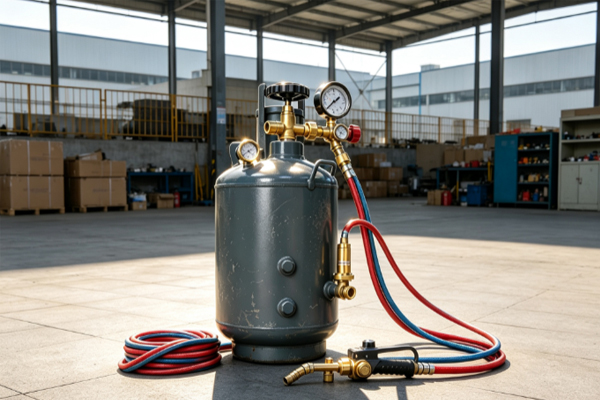
After an acetylene tank is installed, many companies tend to focus more on putting it into use as quickly as possible and pushing production forward, while easily overlooking leak detection, a critical step. What may seem like only a routine confirmation is actually closely related to on-site safety, equipment operating stability, and subsequent management efficiency. If the sealing condition, connection points, and valve status are not properly checked during installation, some issues that could have been identified in advance may gradually escalate during later operation, increasing handling costs and affecting the overall pace of industrial gas equipment maintenance.
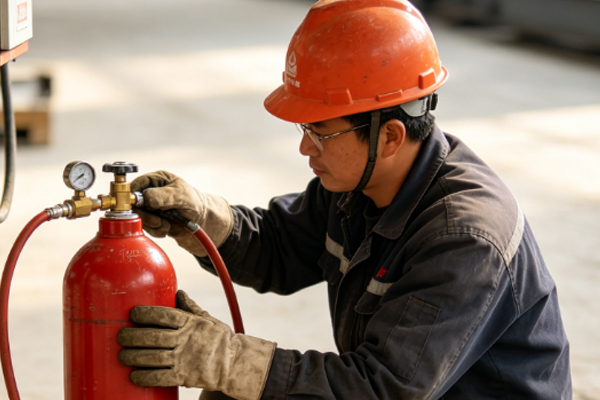
The Role of Leak Detection After Acetylene Tank Installation Goes Beyond Problem Identification
Post-installation inspection is not simply a procedural step. It helps companies control potential risks before formal operation and allows the equipment to enter a more manageable state.
Bringing the Equipment into a Controllable State Before Use
After an acetylene tank is installed, the interfaces, valves, seals, and connecting pipelines all need to be carefully confirmed. Only when these basic elements are properly checked can later use be more secure.
- The tightness of connection points directly affects the stability and reliability of the equipment during later operation, and any looseness may become a source of hidden risk.
- The integrity of sealing parts determines whether gas may escape abnormally during use and whether the on-site environment may be affected.
- The completeness of inspection records determines whether the company will have sufficient convenience and clarity when tracing problems, reviewing situations, and arranging maintenance later.
When the equipment condition is clearly understood during installation, the company can feel more confident when putting it into formal use and can manage operations in a more organized way.
Addressing Hidden Risks Before Operation
Many leakage problems are not obvious at the early stage. They are often difficult to detect by visual inspection alone, and once the site becomes busy, they are even easier to overlook.
- Some minor leaks are not easy to notice in a short period of time, but if they persist for a long time, they may gradually affect equipment condition and on-site management.
- When problems are discovered right after installation, there is usually more room for handling them, and it is also easier to make timely adjustments and corrections.
- The earlier the confirmation is completed, the less likely repeated disassembly, rework, and unnecessary time loss will occur later.
The more detailed the acetylene tank leak detection is, the fewer passive corrective actions the company will need later, and overall management will become easier.
Consequences of Not Performing Leak Detection
If the equipment is put into use directly after installation, many problems may not appear immediately, but the risks often accumulate gradually during later operation, and once they surface, they are usually more difficult to handle.
Significant Increase in On-Site Safety Pressure
Acetylene is an industrial gas that requires strict management. If leakage exists after installation, the risk will continue to accumulate.
- Gas escape makes the on-site environment harder to control, and the company will face greater pressure in ventilation, inspection, and safety management.
- In the presence of ignition sources, static electricity, or high-temperature environments, the hidden danger may escalate rapidly.
- Surrounding equipment and personnel may also be affected, and the company will need to bear more complex on-site management responsibilities.
For companies, this kind of issue is not a minor defect but a management priority that must be taken seriously.
Production Scheduling Becomes More Easily Disrupted
If no inspection is carried out after installation, many problems often only become apparent after the equipment is put into use. Issues that could have been resolved in advance then become real factors affecting production.
- Once temporary shutdown is required for handling, the original production rhythm will be disrupted.
- Rework, reinspection, and reinstallation will all add extra time costs.
- On-site managers will need to invest more effort in coordinating issues, arranging personnel, and adjusting plans.
What could have been completed in one installation and confirmation process may end up requiring multiple rounds of handling, which is not only time-consuming but also more likely to affect company efficiency.
Ongoing Increase in Later Maintenance Costs
The longer a leakage problem is delayed, the more complicated it usually becomes to handle, and the more resources the company will need to invest.
- Minor abnormalities that are not addressed in time may later develop into more complex repair issues.
- Component replacement, labor input, and downtime losses will all increase accordingly.
- If the equipment remains in an unstable state for a long time, the overall service life may also be shortened.
For companies, leak detection is not an extra expense, but an important management action that helps reduce losses and lower risks.
Key Areas to Inspect When Installing an Acetylene Tank
The clearer the inspection priorities are during installation, the better the company can control problems at the source and avoid larger troubles caused by overlooked details later.
Carefully and Thoroughly Inspect Connection Points
The places most likely to cause problems during installation are often the inconspicuous connection points, and these are precisely the areas that require careful inspection.
- The smoothness of valve opening and closing affects whether later operation is stable and also influences the equipment’s response during use.
- The firmness of joints directly determines whether the connection points can remain reliable over the long term, and any looseness may create hidden risks.
- The fit of sealing rings determines whether gas is likely to leak abnormally through tiny gaps during operation.
Although these areas are not very noticeable, they directly affect the operating condition of the acetylene tank, so inspection must be detailed, comprehensive, and thorough.
Environmental Conditions Must Also Be Confirmed
Even if the equipment itself is qualified, that does not mean the site environment is necessarily fully suitable for operation. Surrounding conditions must also be included in the inspection scope during installation.
- Adequate ventilation affects the dispersion and control of gas on site and is also related to overall safety levels.
- Risks from surrounding obstructions, compression, or collisions affect the stability of later use and the convenience of inspections.
- The degree to which the storage area is convenient for inspection and recordkeeping also affects whether the company’s later management will be smooth and whether a standardized process can be established.
Only when environmental management is in place can the value of leak detection truly be realized, and equipment operation will be more stable.
Records and Handover Must Not Be Omitted
After installation and inspection are completed, recordkeeping and handover must be carried out at the same time so that later review, tracing, and accountability have a basis. Inspection results should be archived promptly, any abnormalities should be handed over to the relevant personnel in time, and responsibilities should be clearly assigned to avoid issues being overlooked between different positions. By making these basic tasks solid, the company’s later management will be smoother and less likely to involve repeated communication and repeated handling.
How Companies Can Make Leak Detection a Standard Practice
Only by incorporating inspection into a fixed process can companies truly control installation risks instead of relying on temporary reminders or experience-based judgment.
Establish a Fixed Process
When the process is clear, execution will not easily deviate, and management gaps caused by personnel changes will be less likely.
- Clearly defining inspection frequency and responsible personnel ensures that every step has an assigned executor and avoids situations where no one is responsible.
- Standardizing inspection items and record forms allows different personnel to follow the same criteria, reducing omissions and judgment deviations.
- Forming a closed loop of installation, inspection, and reinspection makes acetylene equipment management more stable and also facilitates later tracing and review.
Once the process is fixed, execution becomes smoother for the company, and management efficiency improves.
Improve On-Site Personnel’s Ability to Identify Issues
Many abnormalities are not absent; they are simply not discovered in time. Therefore, improving the ability of on-site personnel to identify issues is also very important.
- Letting employees know which signs need to be reported promptly helps the company detect problems earlier and prevents minor risks from becoming major ones.
- Ensuring that handover personnel understand the inspection priorities reduces information loss and makes coordination between shifts smoother.
- Synchronizing inspection actions with recordkeeping not only improves work standardization but also makes management data more complete and more valuable for reference.
Once personnel awareness is in place, leak detection will not become a mere formality, and the company’s safety management will be more solid.
Adjust the Plan According to Actual Scenarios
Different companies have different installation environments, usage frequencies, and operating intensities, so inspection plans should not be copied directly. Instead, they should be flexibly adjusted according to actual site conditions.
- Scenarios involving frequent handling are more prone to connection loosening and require greater attention.
- Environments with high temperature, humidity, or heavy dust have a more obvious impact on equipment condition and sealing performance.
- Companies with tight production schedules should identify problems in advance to avoid disrupting arrangements after formal use due to abnormalities.
When the plan is better aligned with the site, execution becomes smoother, and the company is more likely to maintain it over the long term.
If leak detection is not performed after installing an acetylene tank, it may seem at first that one step has been saved, but in reality it may amplify safety, production, and maintenance pressures all at once. By completing inspection work in advance, companies can more easily understand equipment conditions, reduce temporary shutdowns and repeated handling, and make acetylene equipment management more organized and better suited to long-term operations. Zhongcheng Gas Tank provides professional acetylene tank and industrial gas equipment solutions to help companies make installation inspection, daily maintenance, and on-site management more stable and worry-free.