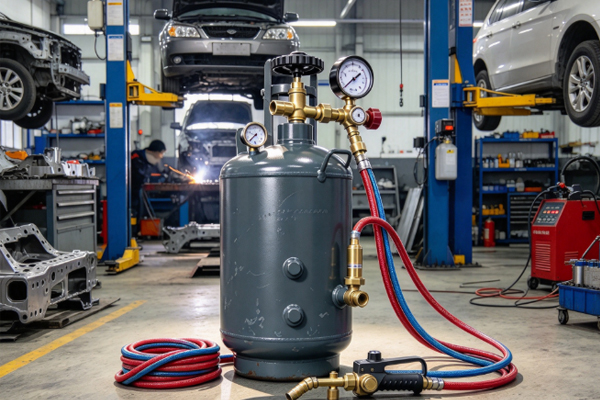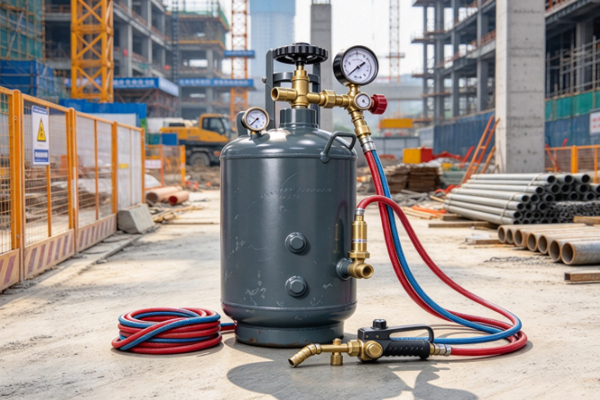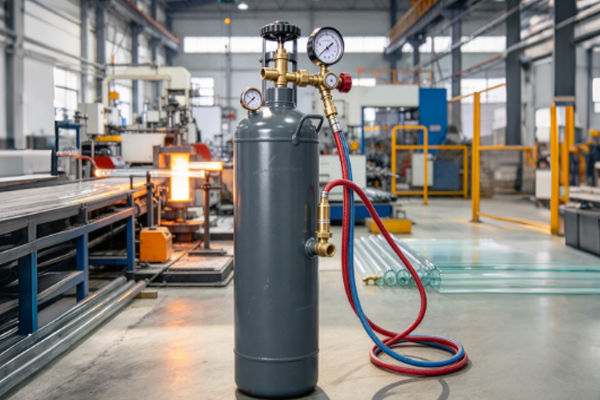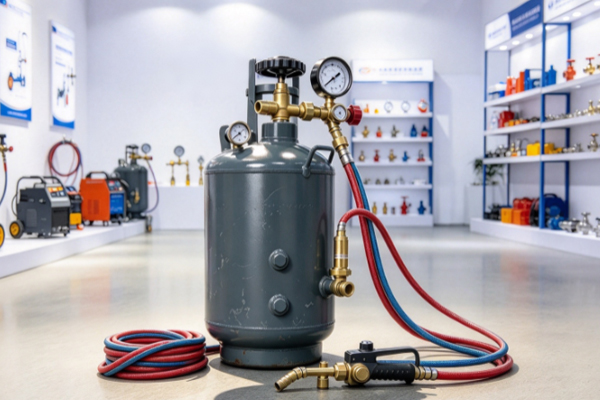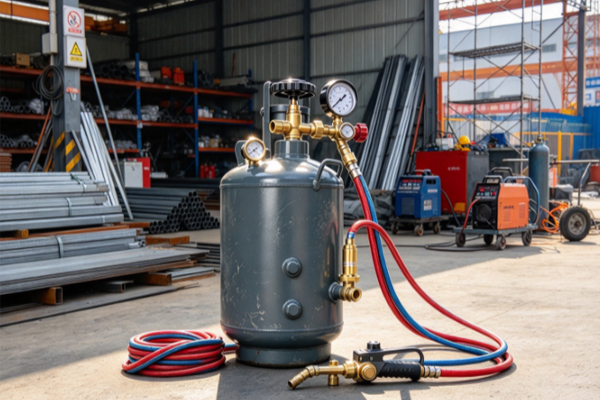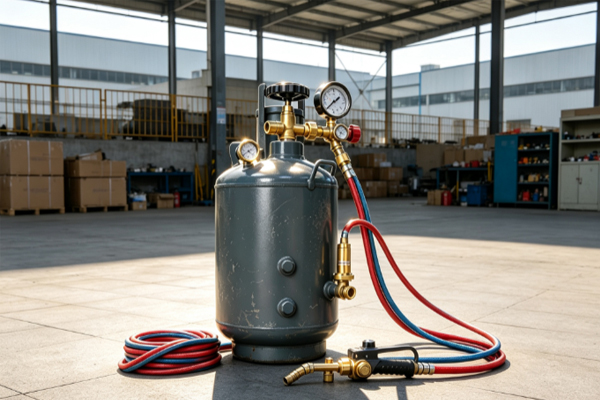
In construction sites, welding and cutting operations run through almost every stage of steel structure installation, pipeline laying, and equipment fixing. As acetylene is the core fuel gas for high-temperature flame cutting, its supply stability directly affects construction progress and operational safety. Therefore, selecting the right acetylene storage tank size has become an important part of equipment planning for construction companies. Different project scales, construction durations, and work intensities require significantly different tank specifications. Improper selection may not only reduce efficiency but also increase on-site safety risks.
Common Acetylene Storage Tank Sizes in Construction
In actual construction sites, acetylene storage tank sizes are generally classified based on project scale and gas consumption frequency to meet different working environments:
- Small portable tanks (40L–80L): suitable for indoor maintenance, minor welding tasks, and small renovation projects, offering high mobility
- Medium standard tanks (100L–300L): commonly used in general construction, steel structure installation, and pipeline welding
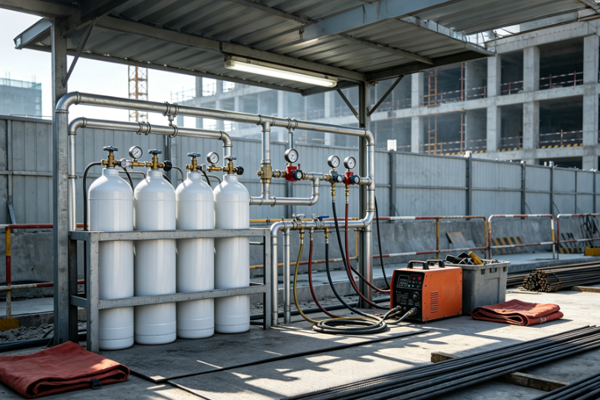
- Large centralized gas supply systems (500L and above): suitable for large construction sites, bridge projects, and continuous welding operations
Different tank sizes offer different advantages in gas stability and mobility.
Acetylene Tank Size Requirements in Different Construction Scenarios
Construction environments are highly variable, and gas demand changes across different project stages, requiring flexible configuration:
- Foundation stage: scattered operations, small tanks are more suitable for flexible use
- Structural stage: increased welding workload, medium tanks ensure stable gas supply
- Large steel structure projects: centralized gas supply or large-capacity systems are recommended for higher efficiency
Adjusting configuration according to project stages improves operational continuity.
Key Factors Affecting Tank Size Selection
When selecting acetylene storage tank sizes for construction projects, multiple practical factors must be considered beyond capacity alone:
- Daily welding and cutting frequency
- Project duration and continuity of operations
- On-site space and storage conditions
- Transportation and replacement convenience
- Safety regulations and site management requirements
These factors collectively determine whether the tank size is properly matched to actual needs.
Common Issues in Construction Site Selection
In real construction applications, companies often encounter typical problems in tank size selection that affect efficiency and safety management:
- Focusing only on low cost while ignoring gas supply stability
- Using undersized tanks leading to frequent gas replacements
- Choosing oversized tanks that waste on-site space
- Failing to adjust equipment according to construction stages
These issues often become more evident during project execution and increase management difficulty.
How to Scientifically Choose Acetylene Storage Tank Size for Construction?
To improve construction efficiency and ensure safety, companies should adopt a scientific selection approach rather than relying on experience alone, especially by combining real project data and site conditions for comprehensive evaluation:
- Calculate peak gas consumption based on project scale
- Select appropriate storage capacity based on construction duration
- Prioritize stable gas supply and operational continuity
- Reserve expansion capacity for unexpected demand
- Consult professional suppliers for systematic solutions
Scientific selection significantly improves overall construction efficiency.
In construction projects, selecting the right acetylene storage tank size requires a comprehensive evaluation of actual engineering needs. It is essential to ensure stable gas supply while balancing flexibility and safety. Proper configuration can effectively improve construction efficiency and reduce operational costs. Zhongcheng Gas Cylinde provides a wide range of acetylene storage tank size solutions to meet the stable gas supply needs of various construction sites.