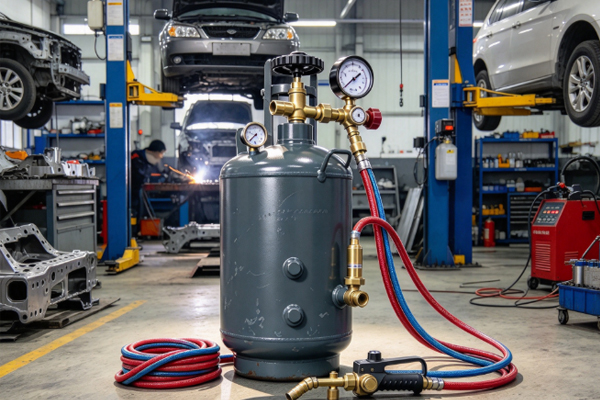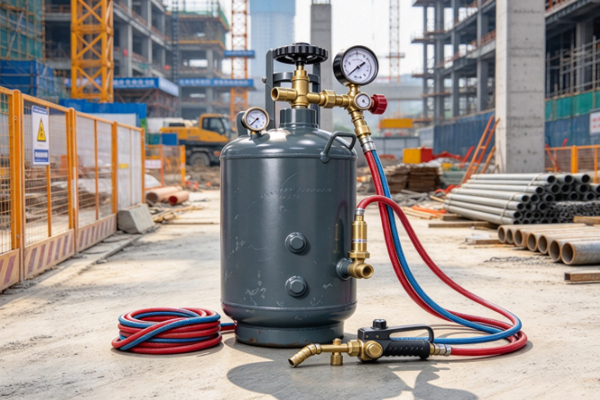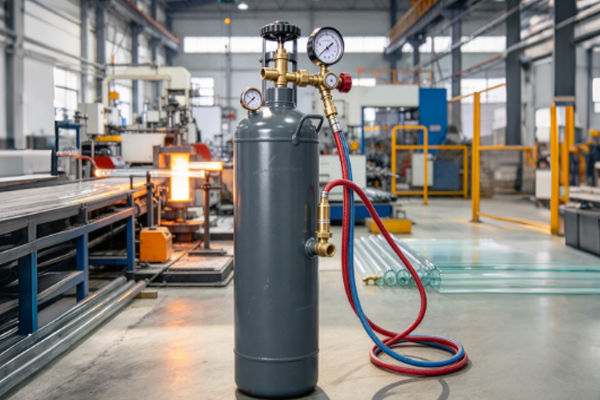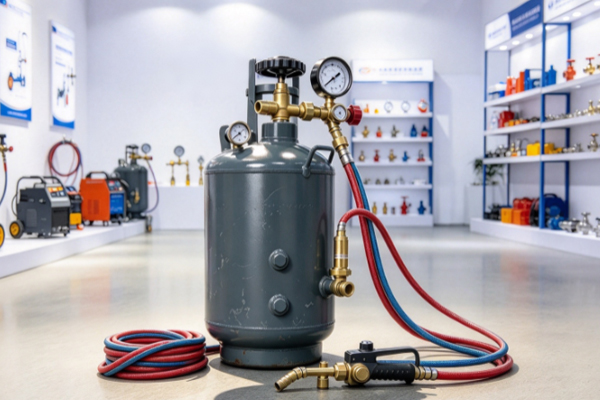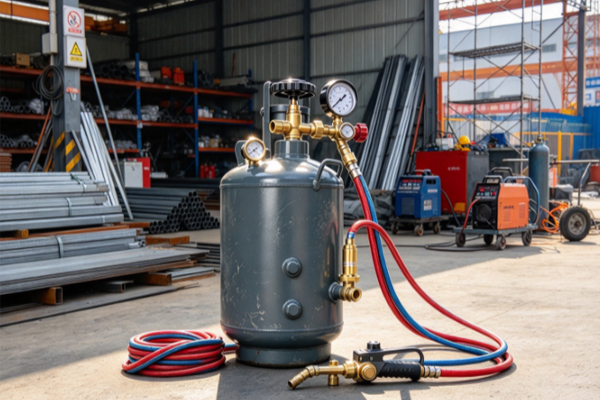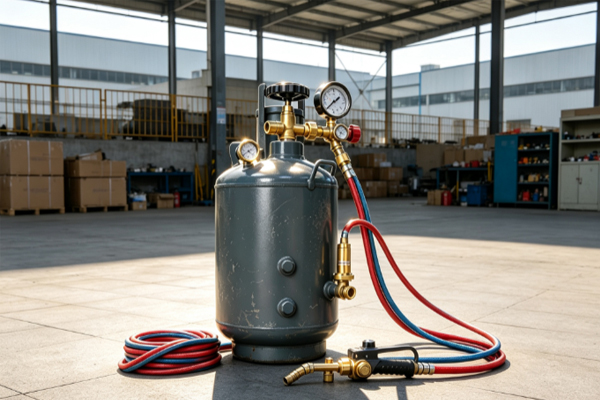
In industrial production, a stable and safe gas supply is essential for maintaining operational efficiency, and the size of an acetylene storage tank directly affects gas supply capacity, installation methods, and long-term operating costs. Whether for welding, steel fabrication, machinery maintenance, or metal cutting, different industries require different tank capacities. Many companies focus primarily on price during procurement while overlooking whether the tank size truly matches their production needs. Understanding the common size ranges of industrial acetylene storage tanks helps improve equipment utilization and avoids unnecessary costs caused by under- or over-sized configurations.
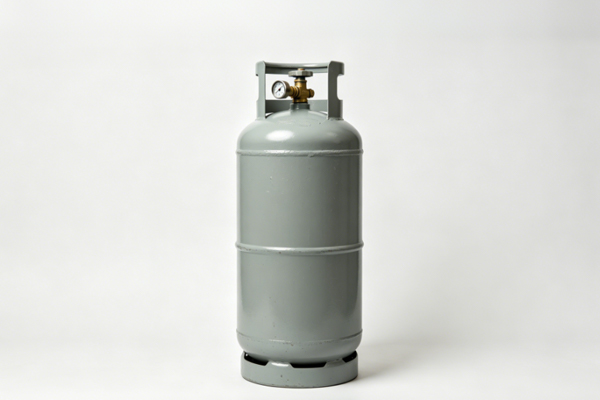
Common Size Ranges of Industrial Acetylene Storage Tanks
There is no single standard size for industrial acetylene storage tanks. Instead, different capacity ranges have been developed to meet various production requirements.
- Small tanks: typically 40L–80L, suitable for equipment maintenance, small welding jobs, and laboratories with low gas consumption.
- Medium tanks: generally 100L–500L, ideal for small and medium-sized factories, machining workshops, and multi-station welding operations requiring continuous gas supply.
- Large tanks: 500L and above, reaching several thousand liters, commonly used in steel fabrication, shipbuilding, and large-scale metal processing facilities.
Different tank sizes vary not only in capacity but also in installation methods, footprint, and supporting gas supply systems.
Factors That Affect Acetylene Storage Tank Size Selection
Choosing the right acetylene storage tank size involves more than simply comparing capacities. Several practical factors should be evaluated to ensure long-term operational efficiency.
- Daily and peak gas consumption to ensure adequate supply during production peaks.
- Available installation space, including ventilation requirements and safety clearances.
- Future production expansion plans to avoid replacing tanks as demand grows.
- Local safety regulations and pressure vessel requirements to ensure compliance.
Considering all these factors together leads to a more suitable and cost-effective tank selection.
Size Requirements for Different Industrial Applications
Since production characteristics vary across industries, acetylene storage tank size requirements also differ significantly.
- Hardware repair shops and automotive service centers generally prefer small tanks for easy transportation and mobility.
- Machinery manufacturing and sheet metal processing plants often choose medium-sized tanks to improve continuous gas supply.
- Large steel fabrication plants, bridge construction projects, and shipyards typically use centralized gas supply systems with large-capacity storage tanks.
Selecting tank sizes based on industry-specific requirements helps reduce procurement costs while improving production efficiency.
How to Determine Whether the Tank Size Is Appropriate?
Many companies discover after installation that their storage tanks are either too large or too small. Evaluating several key factors beforehand can minimize costly adjustments.
- Whether the tank supports the longest continuous production cycle.
- Whether sufficient reserve capacity is available for unexpected demand fluctuations.
- Whether maintenance, inspection, and future expansion are convenient.
- Whether the system fits both the budget and long-term operating cost targets.
- Whether the tank is compatible with existing gas supply equipment and pipelines.
A comprehensive evaluation is much more effective than selecting a tank based solely on capacity.
Other Important Factors When Purchasing an Industrial Acetylene Storage Tank
Besides acetylene storage tank size, several technical specifications significantly influence overall performance and service life.
- Tank material and manufacturing quality.
- Design pressure and working pressure ratings.
- Corrosion protection and expected service life.
- Completeness of safety devices and protective components.
- Availability of technical support and after-sales service from the manufacturer.
Tank size is only one part of the selection process. Product quality, safety performance, and reliable service are equally important for maximizing long-term value.
There is no universal standard for industrial acetylene storage tank sizes. The ideal specification should be selected based on production scale, gas consumption, installation conditions, and future expansion plans to achieve the best balance of efficiency, safety, and operating costs. Zhongcheng Gas Cylinde offers acetylene storage tanks in a wide range of sizes to meet the diverse gas supply requirements of various industrial applications.