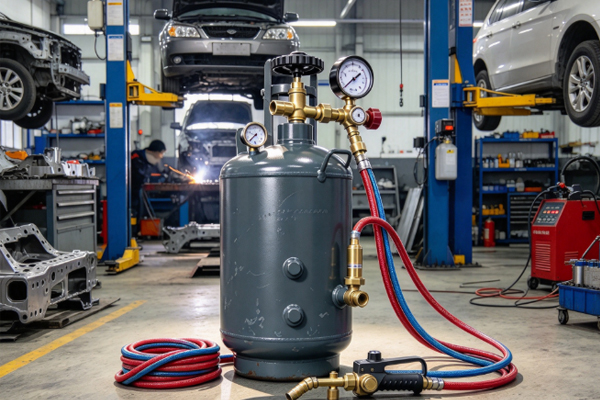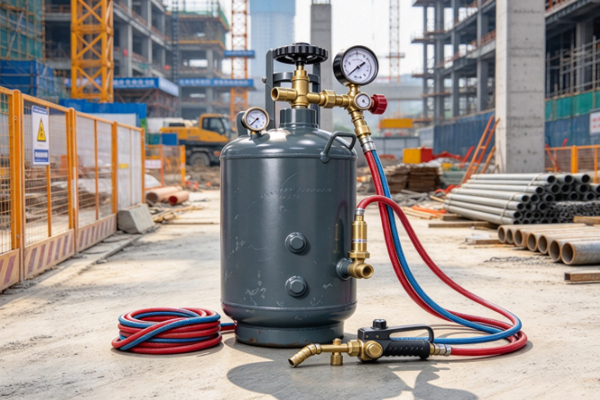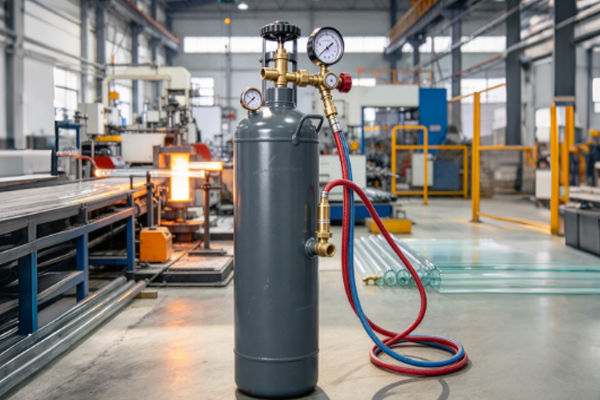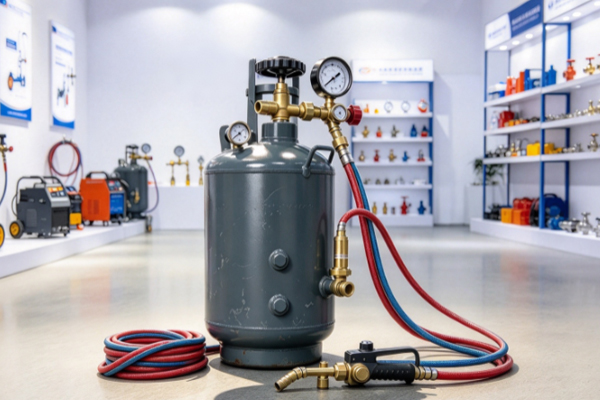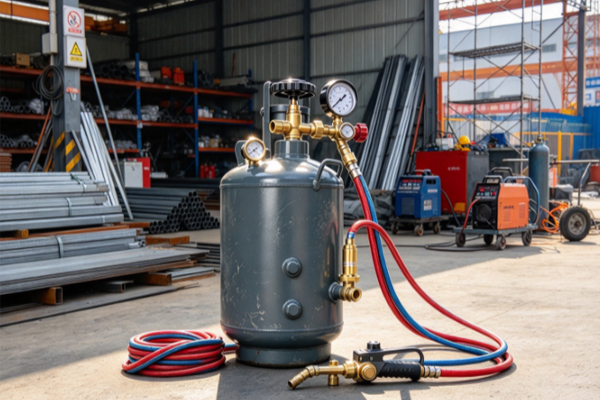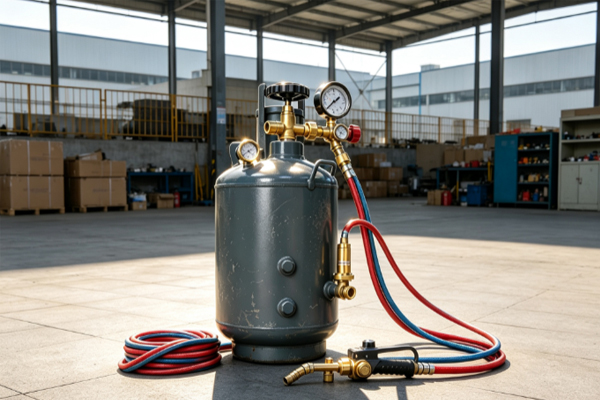
Industrial acetylene tanks are commonly used in hardware processing, metal cutting, welding repair, scrap steel dismantling, and other scenarios, and they are a key piece of equipment in gas supply systems. Installation quality not only affects whether gas supply remains stable later on, but also determines whether on-site operations are safe. If preparations are not in place before formal installation, problems such as mismatched interfaces, non-compliant environments, and improper operation are likely to occur, which in turn increases rework costs and safety risks. A systematic review of the preparations required before acetylene tank installation helps enterprises control risks before construction begins, making later operation smoother and more reliable.
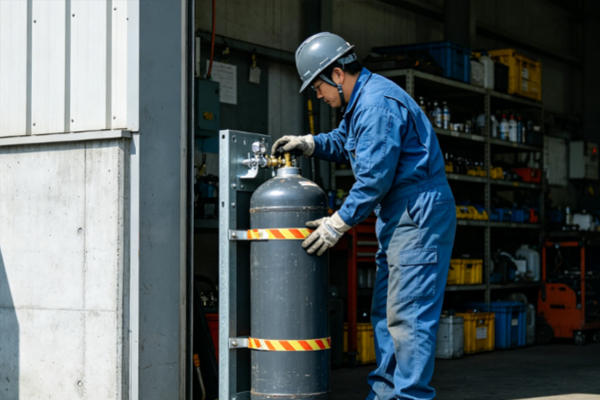
The Installation Environment Must Be Properly Assessed First
Acetylene tanks have clear requirements for the installation environment, and whether the site conditions are suitable directly determines the safety of later use. Many on-site problems do not come from the equipment itself, but from improper installation location selection, disorganized surroundings, and insufficient reserved space.
Ventilation Conditions Must Meet Standards
The installation area should maintain air circulation to prevent gas from accumulating in local spaces.
- Choose an open area whenever possible to reduce the chance of gas retention.
- Avoid long-term enclosed or semi-enclosed environments to prevent poor air exchange.
- The surrounding area should have natural or mechanical ventilation to ensure timely gas dispersion.
- If there is a lot of dust on site, exhaust and dust removal should also be considered to avoid overlapping environmental risks.
The more stable the ventilation conditions are, the more timely the gas dispersion will be, and the lower the on-site risk will be. For processing workshops with continuous operations, ventilation not only affects safety, but also influences the comfort of the work area and the convenience of inspections around the equipment.
Safety Distance Must Be Planned in Advance
No equipment should be placed randomly around the acetylene tank, and it should not be close to heat sources.
- Maintain a safe distance from open flames and spark sources to avoid external ignition risks.
- Keep away from high-temperature equipment and electrical facilities to reduce thermal radiation impact.
- Reserve space for operation, inspection, and maintenance to make later checks and part replacement easier.
- Do not place the acetylene tank at passage entrances, corners, or locations where people frequently collide with it.
A reasonable spatial layout makes installation easier and also reduces interference during later use. Clearly dividing the area before installation helps future management become more organized, and it also makes it easier for the site to form standardized operating habits.
The Equipment Body and Accessories Must Be Checked One by One
Inspecting the acetylene tank and related accessories before installation is an important step in avoiding later failures. Many gas supply abnormalities do not appear after installation; hidden risks are often already present when the equipment arrives on site.
The Tank Condition Must Be Confirmed
Whether the tank itself is intact determines whether the equipment can be safely put into use.
- Check whether the exterior has deformation, rust, scratches, or obvious impact marks.
- Verify whether the valve opens and closes smoothly.
- Confirm whether the sealing parts are intact and reliable, and whether there is aging, cracking, or looseness.
- Check the equipment label, specifications, and usage requirements to avoid mismatched models.
Only when the equipment body is in good condition can the stability of later operation be better guaranteed. If any abnormality is found on the tank, it must not be installed while defective, and the inspection step must never be ignored just to rush the schedule.
Supporting Components Must Be Fully Checked
An acetylene tank is not used alone, so whether the related accessories are complete is equally important.
- Confirm that the flashback arrestor is in place and installed in the correct direction.
- Check whether the pressure reducing device matches the equipment specifications and whether the pressure range is suitable.
- Verify whether the gas hose meets usage standards and whether there is aging, hardening, or damage.
- Make sure connectors, clamps, sealing rings, and other small parts are complete to avoid temporary patchwork.
Complete accessories with unified specifications can reduce the trouble caused by temporary on-site adjustments. Many installation delays come from missing small parts, so checking the list in advance can make construction more continuous and reduce the chance of rework.
Tools and Materials Must Be Prepared in Advance
The installation process requires a variety of tools and auxiliary materials. Proper preparation can improve construction efficiency and reduce operational errors. If tools are not available, it is easy to cause loose connections, inaccurate testing, and interrupted installation progress.
Installation Tools Must Be Professional
Using the right tools makes connections and fastening more standardized. Wrenches and tightening tools should be fully prepared and matched to the interface size; pressure testing equipment should be calibrated in advance to ensure accurate readings; leak detection tools should be ready for use at any time to facilitate quick troubleshooting after installation; if pipeline fixing is involved, brackets and clips should also be prepared. Standardized tools make installation quality easier to stabilize. Professional tools not only improve efficiency, but also reduce interface damage caused by improper force, preventing later loosening or leakage.
Sealing Materials Must Meet Requirements
The quality of sealing and connection materials directly affects the stability of the gas supply system.
- Choose sealing gaskets with good pressure resistance to suit the acetylene operating environment.
- Connection fittings must match the equipment interfaces to avoid forced splicing.
- Anti-leak materials must meet industrial usage standards and cannot be casually substituted.
- For long-term operation scenarios, material aging resistance must also be considered.
Choosing the right materials greatly reduces later maintenance pressure. Handling sealing issues properly during installation can reduce frequent inspections later and improve the overall reliability of the gas supply system.
Personnel Arrangement and Safety Measures Must Be Implemented Simultaneously
Installing an acetylene tank is not just a matter of assembling equipment; personnel capability and safety management are equally critical. No matter how good the equipment is, if the operators are unfamiliar with the process, problems can still easily occur on site.
Operators Must Have Experience
Whether the installers are familiar with gas equipment directly affects construction quality.
- Understand the acetylene equipment installation process and know the sequence of each step.
- Be familiar with pressure control and connection standards to avoid incorrect operations.
- Master common troubleshooting methods and be able to quickly identify abnormalities.
- Have the ability to judge the site environment and adjust the installation plan according to actual conditions.
Experienced personnel can identify problems more quickly and make timely adjustments. For enterprises, assigning skilled workers to carry out the installation is more time-saving and cost-effective than making repairs afterward.
Safety Protection Must Be in Place in Advance
Preparing protective measures before installation can effectively reduce sudden risks.
- Equip basic protective gear such as gloves and eye protection to reduce operational injuries.
- Set up clear safety warning zones to prevent unauthorized personnel from entering.
- Prepare necessary emergency fire-fighting equipment to improve on-site response capability.
- Clearly define responsibilities during installation to avoid confusion caused by multiple people operating at once.
The more complete the protective measures are, the safer the site operation will be. Safety preparation is not a formality; it is a basic action that must be implemented in the installation process, especially in industrial gas scenarios involving acetylene, where it cannot be omitted.
The preparations before acetylene tank installation may seem complicated, but in fact they determine the foundation of the entire gas supply system’s later operation. Environmental assessment, equipment inspection, tool and material preparation, and personnel and safety management—none of these can be omitted. Doing the preparation work thoroughly not only improves installation efficiency, but also reduces failures and hidden risks, allowing enterprises to obtain more stable gas supply support in hardware processing, welding, cutting, and other application scenarios. Zhongcheng Gas Tanks provides professional acetylene tanks and industrial gas supply equipment support to help enterprises build a safer and more efficient working environment.