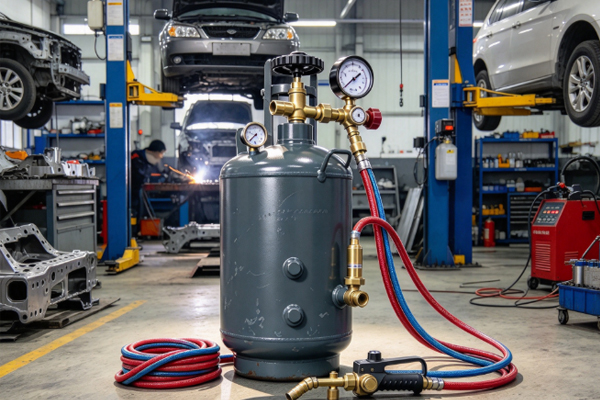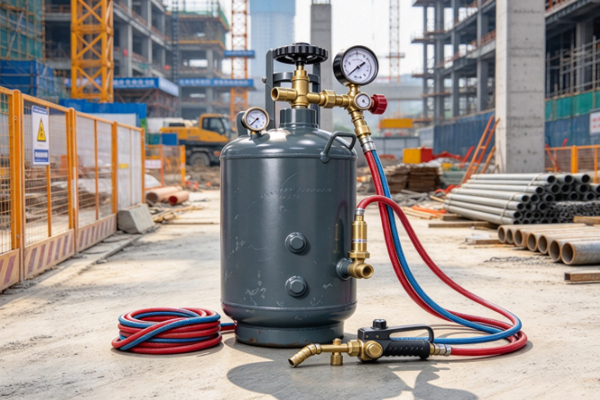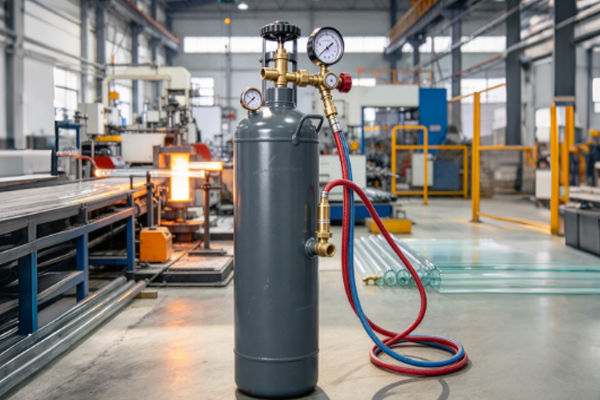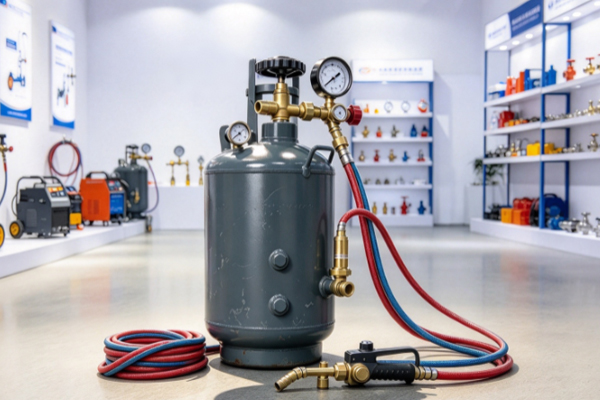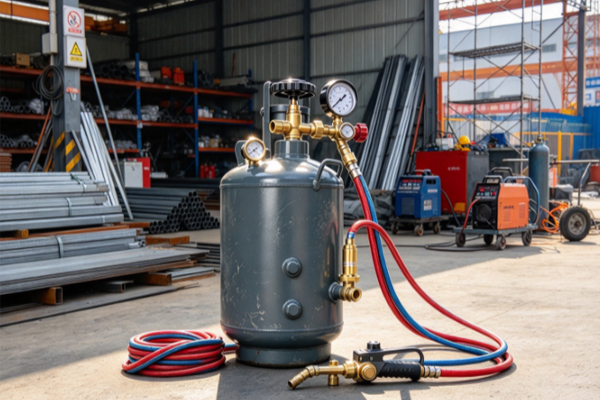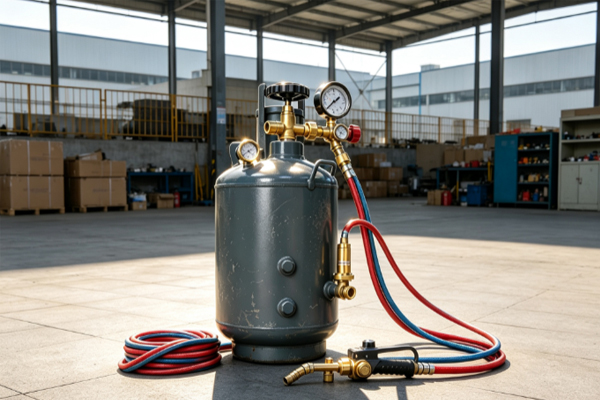
Acetylene storage tanks are important pressure vessel equipment, and their prices are not fixed like ordinary hardware products. Instead, they vary significantly depending on different requirements. When people first encounter customized storage tanks, they often find that products with the same capacity may have quite different quotations. This is mainly due to differences in design standards, material selection, and manufacturing requirements. Acetylene storage tanks involve cutting, forming, welding, heat treatment, and multiple rounds of safety inspections, and each process adds to the cost. In particular, acetylene is a highly dangerous gas, so the requirements for sealing performance and pressure resistance of storage containers are stricter. Therefore, the overall manufacturing standard is higher than that of ordinary gas tanks. In the price composition, usage conditions must also be considered, such as whether it is used for mobile construction or long-term high-pressure storage. These factors affect structural design and ultimately change the total cost.
Factors Affecting the Price
Impact of Material Selection on Cost
In the manufacturing of acetylene storage tanks, material is the most fundamental factor. Common materials include high-strength alloy steel or pressure vessel-specific steel. These materials are significantly more expensive than ordinary steel. Materials not only determine the safety performance of the tank but also directly affect its service life. If customers require higher pressure resistance, thicker steel plates must be used, which significantly increases raw material consumption as well as transportation and processing difficulty. Thick steel plates also require higher welding equipment standards and a more stable production environment, otherwise deformation may occur. In addition, different steel supply channels can also cause price differences. Some high-standard industrial steels need to be imported or specially customized, which increases cost but provides more stable and reliable safety performance.
Differences in Capacity and Specifications
The capacity of the storage tank directly determines the overall cost structure. The larger the capacity, the more steel is required, and the longer the processing time. Small customized tanks are usually used in laboratories or small-scale welding operations, while medium and large tanks are more commonly used in construction sites or industrial production lines. As the tank size increases, not only does material usage rise, but transportation costs also increase, since large equipment may require special transportation methods or even disassembly and on-site assembly. These additional costs are included in the final quotation. In addition, different specifications may require different design adjustments, such as reinforced support structures or anti-vibration designs, which further increase manufacturing complexity and affect final pricing.
Complexity of Manufacturing Process
The production process of acetylene storage tanks is much more complex than that of ordinary gas storage equipment, because it involves high-pressure environments and flammable gas storage. Therefore, every weld must be strictly processed. Welding requirements include not only strength but also sealing performance, as even minor defects may compromise safety. In high-standard customization, multi-layer welding structures are often used along with heat treatment processes to stabilize the internal metal structure. These processes not only increase production time but also raise labor and equipment costs. In addition, non-destructive testing is required after production, such as ultrasonic testing or radiographic inspection. These inspections are essential safety procedures and are also included in manufacturing costs.
Safety Standard Requirements
Safety standards for acetylene storage tanks are usually very strict, with different countries and industries having their own regulatory requirements. During production, multiple rounds of pressure testing are required to ensure no leakage or rupture occurs under high-pressure conditions. In addition to pressure tests, airtightness and corrosion resistance tests are also necessary to ensure long-term use in complex environments. The higher the certification level, the more inspection items are required, and the higher the cost becomes. Some special-purpose tanks also require additional safety components, such as explosion-proof valves and pressure monitoring devices, which are also included in the overall cost calculation.
Actual Cost Structure of Pricing
Material costs account for a major portion of the total cost. Steel grade and weight directly determine the base price level, and fluctuations in steel market prices also affect final quotations.
Material cost: Different steel grades result in significant price differences, with high-strength pressure-resistant steel being more expensive
Capacity specification: The larger the tank, the more materials required, and processing difficulty increases accordingly
Manufacturing process: Welding precision, sealing treatment, and pressure testing all increase processing costs
Safety configuration: Explosion-proof devices, pressure valves, and pressure relief systems increase overall cost
Processing costs include cutting, welding, forming, and heat treatment. Each step requires professional equipment and skilled labor, and more complex processes result in higher costs. Testing costs are used to ensure safety performance, including pressure testing and non-destructive testing. Although this portion does not account for a large share, it is an essential part. Additional configuration costs such as valve systems, pressure gauges, and safety protection devices are adjusted according to usage requirements.
Common Questions About Pricing
Why is there a large price difference for tanks of the same specification?
In the market, even acetylene storage tanks with the same capacity or appearance may have significant price differences. This is mainly due to differences in material grades. Some manufacturers use standard industrial steel, while others use higher-grade pressure vessel steel. In addition, machining precision and process level also affect pricing. Products produced with high-precision welding equipment are more stable in quality but also more expensive. At the same time, differences in inspection completeness also lead to noticeable price variations.
Does customization lead time affect price?
If customers require a shorter delivery time, production schedules must be adjusted, and overtime or priority production may be needed. This results in additional labor and equipment costs. Normal production cycles follow standard procedures, but expedited orders often require multiple processes to run simultaneously, which increases overall cost. This is common in industrial customization.
Is it possible to reduce costs?
Under the premise of ensuring safety standards, cost optimization usually comes from design adjustments, such as selecting more suitable capacity specifications or adopting standardized structural designs to reduce unnecessary processing steps. However, since acetylene storage tanks are high-pressure safety equipment, core structures and safety configurations cannot be reduced arbitrarily, otherwise safety performance will be affected. Therefore, cost optimization is mainly focused on rationalizing design and configuration.
The customized price of acetylene storage tanks begins with raw material procurement, followed by manufacturing and safety inspection, with each step adding to the cost. Different usage requirements correspond to different design solutions. For example, high-pressure environments require thicker steel and more complex welding structures, while basic usage scenarios can adopt standard configurations. During production, any adjustment in any step will affect the overall cost. Therefore, pricing is not determined by a single factor but is the result of multiple interconnected processes. Materials, processes, and inspections are closely linked, and each directly influences the final cost.