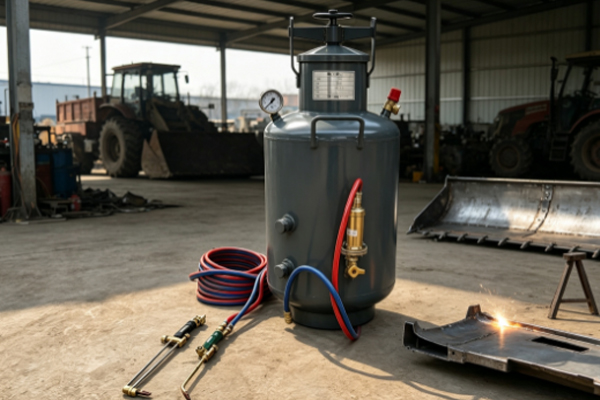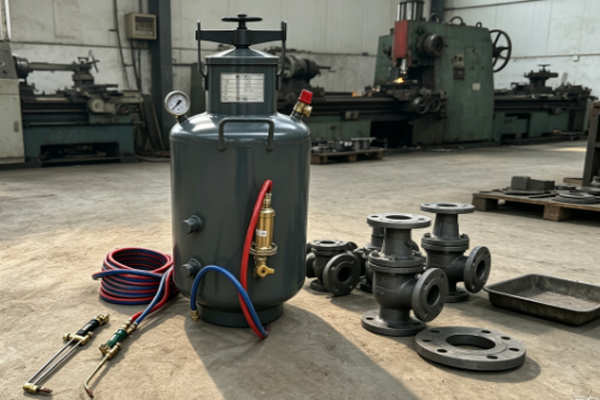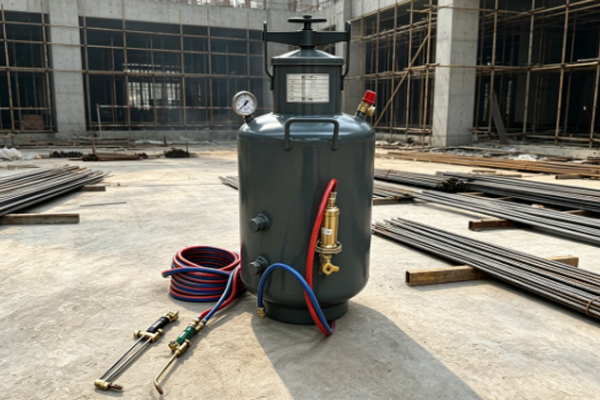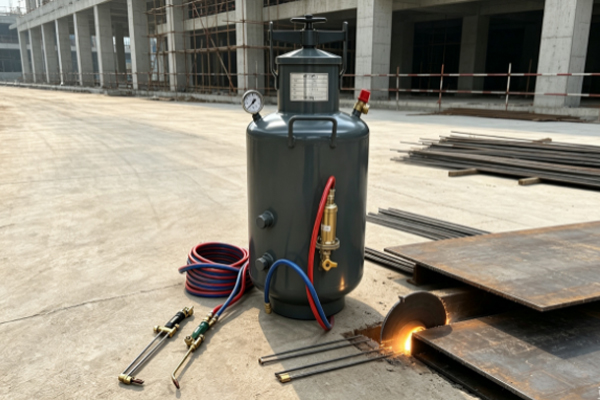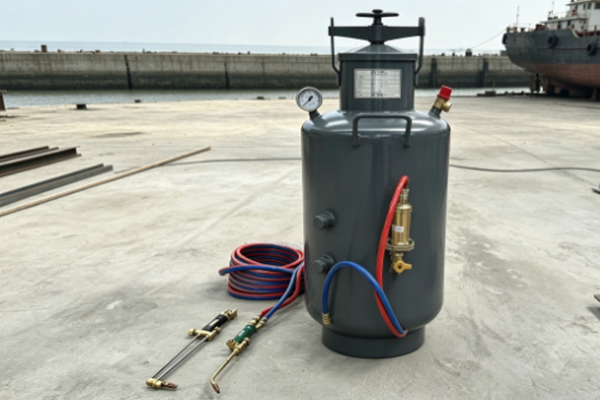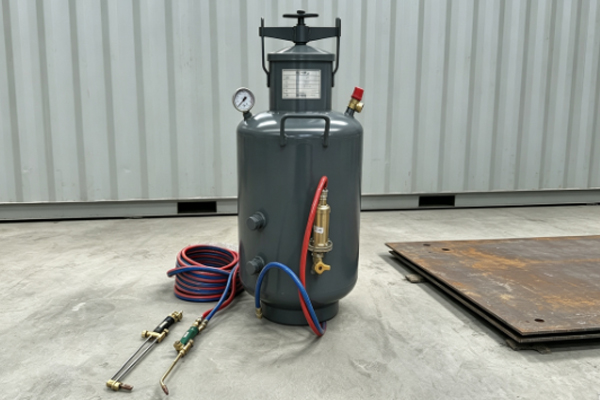
An acetylene tank may not be needed every day after purchase. Some factories pause production when orders slow down, while construction projects may leave equipment unused for several months after work is completed. During this time, storage conditions, valve protection, and safety management can easily be overlooked. When the tank is needed again, corrosion, damaged accessories, or inspection issues may prevent it from being used. Since acetylene is a flammable gas, storing a tank is not as simple as leaving it in an empty corner. Proper storage helps protect the equipment and reduce safety risks while it is out of service.
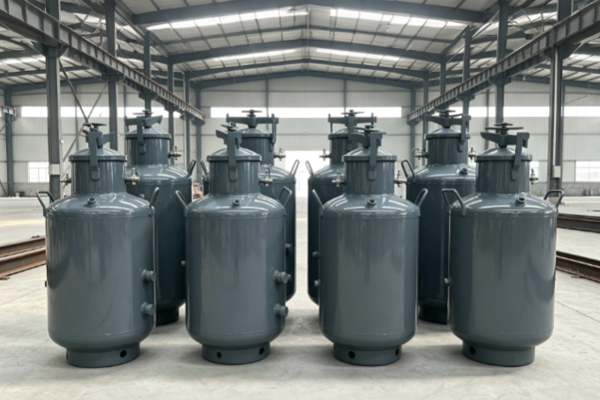
Where Should an Acetylene Tank Be Stored for Long Periods?
Choosing the right storage location is essential. Whether the tank is kept at a factory or on a construction site, it should be placed in a designated area that meets local fire safety and hazardous gas storage requirements. It should never be left wherever there happens to be space.
- Keep it away from ignition sources: Avoid welding areas, open flames, hot equipment, and locations where sparks may occur.
- Ensure proper ventilation: The storage area must have suitable ventilation to prevent leaked gas from accumulating.
- Avoid direct sunlight: Do not leave the tank exposed to high temperatures for extended periods.
- Keep it away from flammable materials: Do not store it together with oils, fuels, or incompatible substances.
- Prevent tipping and movement: Secure the tank according to its design requirements to prevent it from falling, rolling, or being struck.
The storage area should also have clear warning signs and restricted access for unauthorized personnel. Whether indoor or outdoor storage is appropriate depends on local regulations, the tank type, and site conditions. Outdoor storage should not automatically be considered safe.
What Should Be Done Before Storing an Acetylene Tank?
Before taking an acetylene tank out of service, do not simply move it into a warehouse and leave it there. Trained personnel should prepare it for storage in accordance with the manufacturer’s instructions and site safety procedures. Its current condition must be confirmed before storage. Ordinary users should never remove valves, release residual gas, or handle internal porous materials themselves.
- Inspect the tank exterior: Look for corrosion, dents, cracks, and visible damage.
- Check the valve condition: Look for anything unusual without attempting to repair or dismantle it.
- Protect valve connections: Fit the appropriate protective devices as specified by the manufacturer.
- Check inspection information: Review inspection markings, validity status, and manufacturer requirements.
- Keep storage records: Record the date it was taken out of service, equipment number, and inspection results.
If a tank shows signs of leakage, unusual heating, severe corrosion, or other suspicious conditions, do not continue moving or handling it. Follow the site’s emergency procedures and contact qualified professionals immediately. Long-term storage does not eliminate the need for periodic inspections. Before the tank is used again, its condition must be checked against applicable local requirements.
Does an Acetylene Tank Need Regular Inspection During Long-Term Storage?
Yes. Even when an acetylene tank is not being used, moisture, temperature changes, accidental impacts, and unsuitable storage conditions can affect its condition. Tanks stored for extended periods should not be left unchecked until production resumes. Site managers should arrange inspections in line with manufacturer instructions and local regulations, paying particular attention to corrosion, tank restraints, valve protection, and inspection markings. If anything unusual is found, the tank should be taken out of service and handled by qualified personnel. It is also important to remember that conventional dissolved acetylene cylinders generally contain porous material and a solvent. They must not be treated like ordinary empty steel cylinders, and the cylinder body should never be opened to inspect its internal structure.
Should You Keep Using an Acetylene Tank or Switch to Another Gas Supply System?
If a project is only paused for a short time, production will resume soon, and a filling station is conveniently located nearby, conventional acetylene cylinders that meet inspection requirements are usually a practical choice. There is no need to invest in additional gas-generating equipment. However, for factories and construction projects that require large volumes of acetylene over long periods, especially in locations without a nearby acetylene filling station, repeatedly purchasing, transporting, and exchanging cylinders can become expensive. A mobile acetylene generator may be a better option. It produces acetylene on-site through a chemical reaction between calcium carbide and water, using a water-displacement system to regulate gas production. This reduces dependence on pre-filled cylinders and repeated transportation. Under suitable operating conditions, total long-term costs may be reduced by approximately 40%–60%. Actual savings depend on equipment investment, calcium carbide prices, gas consumption, and maintenance expenses.
Proper storage and preparation are essential when an acetylene tank will remain unused for an extended period. Cylinders that are temporarily out of service should be stored correctly, with their condition and inspection records kept up to date. If a project has shifted toward continuous, high-volume gas consumption, it may also be worth reviewing the entire gas supply setup. We offer acetylene tanks in different specifications as well as mobile acetylene generators to suit various operating requirements. Contact us with your application, estimated gas consumption, purchase quantity, destination country, and port. We can recommend suitable equipment and provide a quotation based on your needs.