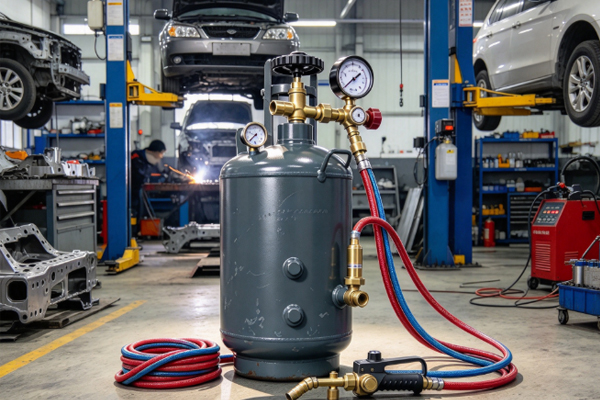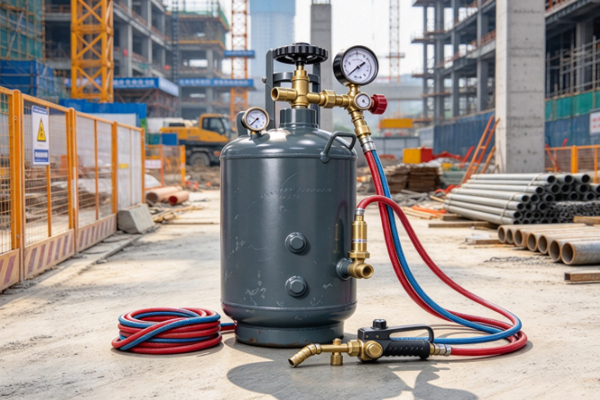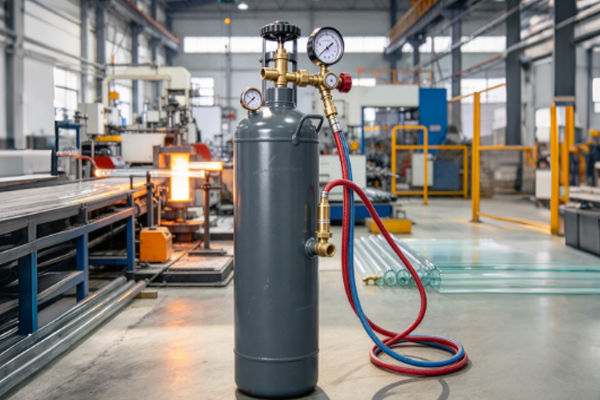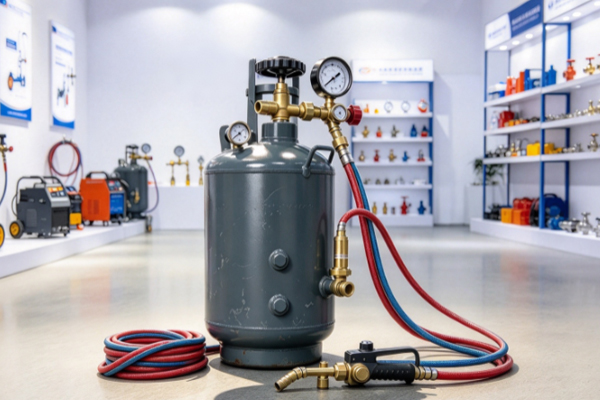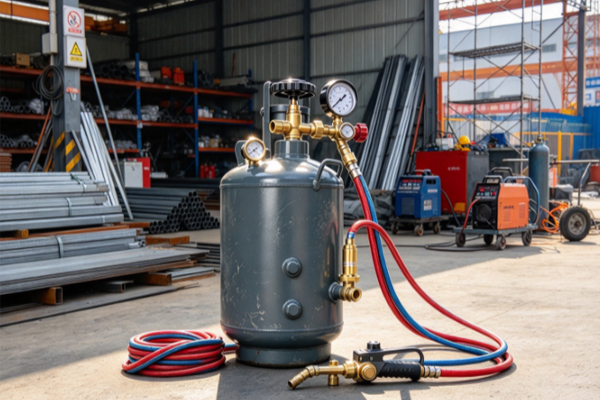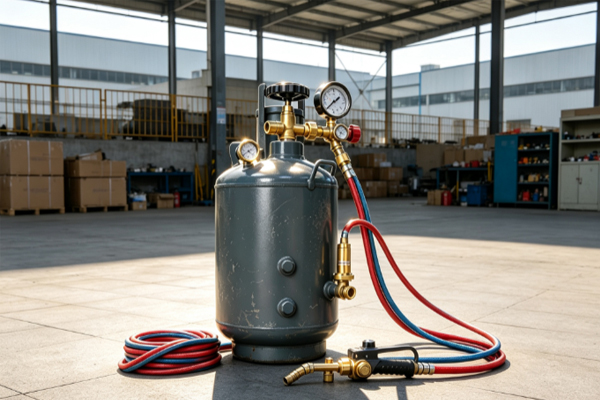
Acetylene tanks play a crucial role in welding, cutting, and metal processing by ensuring a stable gas supply. The pressure state directly affects flame quality and operational safety. Standardized pressure testing can promptly detect problems such as insufficient gas reserves, abnormal pressure-reducing systems, or seal leaks, thus preventing construction interruptions or safety hazards. Mastering scientific testing methods helps improve overall equipment management and extend the service life of acetylene tanks and their components.

Working Principle of Acetylene Tank Pressure Testing
The gas inside the acetylene tank is stored in a dissolved state within a porous material. After being released through a pressure-reducing valve, a stable output pressure is formed. During pressure testing, pressure gauges are primarily used to monitor the high-pressure and low-pressure ends to determine gas reserves and output stability. When gas is consumed or the ambient temperature changes, the internal pressure fluctuates, and changes in the pressure gauge readings reflect the system’s operating status. Simultaneously, the pressure-reducing device automatically adjusts the output pressure to maintain it within a suitable range for welding or cutting. Understanding this process helps in more accurately determining whether the test results are normal.
Practical Significance of Pressure Testing
A stable pressure state ensures continuous and uniform flame combustion, resulting in smoother weld formation and improved continuity and precision in the cutting process. In industrial production environments, pressure testing is not only used to determine the remaining gas volume but also to detect problems such as abnormal pressure reducing valves, hose leaks, and loose connections in advance. Regular testing can reduce the probability of sudden equipment failures, decrease gas waste, and improve overall operational efficiency. For continuous operation projects, stable pressure management can make the production process smoother and reduce downtime for adjustments.
Preparations Before Pressure Testing
Before starting pressure testing, a comprehensive confirmation of the equipment status is necessary to ensure accurate test results and avoid safety risks during operation. This stage of preparation directly affects the reliability of subsequent judgments.
Before entering the testing process, the following preparations should be completed:
- Confirm equipment connection status: Check whether the acetylene tank, pressure reducing valve, pressure gauge, and hose connections are secure, ensuring that there is no looseness or damage at the interfaces.
- Eliminate external interference factors: Maintain good ventilation in the testing area, away from open flames and high-temperature environments, to avoid environmental factors affecting pressure readings.
- Check the initial state of the pressure gauge: Observe whether the pressure gauge pointer is at zero or in a normal static state, confirming that the instrument is not stuck or inaccurate.
- Prepare leak detection tools: Use soapy water or a special detection solution to determine whether there is a gas leak.
After completing the above preparations, you can proceed to the formal pressure testing stage, ensuring that the data from each step is valuable for reference.
Acetylene Tank Pressure Testing Operation Steps
The pressure testing process needs to be carried out in sequence to avoid data deviations or safety risks caused by arbitrary operations. A standardized procedure can more accurately reflect the true working state of the acetylene tank.
During the testing process, the following steps should be followed:
- Slowly open the cylinder valve: Control the opening speed to allow the gas to gradually enter the pressure reducing system, avoiding pressure shocks that could affect the instrument.
- Observe the changes in high and low pressure readings: Check whether the pressure gauge is rising steadily and record the current value to determine the gas storage status.
- Adjust the output pressure of the pressure reducing valve: Rotate the adjustment knob and observe whether the low-pressure end can be stably maintained within the set range.
- Leak Detection: Apply the detection fluid to the interfaces, valves, and connections, and observe for bubbles to determine if there is a leak.
- Shutdown and Retest Confirmation: After completing one test, restart the system and confirm that the readings are consistent to avoid occasional errors affecting the judgment.
After completing the above steps, the decision to continue use or perform equipment maintenance can be made based on the test results.
Applicable Scenarios and Frequency of Pressure Testing
Acetylene tank pressure testing is applicable to various working environments such as welding workshops, metal processing plants, construction sites, and ship repair. In continuous welding or cutting tasks, pressure stability directly affects the quality of work; therefore, testing before starting work is particularly important. In environments with large temperature variations, such as outdoor construction in winter or high-temperature workshops, the testing frequency needs to be increased to avoid abnormal pressure affecting equipment operation.
During daily use, it is recommended to perform pressure testing each time the gas cylinder is replaced, after a long period of inactivity, and before continuous operation. At the same time, if the equipment experiences unstable flame or insufficient gas supply, testing should also be performed immediately to rule out the possibility of pressure system abnormalities. By establishing a regular detection mechanism, the overall safety level can be effectively improved, ensuring that acetylene equipment always maintains a reliable operating state.